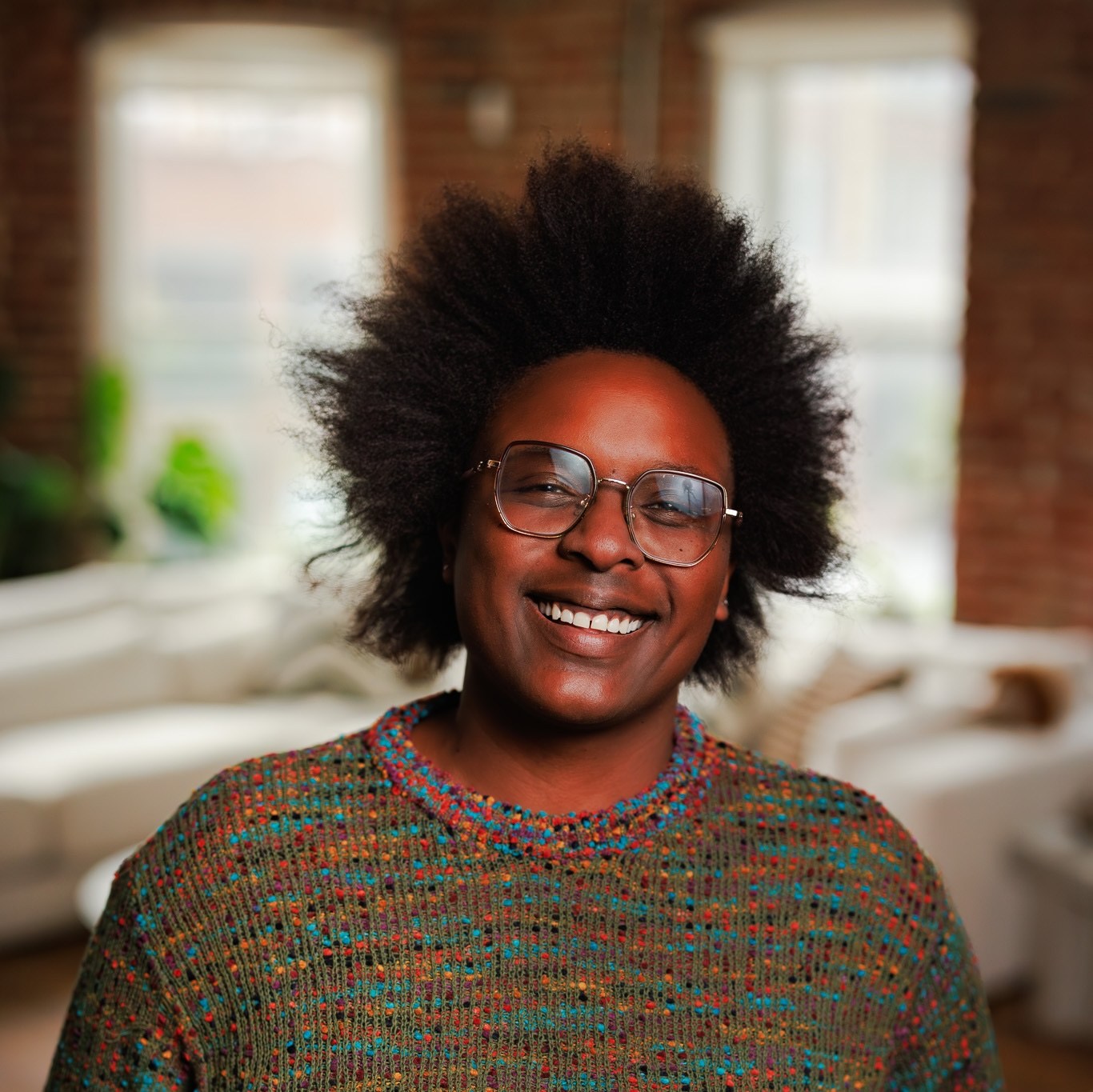


To hear him tell it, District 8 supervisor candidate Gary McCoy spent most of the 2000s adrift in San Francisco, intertwined with drugs, grappling with jail time and probation from shoplifting charges, and regularly on the verge of death.
Born in Virginia, McCoy came to the Bay Area in 2001 hoping to leave behind addiction and rebuild his life. Instead, he slipped back into drug use, landing in jail for possession. He was diagnosed with AIDS in 2005 while in the throes of a meth habit. He eventually landed on the street, sleeping under overhangs (including in the Castro, in D8) while withering away.
One of the people McCoy credits with saving his life is the person who had enabled him in the first place: His drug dealer, Rob, who lived in the Tenderloin. McCoy was receiving HIV care from UCSF’s legendary Ward 86, and his counselor had been pushing for McCoy to go to drug treatment. Eventually, Rob thought the same.
“He was my dealer, but he was also my friend. I ended up staying in his house for, like, two weeks straight and at the end, he looked at me and said, ‘I hate to tell you this, but you have a problem,’” McCoy said.
The irony was almost too much, but Rob, whose last name McCoy chose not to share, was serious. McCoy called his Ward 86 counselor to arrange an intake that same day, and Rob walked him to the treatment center. Rob did the same two weeks later, when McCoy secured a treatment bed.
Not long after, McCoy received a call from Rob: He had landed in the hospital for a health issue, but told McCoy he was ready to try treatment at Laguna Honda Hospital, inspired in part by McCoy’s efforts. Weeks went by without McCoy hearing from his friend, when he finally received bad news: Rob had died in the hospital from organ failure.
McCoy has been sober since 2011, and his firsthand experience with homelessness, addiction, and disorder has fueled his efforts to address the poverty and drug crisis in San Francisco head-on. The former director of public affairs at service provider HealthRight360, McCoy has worked with elected officials like Scott Wiener, London Breed, and Nancy Pelosi, serving as the latter’s campaign manager for the Save Our Health Care initiative.
McCoy has never forgotten about his friend, nor the precarious nature of seeking help in a system that, in so many ways, fails vulnerable people. He knows recovery, whether from addiction or homelessness or both, isn’t a linear path. He also believes that forcing people to comply in order to clean up San Francisco’s streets can and will backfire.
“Handcuffs didn't get me sober. Handcuffs just caused me to leave jail and go to my dealer's house and get high,” McCoy says.
Mayor Daniel Lurie, among other officials, have pursued more punitive approaches as a strategy to get people off the street. McCoy and I sat down to discuss the alternatives, and his ambitious behavioral health policy plan, over strong coffee at Cafe de Casa in the Castro.
This interview has been edited for length and clarity.
Much of the conversation around homelessness and drug use focuses on the Tenderloin and parts of SoMa. What do you see in District 8?
McCoy: I mean, we’ve got our challenges here in D8, and in fact, I’ve been part of those challenges. There’s probably three or four people out on the streets today who were on the streets with me 20 years ago in this same neighborhood.
Folks get pushed around the city quite a bit. I have a lot of conversations with people on the street, mostly kids, on a daily basis here in the Castro. In some cases, they’ve been housed many multiple times, but generally it’s somewhere in the Tenderloin. And they feel they’re part of the LGBTQ community and want to be in the Castro and so they’d rather give up that housing and sleep on the streets of a neighborhood where they feel safest. I think that’s why we need more permanent supportive housing opportunities. We’ve got one site in the entire district.
Some of that “getting pushed around” is due to policy shifts in the city. There’s a get-things-done-now attitude about Mayor Daniel Lurie’s administration, but how is it really different from previous efforts?
It feels different in the sense that he’s been much more public about it. He’s taken to social media and has provided at least a little more transparency than previous administrations. Whether the policies have really changed, I’m not sure. We see this happen all the time in politics. I’ve seen his administration announce a new project, and then it turns out it was a program I was involved in when I worked with HealthRight360, something London Breed was leading the effort on. So it’s worth having a longer-term view.
There’s this narrative in San Francisco politics that we’ve done all we can with a housing-first, “compassionate” approach and that strong enforcement, including via police, is a new priority. Your opponent, Manny Yekutiel, has said we need to “stop trying to do the same thing over and over again.” What do you think?
The folks that are saying that right now are only looking at the last five years. Doing the same thing over and over again, and not having the results, is what we’ve been doing for the last couple decades, from the War on Drugs to [Ronald] Reagan defunding mental health resources in the ‘80s. We have never taken a position to do real strategic planning in San Francisco. What happens, what drives me insane with our elected officials, is that whether you love ‘em or hate ‘em, we get four years out of them. Because of that, they’re always trying to legislate for a four-year cycle. We need to really think long-term, and I want to be a supervisor that works on a 10-, 15-, 20-year plan.
In other words, you think there are too many half-measures? That squares with what I hear from unhoused people, who say they hit so many dead ends and complications while seeking help.
Yeah. We do want solutions in a fiscally responsible way. That’s why I don’t agree with tiny homes, because the amount of money for these tiny home sites doesn’t make sense to me. We could be getting so much more.
I’m also not supportive of navigation centers in the current model because it isn’t how [the concept] started. In the past, the centers made it easier to persuade folks to come off the streets. They could stay at the center until a more permanent exit was found for them. There was no time limit on the stay.
Now there’s a time limit, and it doesn’t matter if the city has found you housing or services or not. It basically just feels like a triage shelter now. I want to push for the city to go back to the old model. And if there’s a bottleneck happening because we’re not able to find housing for people, so be it. Hopefully that’s the push for the city to do a better job and rebuild the “housing ladder” that doesn’t exist right now.
The city isn’t even really doing a good job at keeping in touch with people who need treatment and assistance, which is a huge problem.
The entire time I worked at HealthRight, the frequent conversation was, “How can we make metrics better?” The best metric they had is whether someone completed a 90-day stay in treatment. So we can call that a success, but then they’re found dead on BART from an overdose the next day.
There’s no funding to actually be able to follow people after they leave treatment. I think there’s a really simple fix to this. The housing-first approach is not simply about getting people from the streets into housing regardless of their health. It’s about eliminating barriers to housing, whether it’s a criminal record, health issues, bad credit.
There’s been this huge push that, “Oh, the policy has to be recovery-first because the housing-first model is failing and people are dying in permanent supportive housing.” They’re not wrong about the issues. But how many more people would be dead without that resource? We need better assessments of people to make sure we’re not throwing someone in a vacant hotel without behavioral health resources. We need to do more than an overdose risk assessment — we should add physical and mental health assessments.
It’s a super easy fix, and we can reassess people every one to two years. If you’re improving, you’ve been sober, we can move you somewhere else. It would make housing-first a lot more successful.
You also have ambitions to build a behavioral health campus that can take some stress off of hospitals and other organizations. What’s a realistic path for that?
I’ve had conversations with, among others, Sutter CPMC [hospital] about this. It’s a private facility. They have a bottleneck in their emergency department because they can’t turn people in crisis away. Then they lose money on that service, because unlike San Francisco General Hospital, they don’t get [recouped] from the city’s general refund. So they’re eating millions of dollars a year for folks coming into the ED but don’t need that level of care.
We would love to create a behavioral health wing of Sutter’s new Van Ness campus so that people can go and get the right kind of care. There are people on the street who are missing their dialysis appointments, and that will cost more money in the long run to get that patient back to health. It will take some time to find the capital funding, but I plan to move on it as quickly as possible. There’s an expansion of funding for Certified Community Behavioral Health Clinics in California that is not impacted by federal cuts, and it may be one tool for that.
Speaking of cuts: The city recently announced the removal of “peer responders” from street crisis response teams, who are trained to speak with unhoused people and interpret their problem and best solutions. What is your take on this?
The street crisis response team was inspired by the George Floyd case, to be able to respond to a behavioral health crisis with help, not abuse. San Francisco created a great model to bring together EMT, licensed clinicians, and peer responders.
But a few years ago, there was a political expectation from the city Department of Emergency Management for licensed clinicians to do more involuntary [psychiatric] holds, aka 5150s. The clinicians weren’t doing enough of them, and it created internal debate, and they decided we’re taking the clinicians off the [fire] rigs, and instead have EMTs do involuntary holds. And then the clinician can do follow-ups after the fact.
How the fuck are you going to do a follow-up after the fact with someone with no home who’s on that sidewalk for one day and having a behavioral crisis? How are you going to send someone to find this person the next day? So I think the street team is great, but we need to do what we can to expand the service.
“Doing the same thing over and over again,” to me, is where we arrest people and move everyone from block to block. The root of all this is housing and health. Housing and health. We’ve known this for decades.