

Earlier this year, when Cristina Ashbaugh and Kelly McGee, the co-founders of the outdoor apparel brand Yardsale, were renovating the Cole Valley building that would eventually become their company’s first brick-and-mortar location, they knew exactly which local hotspot they wanted it to emulate.
Ideally, the cafe portion of the Yardsale store, which they called Double Black, “will feel very much like The Mill,” Ashbaugh told Gazetteer SF in January, months before it opened.
Before the Divisadero bakery’s fire in June, she and McGee frequently met at The Mill to work on Yardsale at its bustling coworking tables, their creative energy sustained by the abundance of sunlight, natural materials, and plants surrounding them. To create the same effect for their future customers, they sought the architects behind The Mill’s interiors and hired them for Yardsale’s build-out.
Those architects are Studio BBA, the tiny, Tendernob-based architectural and interior design firm behind a litany of the city’s most stylish and popular restaurants and cafes. Mister Jiu’s, Stonemill Matcha, Flatiron Wines, and four Sightglass Coffee locations — on 20th Street, Divisadero, the SoMa roastery, and inside SFMOMA — are all the work of Studio BBA. The firm did Tartine’s Inner Sunset location, Mamahuhu locations in the Richmond and Noe Valley, and the Equator Coffee in Fort Mason. Beyond the city, they designed Third Culture Bakery in Berkeley, a padel club in South San Francisco, a Mamahuhu and Tartine in Mill Valley, and another Tartine in Los Angeles.
And that’s just their retail work: The firm does homes and corporate offices across the city. Over the past three decades, Studio BBA has conceived spaces in nearly every neighborhood of San Francisco, proliferating a look and vibe now so ubiquitous that one could argue it doesn’t just contribute to the modern SF aesthetic — it is the modern SF aesthetic.
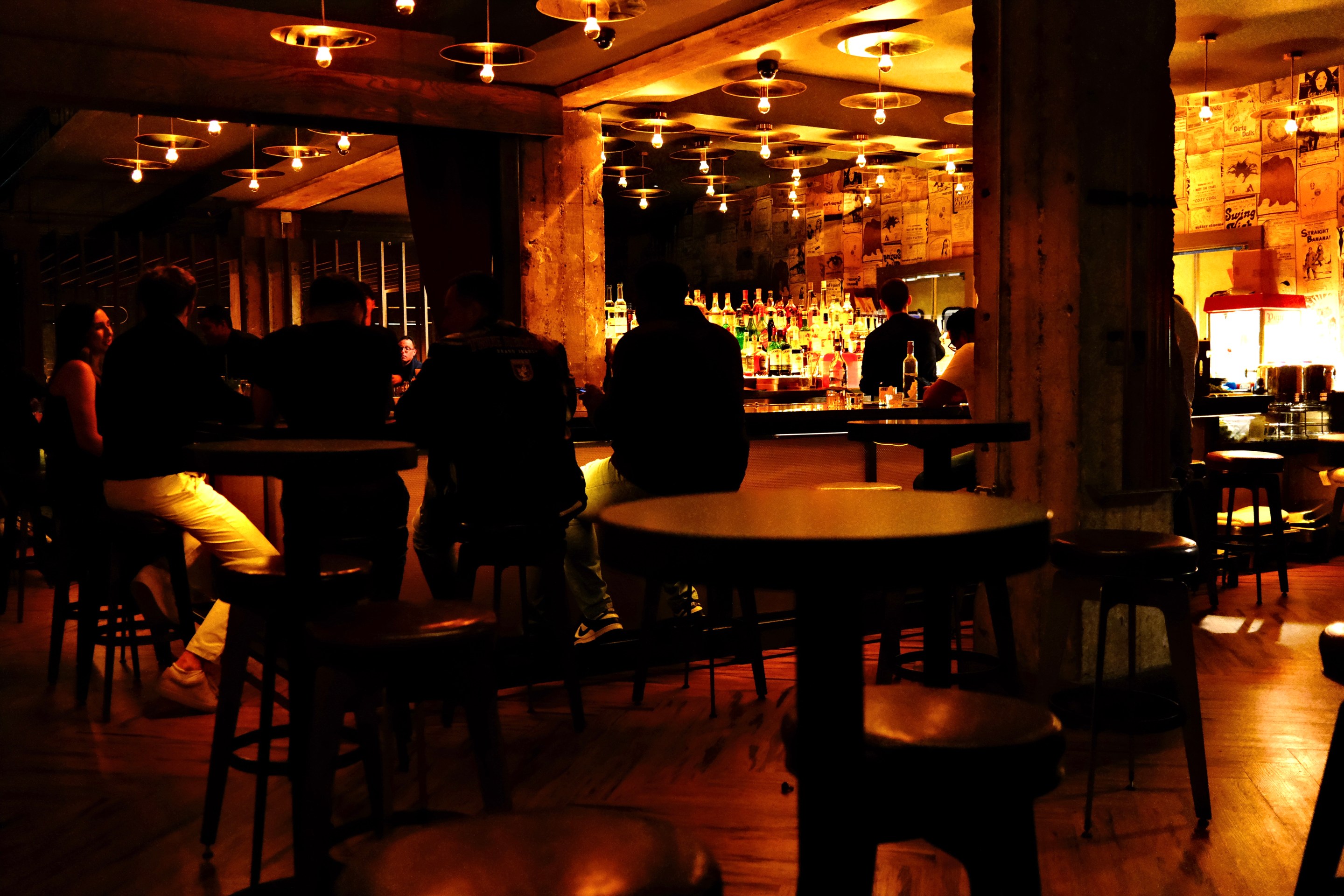
If you’ve spent any time in the city in the past, say, 15 years, you’ve certainly encountered it: Ceilings lined with wood beams, floors tiled in terra cotta or eggshell tones, gleaming blonde wood tables and chairs that offer the space just enough tidiness to offset exposed brick walls and lush collections of houseplants. The lighting is never harsh. The color palettes call to mind a thriving desert landscape at sunset: muted greens, pinks, rusty reds and auburns, many shades of brown. Everything feels balanced. Everything feels expensive. Usually, it is.
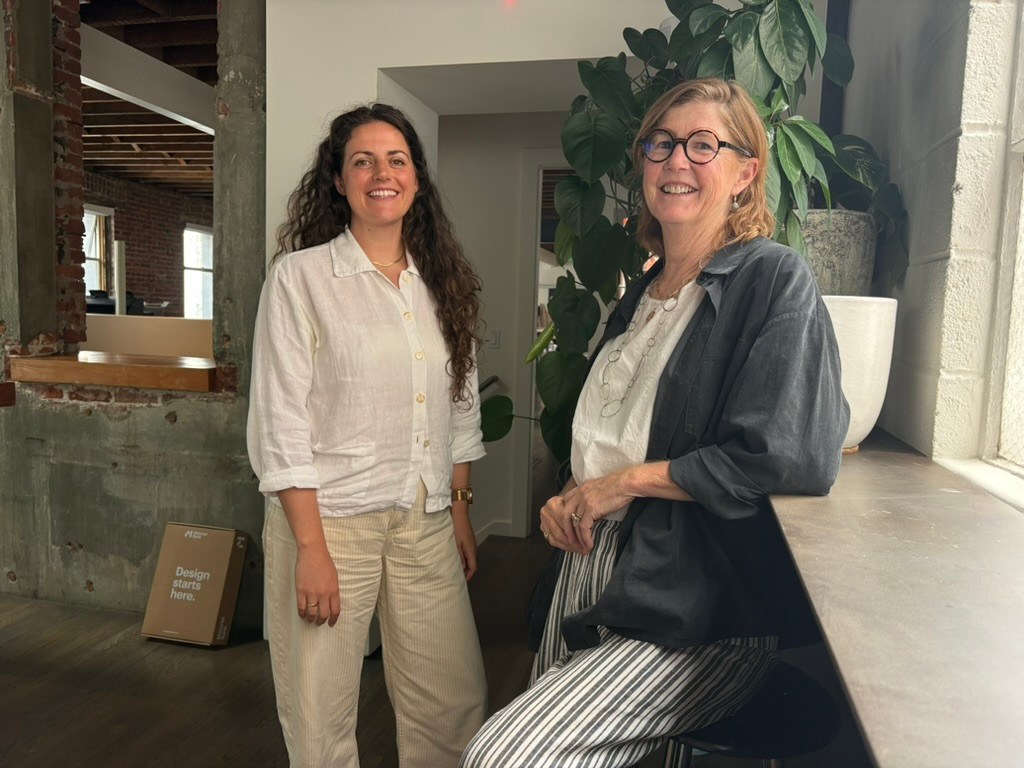
Sitting at a long wooden table inside the firm’s breezy, industrial chic office on Larkin Street, Bonnie Bridges, Studio BBA’s founder and principal designer, told Gazetteer that many of her clients find her firm the same way Yardsale did, by having unwittingly spent time in the Studio BBA ecosystem. Take one of their new clients, a recreational padel player who was so taken with the interiors of Park Padel in Oyster Point that they hired Studio BBA to design their own business, a new coffee shop that Bridges declined to name because the documents are still being finalized. “They were like, ‘The lighting is so good. The locker rooms are nice. Who did this space?’” she said.
Before that, the Park Padel owners themselves found the firm because one day they were discussing their venture while sitting inside one of the many Studio BBA-designed Mamahuhu locations.
Studio BBA’s aesthetic dominance is hard-won, the result of more than 30 years of building and networking in San Francisco, Bridges, 66, said. (“BBA” stands for Bonnie Bridges Architect.)
The daughter of a contractor and a computer engineer, Bridges grew up in Saratoga and would often take trips with her family up the peninsula to San Francisco, “our big city,” as she called it, including one memorable visit in 1969 to attend the grand unveiling of the Bank of America Center in Union Square.
“It was a big deal,” Bridges recalled of the opening. “Pink granite. Faceted facade. I don’t know why my parents thought it would be a fun thing to do with us, but I just remember thinking, ‘This is so cool.’”
Bridges studied architecture at University of Arizona, where she learned to incorporate the natural environment into the spaces she designed. In the arid Southwest, that meant “we were trained in extreme heat environments,” she said.
When she moved to San Francisco and opened Studio BBA in 1992, a sense of organic harmony became a core principle of her work. “We live in a really benign climate, so, for example, if you have a building with windows, they should open,” she said.
Aesthetically, Bridges describes the Studio BBA house style as “Japandi Norcali,” which braids Japanese minimalism, Scandinavian coziness, and the relaxed, rustic essence of Northern California. Abundant daylight, lots of plants, and good acoustics so people can chat comfortably are also among her top priorities.
“We’re going to these places for interconnection, so we want to support humans being humans,” said Sam Buckley, 36, the firm’s other principal designer and Bridges’ second-in-command. In architectural terms, Bridges tells me this is called “humanistic modernism.”
By Bridges’s account, Studio BBA's breakthrough project came more than 20 years ago, when she was hired by local gardener Flora Grubb to design Flora Grubb Gardens, a sprawling plant nursery near the Bayview. “In San Francisco, we don’t get a lot of opportunities to do ground-up buildings. There’s so much existing real estate,” Bridges said.
The Grubb project, which lasted from 2004 to 2006, let Bridges and her team work almost from scratch. “It was a risky move,” she recalled. The lot they built on wasn’t technically toxic, but it required “tremendous remediation.” In the end, Bridges and her then-business partner, architect Seth Boor, created what she describes as “an oasis.”
In 2018, Boor departed amicably to start his own firm, which has put its own stamp on San Francisco, designing upscale restaurants like Good Good Culture Club, Liholiho Yacht Club, and Wolfsbane.
Studio BBA takes on a variety of projects, but Bridges recognizes that most of them cater to “a higher-end, more luxury-driven” consumer. Naturally, Studio BBA’s own clients tend to be higher-end as well.
“It’s a really expensive city to build,” Bridges said of San Francisco, “and it’s getting more and more and more expensive.” Between tariffs, skyrocketing oil prices, and high costs of the craftspeople Bridges hires to do custom contractor work, Studio BBA’s fees can reach up to $800 or even $1,000 per square foot. “Anyone taking on a project is a brave soul,” Bridges said.
These days, the firm’s commercial client roster is filled with AI companies. In the past year, at least six AI projects have come across Bridges’s desk, a lot for a firm as small as Studio BBA, which at the moment is only three people. “That’s where the money is,” Bridges said. “The AI clients typically want it now, and they want it in a certain location,” she explained; right now, most want to be in the Mission, “and they’re willing to spend a lot of money” to get there. She declined to name any of the clients due to strict NDAs.
Bridges has noticed that many young AI founders she works with have extensive but sometimes hollow understandings of interior design, frequently name-dropping the same luxury furniture items — Noguchi lamps, Togo couches — to describe what they’re looking for.
“They’re iconic things that this whole generation has consumed,” Bridges said. “They’re really aware and really knowledgeable, but they don’t know what it means for them.” (At this, I ask her if she’s heard of “tasteslop,” the blandly slick aesthetic that ChatGPT might generate if you were to ask it to create a moodboard for “tasteful vibey startup office.” She threw back her head and laughed. “Yes! Oh my god, tasteslop is so real.”)
She also said many AI startups, however well-funded, try to avoid having their offices look “too nice.” “They say, ‘We still need funding, so we don’t want to look like we’ve made it.’” (I regret to inform her that this visual signaling of neverending toil is what the kids call “grindslop.”)
Despite whatever the algorithm says is the style de jour, Studio BBA has been able to influence the visual identity of San Francisco in large part because Bridges has trusted in her own taste and vision, as well as the cultishness that has developed around the spaces she creates. A select handful of people — mainly “very private CEOs” she declined to name — live most of their lives inside the Studio BBA universe. “We’ve designed their office, and then we’ve designed their house, and of course they live in San Francisco so they're going to eat at Mister Jiu’s,” she said.
For the true design-heads in the Bay, Buckley says Studio BBA has “a fan club, for sure.” Still, Bridges is modest about her firm’s success and admits that introspection isn’t a big part of her process. “I don’t really think about it,” she said when I asked if she considers her studio a leader in the local architecture scene.
Besides, it doesn’t really matter if her future clients don’t know her studio’s name. Like the Yardsale founders, they’ve probably lived inside her world for years and may be starting to wonder who created it.