

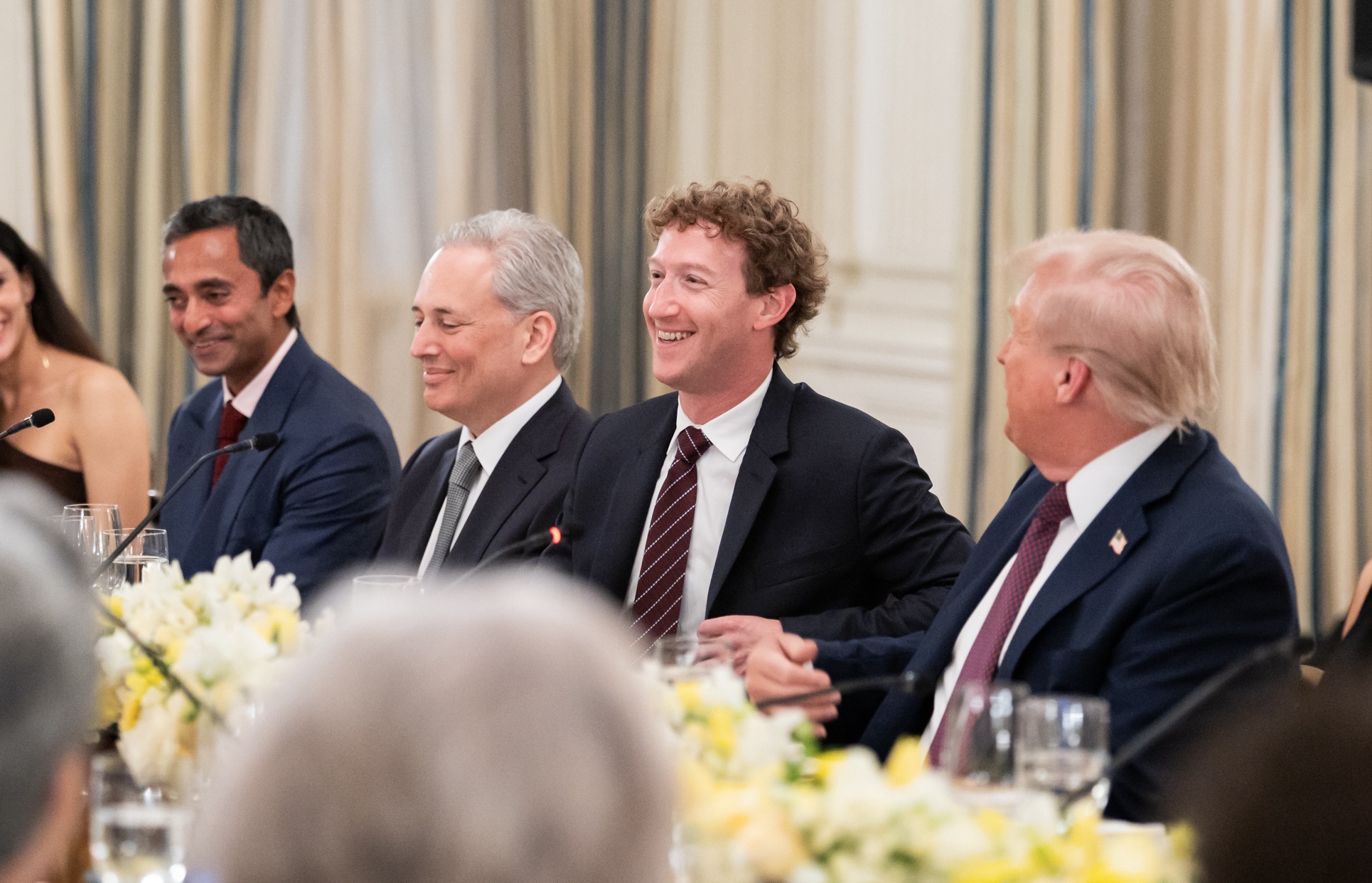
On Tuesday, the Wall Street Journal ran an op-ed written (or at the very least, signed) by Meta CEO Mark Zuckerberg that reads less like opinion and more like a manifesto, laying out his vision for how and why superintelligent AI should be embraced as the key to a prosperous future for all mankind.
Zuckerberg wants us to stop worrying and learn to love superintelligence. He also misses the point entirely. The manifesto is, effectively, vibe-coded rhetoric that spends a lot of words saying nothing.
“The defining question of our age isn’t whether superintelligence will exist, but who will have access to it,” Zuckerberg writes. “Will it be centralized and restricted to a few institutions, or will it be a tool that empowers everyone?”
Let’s put aside the fact that “superintelligent AI” means wildly different things to different people — not to mention to the different companies hoping to make trillions off it. On its face, Zuckerberg seems to think his manifesto is a call to action: The AI revolution can empower the working masses, but can’t if resources are controlled by “institutions,” not individuals.
“I propose a philosophy based on individual empowerment as the source of prosperity, invention as the primary purpose of superintelligence, and balance of power as the foundation of safety,” Zuckerberg continues.
If that call for individual empowerment and prosperity smells a little familiar, that’s because it’s the same reheated dish that libertarians have been serving up for decades. You know, how governmental or academic oversight stands in the way of personal liberty and achievement.
It’s no surprise that a man building a supervillain-esque compound atop Native Hawaiian burial grounds has issues with institutions telling him what he can and cannot do. But Zuckerberg’s manifesto is built on something just as dangerous: the false premise that systemic regulation of AI will lead to “an extreme concentration of power” into an institution that will destroy a universal benefit for all of us.
The resistance toward unchecked AI development and its trappings isn’t from some shadowy cabal of “institutional” overseers who want singular control; it’s from people who are skeptical of the kind of utopic embrace of superintelligent AI that Zuckerberg is peddling. He’s already nudged his way into halls of institutional power, namely the Trump administration. Meta is spending over $65 million to fight AI regulation on the state level. Zuckerberg is the “extreme concentration of power” that he is warning of, no matter his Ayn Randian platitudes about individual liberty.
For how mealy-mouthed his manifesto is, it recalls tired lines of rhetoric from prior tech barons. The internet revolution, for all its benefits to the individual, created concentrations of power and de-facto monopolies that hurt consumers while enriching shareholders in megacorps like, well, Meta. More recently, crypto and NFTs transformed from a vision of post-banking currency into the favored plaything of grifters and institutional hoarders, leaving a trail of hapless victims who lost their savings on shitcoins.
“If only a handful of institutions have superintelligence, they will inevitably exercise a controlling influence over economics, science, and politics,” Zuckerberg writes.
Does Zuckerberg realize that, in the present, a select handful of sweaty transhumanists and AI disciples with endless capital are forcing AI into every part of our lives with their controlling influence? It seems to not matter that recent research shows that AI adoption could lead to more unemployment and the loss of entire categories of jobs. Meanwhile, Zuckerberg can’t even articulate how AI will create a glut of more lucrative, fulfilling jobs that fill our pockets with cash.
Keep in mind that our existing technology is already “intelligent” enough to reduce the labor in our lives, yet is primarily used to quicken our productivity and benefit an economy obsessed with the myth of endless growth. I like Zuckerberg’s claim that superintelligent AI will inspire more entrepreneurship, and even today, generative AI makes it possible for, say, a small business owner to create financial plans and navigate permitting much more easily than they could. That’s a big positive.
But the tech economy is such that, whatever material benefit it brings the little guy, it generates far more for profiteers in the AI industry. We’ve seen what happens in America’s casino economy, in which we’re told anyone can win when, in reality, the house always does. The house in this metaphor is made of people like Zuckerberg and his Big Tech colleagues who’ve pivoted to conservative politics to secure more money and market share for themselves.
As he repeatedly sets up “institutions” as obstacles (while never once naming one), Zuckerberg seems unable to reckon with the fact that it’s not merely government or progressive groups that are AI’s biggest critics: It’s tech experts, from frontline AI engineers to industry heroes like Apple co-founder Steve Wozniak, calling for oversight of an industry where competition means all gas, no brakes in AI development. (Especially when Trump is all-in on AI to enrich himself.)
To make his point, Zuckerberg trots out a high school debate-worthy hypothetical about how it’s more fair for both parties in a trial to have superintelligent lawyers instead of only one person. Groundbreaking stuff.
Zuckerberg’s op-ed gets one thing right: The AI future is for everyone, at least in theory. That demands consensus, not unlimited power in the hands of individuals, and this isn’t even considering the possible harms of superintelligence running amok. AI tech is evolving so quickly, in fact, that a number of experts say any confident claims about the future need to be taken with a grain of salt.
Zuckerberg’s manifesto isn’t a humanistic look at that future and a call for democratized AI. It’s a hallucination based on hubris, and one that not even a superintelligent chatbot could understand.