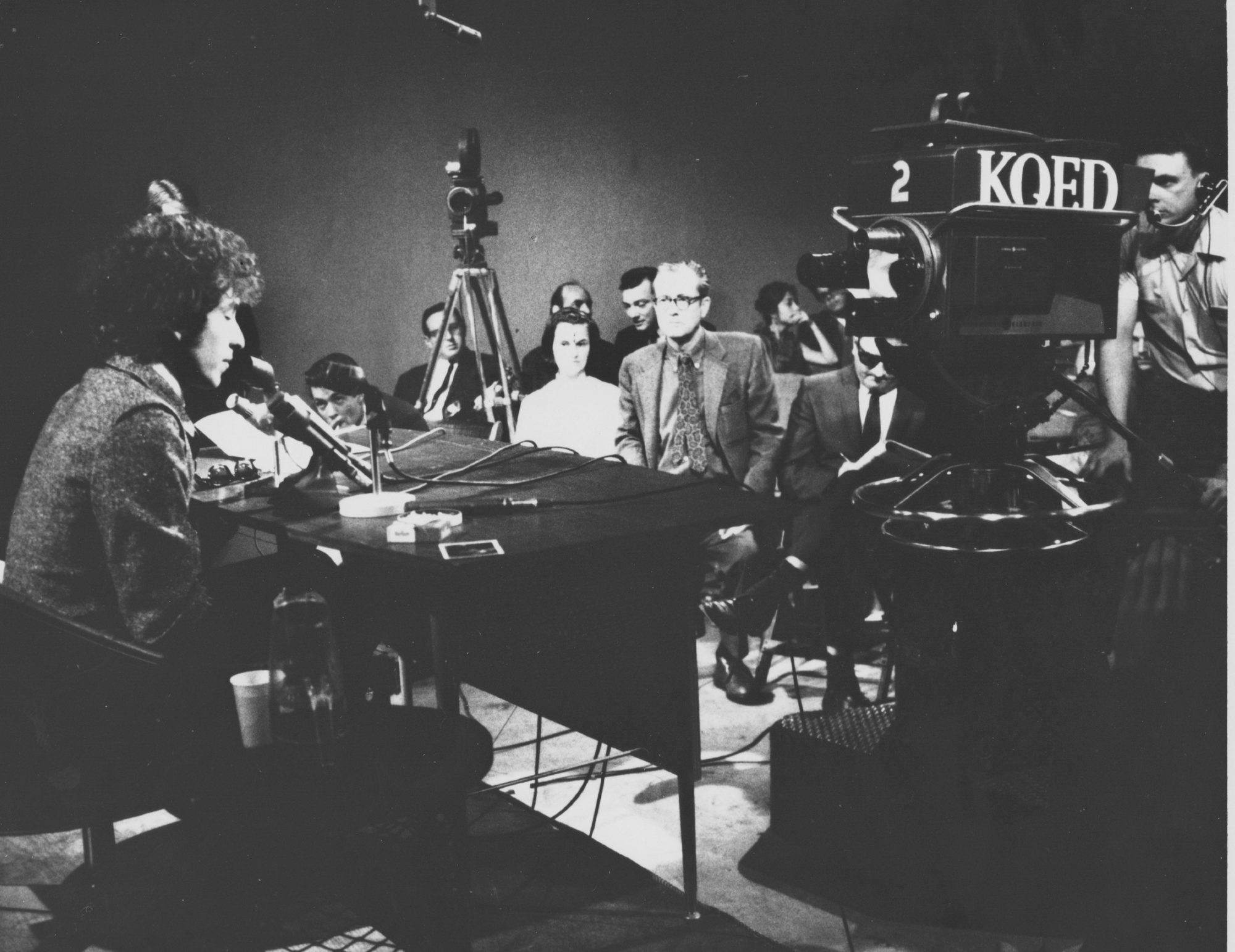
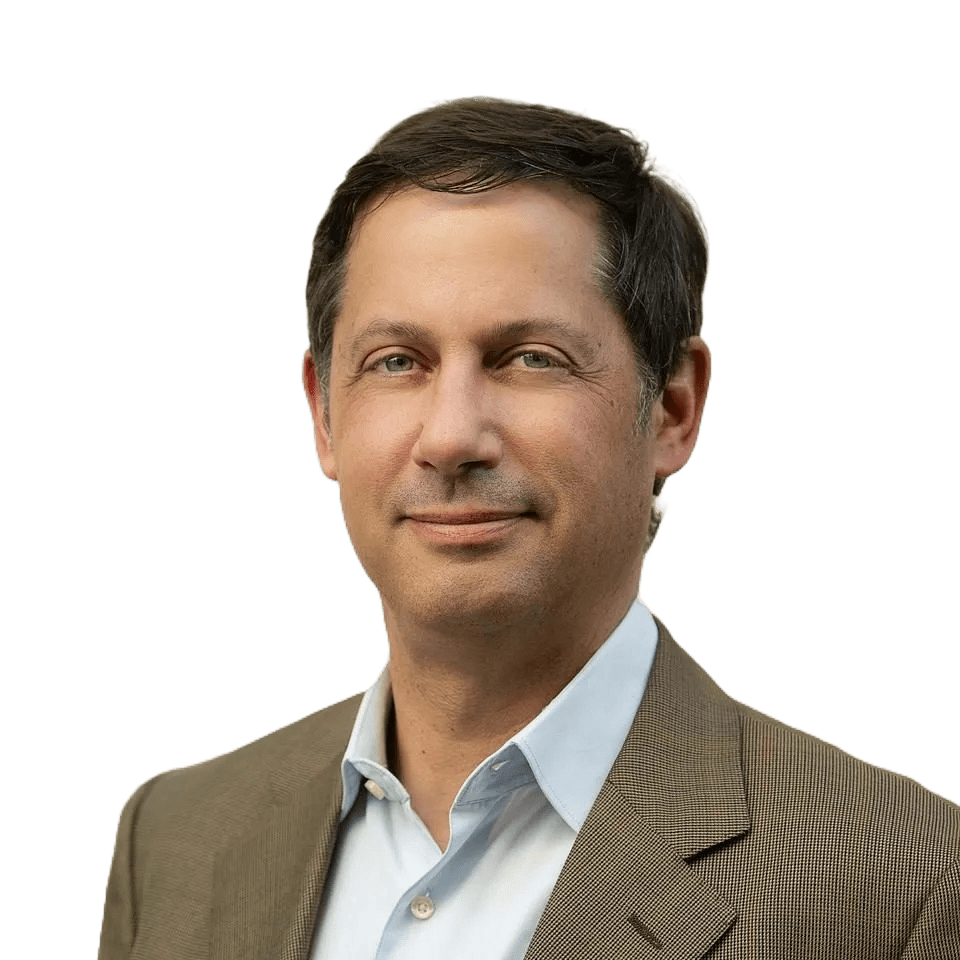
Two years before Bob Dylan went to KQED’s old 4th St. headquarters on Dec. 3, 1965, for his first and last full-length televised press conference, Robert Zagone was a 27-year-old unpaid intern at the San Francisco public television station.
Leveraging his ability to read music, Zagone was invited to work on films about Vince Guaraldi and Duke Ellington produced by Ralph Gleason, the syndicated jazz critic for the Chronicle and, later, co-founder of Rolling Stone. Gleason admired Zagone’s work, and ahead of Dylan’s five Bay Area performances in 1965, leaned on the director’s connection to KQED to recruit him, along with promoter Mary Ann Pollar, to make the press conference happen.
It starts with Gleason in full command, leading Dylan into the studio. Standing at a microphone, Gleason introduces Dylan as “a poet who also happens to be a singer,” who will answer questions about everything, ranging from “atomic science to riddles and rhymes.”
Dylan, 24 years-old at the time, was positioned at an elevated table, chain-smoking, shifting in his seat, and looking like he’d rather be anywhere else. Underneath his breath, Dylan surveys the room and can be heard muttering, “Oh my god.”
The questions — from Gleason to begin with — were improvised, and, especially at first, so awkward and fraught with tension that it felt staged. The studio was filled with ringers: an eclectic collection of artists including poet and City Lights founder Lawrence Fehrlingetti, poets Michael McClure, and Allen Ginsberg; members of The Committee, a counterculture comedy troupe featuring future sitcom star Howard Hesseman; and photographer Jim Marshall.
Another group in attendance was the journalists, including Lisa Hobbs from the San Francisco Examiner, Michael Greig from the San Francisco Chronicle, Rollin Post from KPIX, and a handful of reporters from high school newspapers.
“Mr. Dylan, you called yourself a completely disconnected person,” Hobbs asked. “Would you like to — ”
“I didn't call myself that,” Dylan interrupted. “They sort of drove those words into my mouth, I saw that in the paper.”
Claud Mann from KTVU asked: “Mr. Dylan, I know you dislike labels, and probably rightly so, but for those of us who are well over 30, could you label yourself, and perhaps tell us what your role is?”
“So, I sort of label myself as well under 30,” Dylan said to laughter. “My role is to, you know, to just stay here as long as I can.”
Dylan, now 85, is coming to Berkeley this weekend to play two shows on June 13 and 14 at the Greek Theatre. Looking back at the almost hour-long press conference, it feels like a critical, and local, piece of lore in the unsolvable puzzle that was and still is Bob Dylan.
The press conference was recreated in Todd Haynes’ I’m Not There (2017), a jittery Cate Blanchett standing in for Dylan. Martin Scorsese licensed clips of it for his documentary, No Direction Home (2005). And yet, for 61 years, no one had asked Zagone a single question about its making until recently.
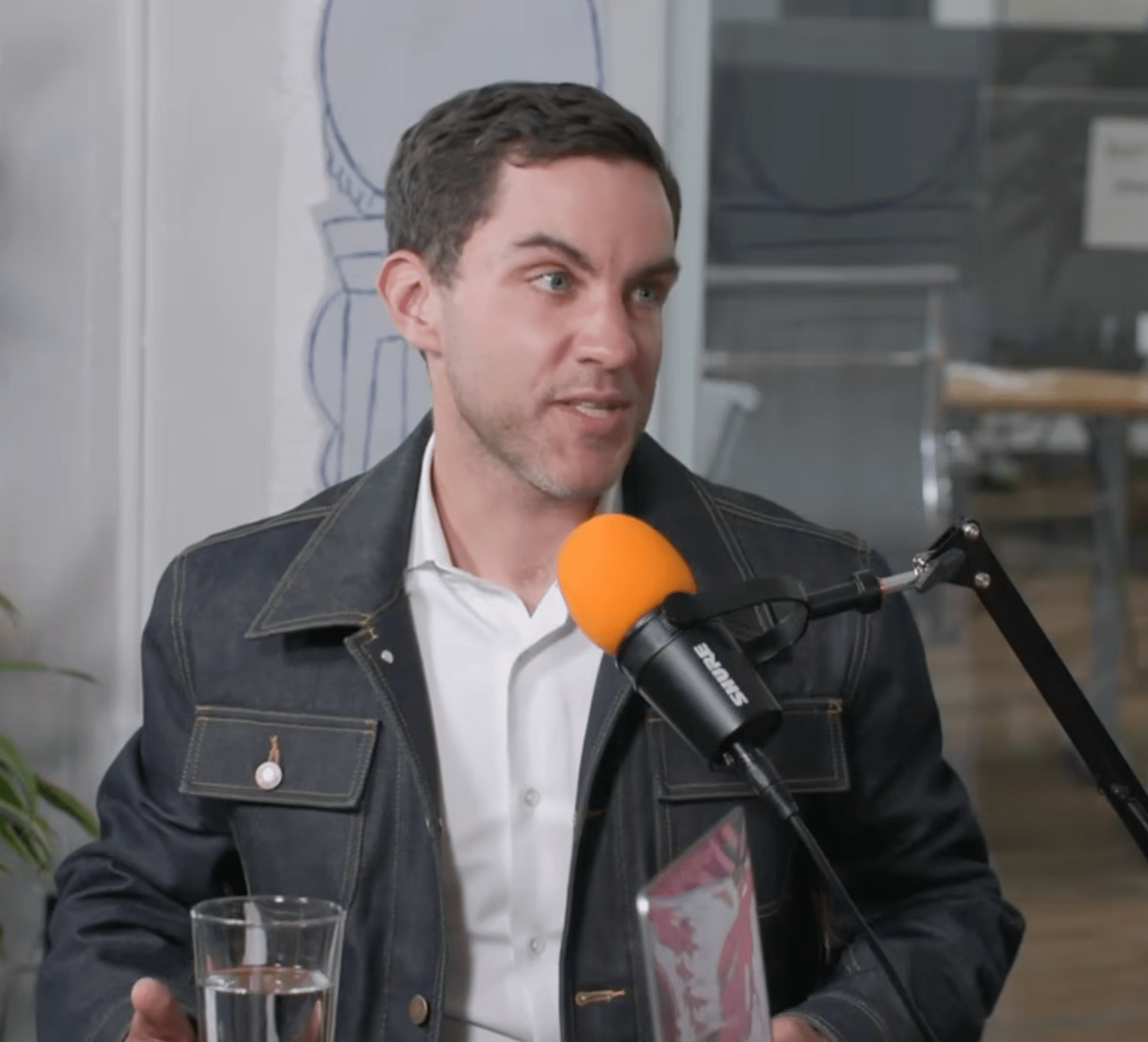
During a conversation at the Vanne Bistro near Zagone’s home in Berkeley, the director told me he has an eidetic, or photographic, memory. As I asked questions about the press conference, he looked down, and to the side in the distance, as if watching his own film, and unspooled highly detailed answers.
“An artist deals with their art, they’re not subjects for examination, and here he was being examined by people who didn't know or understand him, and it made him uncomfortable,” Zagone said. “I thought at the time he handled it very well. He handled some of the subversive reactions to him very well, either by being witty, or by being humorous, or in some cases he was defensive.”
When Dylan appeared at KQED, the city’s “cultural cauldron was just bubbling at that time. It hadn’t cooked yet,” Zagone told me. “There was something happening in San Francisco, but it hadn't happened yet.” With its flower power just taking root, “The press is talking one language, and Bob Dylan is talking the poet’s language, and they don’t understand each other,” Zagone explained.
As Dylan parried questions with what was then his defensive wit, Zagone saw something else through the camera lens: “This guy is one hundred percent photogenic,” he said.
Steven Jenkins, the director of the Bob Dylan Center in Tulsa, Oklahoma, told me that he views Dylan at the press conference as the singer in his “full 1965 iconoclast glory.”
“It’s not your standard-issue media presentation for the mid 1960s, this is something new,” Jenkins said. “This is Warhol-era image construction, in part, that I think he’s toying with. It’s Dylan being Dylan, which, you know, takes us lifetimes to figure out exactly what that means.” (In fact, earlier that year Dylan sat for one of Warhol’s Screen Tests looking sullen.)
For Zagone, capturing Dylan’s image wasn’t so simple. To begin with, KQED brass wasn’t sold on the idea of shooting the press conference. Though he managed to pry the studio space from the station, the network gave him just two cameras along with two highly inexperienced cameramen. One of them had never been behind a camera before. Zagone instructed him to train his lens on Dylan and not move it.
“I knew I had a treasure before me, and it was his face,” Zagone recalled.
After shooting it, Zagone shared a copy of the press conference with the Eastern Educational Television Network, the organization responsible for distributing shows to public television stations in New York, Boston, Pittsburgh, Chicago, and Los Angeles. He received a letter declining it, stating that the subject was “uncommunicative.”
“I laughed,” Zagone told me. “I said — you know, in today’s terms — ‘But dude, that’s the whole point! That’s what’s fascinating about it: It’s totally uncommunicative!’”
It’s only because Gleason also understood the value of the press conference that it exists at all. The music critic bought the tape of the press conference from KQED. (Zagone believes Gleason likely paid the price of the videotape alone.)
Had Gleason not purchased it, the station might’ve recorded over it, which was the fate of other interviews Zagone recorded, including one with Andy Warhol. Zagone quickly advanced in his career as a producer and director of both films and live television. His independent films include The Stand-In (1985) with Danny Glover, and Read You Like a Book (2006), starring Glover, Karen Black, and Tony Amendola.
Last year, Zagone, 88, hosted a Q&A at the Roxie after a screening of his 1966 film Drugs in the Tenderloin. He was surprised by the enthusiasm of young movie-goers, and suspects the theater was filled with aspiring guerilla auteurs who now use iPhones to make their own films. He’s amazed by the recent interest in his early work, including the Dylan press conference.
Six decades after the press conference, Zagone remains a Dylan fan. In fact, during our interview he offered me one of the best explanations for some people’s intense, ongoing fascination with the Nobel Prize-winning artist. “There’s something about what he’s saying that affects us, and we’re not sure how we’re being affected, but we like it,” he said.
At one point Zagone told me everyone he knew at the 1965 press conference was deceased. I pointed out to him that Dylan is still alive.
“Right,” he said. “The other Bob.”
Editor’s Note: This story has been updated to clarify that Robert Zagone was not the director on KQED’s films about Vince Guaraldi and Duke Ellington.