

There are an estimated 4,000 restaurants in San Francisco collectively serving up tens of thousands of dishes. For Gazetteer SF, food enthusiast and man-about-town Omar Mamoon is recommending the best ones. This is Order Up.
In Jean de La Fontaine’s La Cigale et la Fourmi, a French adaptation of one of Aesop’s fables, a hungry cicada (cigale) pleads with a neighboring ant (fourmi) for food once winter arrives. When the ant asks what the cicada was doing all summer, the cicada replies that it was simply singing. Instead of giving even a grain, the ant tells it to buzz off and dance.
The lesson is supposed to be that hard work pays off. “It’s meant to be this cautionary tale about being diligent and hardworking versus being lazy and fucking off and enjoying life,” explained chef Joseph Magidow of La Cigale, the new Occitan restaurant at 679 Chenery St. in Glen Park.
But there’s another read:
“To me, cicadas have this sort of symbolic cultural resonance around summertime,” says Magidow, who hails from Minnesota. “The sun goes down late and you stay up, barbecuing, and drinking rosé and playing pétanque.”
Even though his restaurant is named after the insouciant cicada, Madigow is doing things the hard way at La Cigale. There’s not a single gas burner in his kitchen: two times a night, he cooks a multi-course dinner for fifteen over a custom built wood-fire grill, with just one commis in the back shucking oysters and assembling salads. Instead of an electric motorized turnspit, he uses a manual version operated by weights and ropes that must be cranked every ten minutes.
Sitting at the wooden counter and seeing the chef helm the kitchen, singlehandedly taking orders and preparing a meal was a joy-giving, badass time. La Cigale was one of the best meals I’ve had in San Francisco this year.
No two meals at La Cigale will ever be the same. A chalkboard menu changes daily and is explained by Magidow at the start of the meal. You get your choice of first course, second course, and dessert, with a wave of soup, salad, and oysters in between along with optional (but highly recommended) supplements. The move is to come with someone you like to share food with, and order different things so you can try it all.
Highlights from my dinner the other week came from a 700-pound pig named Betty, care of Corvus Farm in Pescadero. “It was the largest pig they ever slaughtered and the largest pig I ever butchered,” Magidow told me.
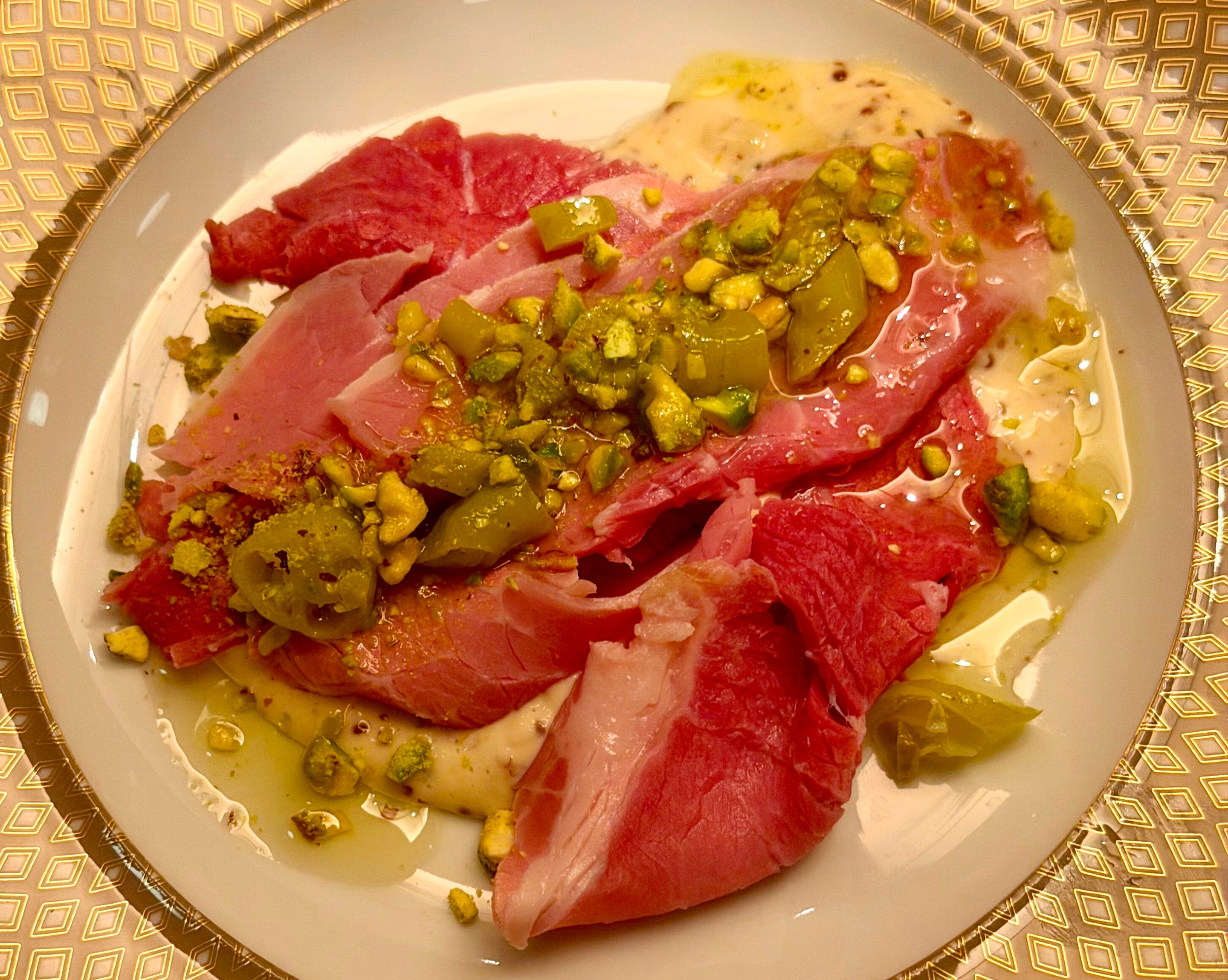
Specifically, a $12 add-on of ham made from the cured-then-poached hind leg sliced to order was a standout. The thin, salty meat sheets were plated over a thick puddle of creamy aioli spiked with whole grain mustard and anchovy for umami, then topped with chopped pickled piparra peppers for acid and pistachios for texture. It was seemingly simple, yet so much went into it.
Betty also made her way into a rustic sausage second course made with shoulder, seasoned with garlic, juniper, black pepper, and myrtle, a fruity floral herb; it all gets ground together with boiled skin, which helps retain moisture and gives it an extra luscious lip-coating layer, before being encased, poached, and finished on the wood-burning oven.
The sausage is served over a traditional bean stew spiked with a wild nettle puree. But the best part was the flambadou, a medieval cast iron cone that was heated until red hot. Madigow filled the funnel with pork fat that immediately melted into liquid and poured directly onto the sausage plate just two feet from my face.
It was dinner and a show.
Before drinks, the meal will cost $140 per person, including tip.
But if you want the chance to eat at La Cigale, you’re going to have to work for it: Madigow is only serving thirty people per night. For the first 6 p.m. seating, people line up as early as 3:30 p.m. to put their name on the list. Those seats will usually fill up by 4:45 p.m. The second seating is around 8:30 p.m., and you can add your name to the list remotely starting at 6 p.m.
The moral of this story? Be the ant and show up early, so you can be the cicada and enjoy life.