


An unprecedented leak by hacker activists last month revealed the identities of more than 41,000 people who work for federal Immigration and Customs Enforcement. That list includes 84 employees at two field offices located in downtown San Francisco.
The Icepick hack, as it is dubbed, was orchestrated by a group called the Department of Peace and dropped on Oct. 28. The information was reviewed and published by the hacktivist organization Distributed Denial of Secrets and the hacker maia arson crimew. (The latter gained attention in June for leaking the members of Peter Thiel’s secret society Dialog.) In a press release, DDoS stated that the data was extracted via the Department of Homeland Security’s Okta login platform. The group notes that the leak is not a comprehensive list of all DHS employees.
The data archive features the names, titles, location of employment, federal email addresses, and work phone numbers of ICE employees. The agency is part of the broader Department of Homeland Security, and ICE has two divisions: Homeland Security Investigations, which focuses on transnational crime, and Enforcement and Removal Operations, which is tasked with the detainment and deportation of immigrants.
The leak reveals the command chain and breadth of jobs within the agency, which operates locally primarily at 630 Sansome St. The vast majority of the 84 people listed (excluding six contractors and associates who are not full-time employees of DHS) are based in ICE’s San Francisco field office at that location. Others work out of an office at 100 Montgomery St., the former site of the San Francisco Immigration Court.
According to the leak, there are currently at least 24 deportation officers working in San Francisco, seven of them with supervisor-level positions. The leak highlights the highest positions in the city’s ICE operations, including data on the chief of staff and assistant director of the field office. Also included in the leak are identities of more than 240 employees with Customs and Border Protection, who are tasked with patrolling coastal and border-related territory, including San Francisco International Airport.
The Icepick hack shows that after last year’s major protests, citizen interventions, and clashes with DHS officers, the agency continues to operate in the city, albeit more quietly. One factor in the reduction in visible ICE activity may be due to the fact that most enforcement cases have been transferred to other offices. The immigration court in Concord, the largest on the West Coast, has become a major hub for San Francisco detainments. The court is currently badly backlogged and executing record-high numbers of removal orders, according to reporting by the San Francisco Standard.
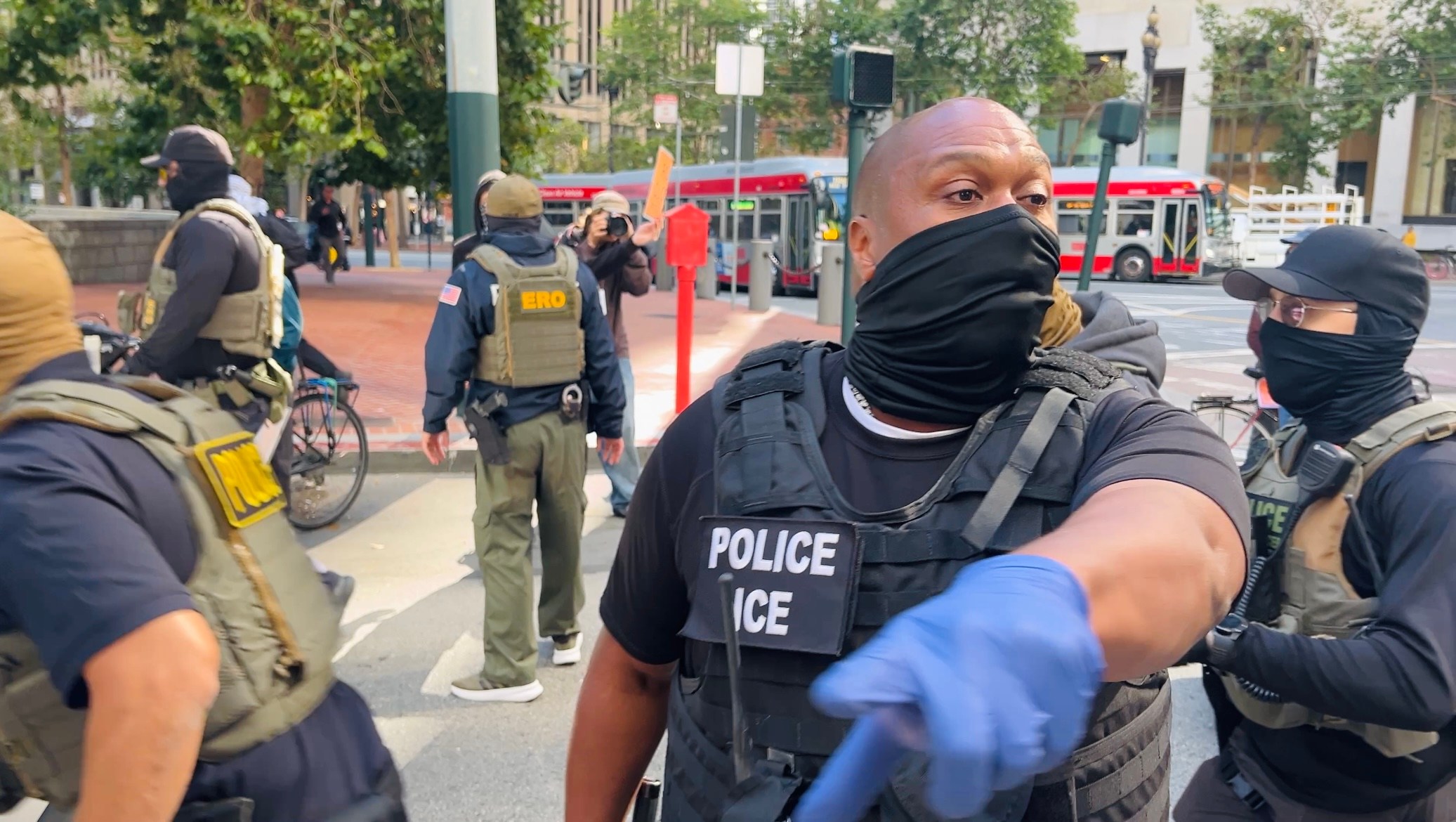
Meanwhile, ICE enforcement continues in San Francisco. In addition to abductions at SFO (including an SF-based Ukrainian artist, the British journalist Sami Hamdi, and a UC Berkeley student), ICE detained a man in SoMA last month who had previously been deported; the confrontation was captured on camera.
Other regions in the Bay Area have also seen surges in immigration enforcement activity.
In September, four people were vanished by ICE in the parking lot of a Home Depot in Concord. Marin saw four arrests last month despite passing a policy to limit ICE from operating on county property.
In October was the abduction of two men in the parking lot of a lumber and building supply store; one was not an initial subject of the enforcement, but was detained by chance, according to reporting by the Marin Independent Journal. Most recently, four people were arrested by ICE in Oakland on Saturday as part of a 45-day federal operation to scoop up undocumented immigrants en masse.
Gazetteer SF attempted to reach out to ICE for comment but did not hear back by publication time.