
Proposition “Overpaid CEO Tax” D, of San Francisco, received the final veto on June 5, 2026, surrounded by loved ones who fought for a different economic approach to building city revenue. D was seven months old.
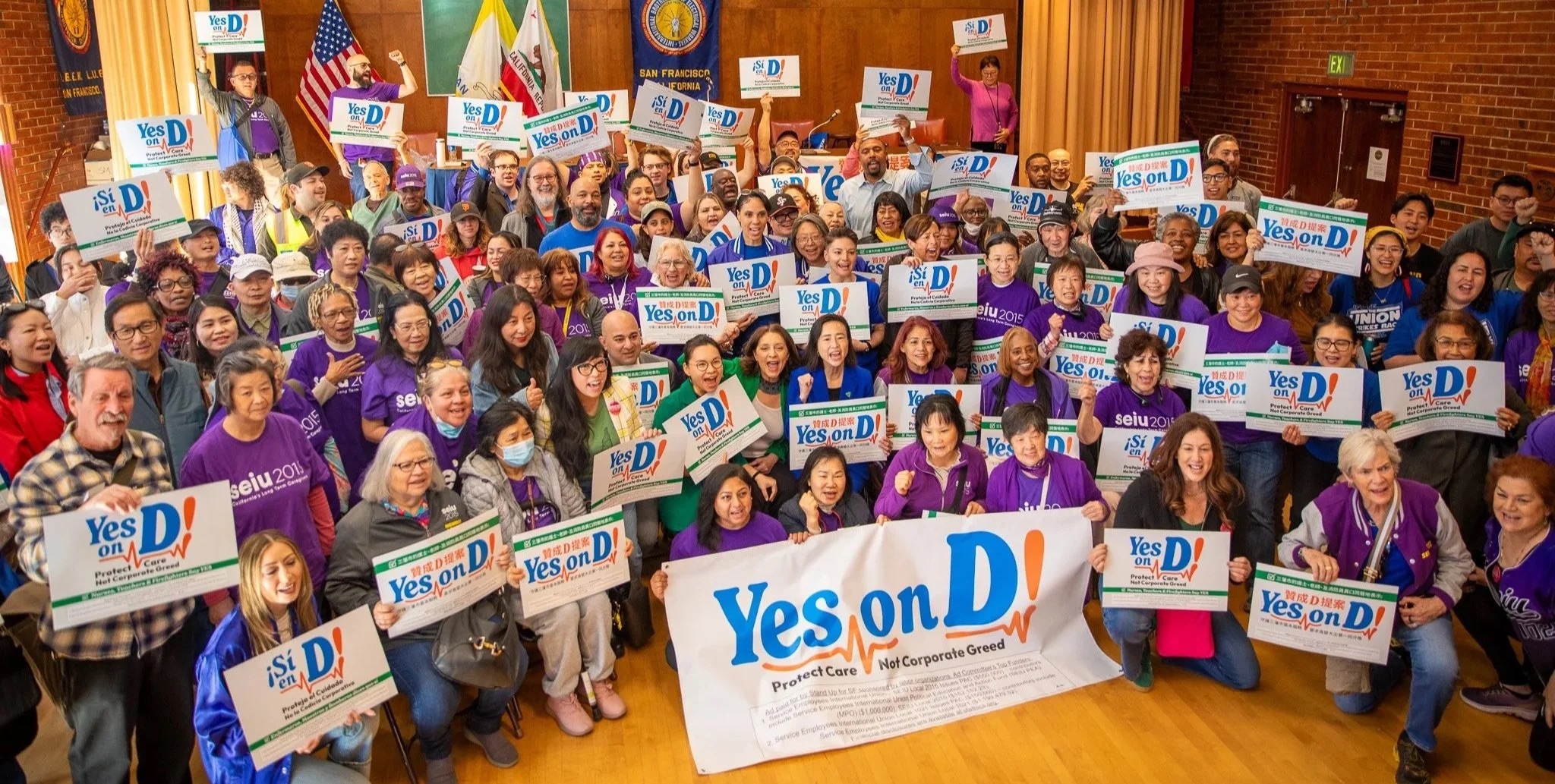
D was born on November 5, 2025, the child of local labor unions such as SEIU and a coalition of community advocacy groups. As a newborn, D quickly became a darling of progressives around the city and was raised by a large extended family of high-powered politicos, including Rep. Nancy Pelosi, Sen. Bernie Sanders, and Supervisor Connie Chan.
From the start, D was a principled and ambitious talent in the making. Whether you loved them or hated them, D got the masses talking and inspired a new way to think about financing San Francisco. All that attention inspired optimism from friends and family that D’s fast start could launch them into stardom for decades to come.
Motivated by Donald Trump’s slashes to Medicaid and instability in the city budget, D dedicated themself to compelling the biggest companies in San Francisco to pay more taxes.
Despite D’s idealism, they faced major obstacles from an early age.
D’s budding stardom became viewed as a threat by established power players in politics and industry, triggering a campaign to delegitimize D’s strategy to find funding for city services in San Francisco.
This radical approach, which D’s family argued could generate more than $200 million a year in tax revenue, made D a target. D’s hope was to future-proof the city budget from more Trump violence, but foes claimed D was too young and reckless, a bull in a china shop who could hurt San Francisco for years to come. Daniel Lurie, the first-term mayor of San Francisco, was D’s loudest opponent, stating that the policy would make giant corporations flee for Texas, ruining the city’s comeback.
Undeterred by the constant body blows from establishment figures like the San Francisco Democratic Party and centrist political funder GrowSF, D stayed the course, hoping their fresh-faced talent could buoy a career. However, the threats that D would raise consumer prices amid an inflation crisis and lead to job losses affected D’s health significantly over the last several months. Rebukes from commentators like the San Francisco Chronicle and San Francisco Examiner, meanwhile, led some former friends to lose sympathy for D’s struggles.
D’s friends and family took on the criticism with aplomb but were overwhelmed by Lurie’s fueling of the anti-D campaign. D, meanwhile, kept the faith that voters would support them in June’s primary election and their condition would improve.
On the evening of June 2, D’s condition worsened dramatically. At the same time, they still chose to fight rhetoric from hyper-wealthy neoliberals that suggested that D had a terminal illness and, moreover, deserved to die. Nearly $3.6 million was spent to plan and execute this campaign by D’s critics, but D’s inner circle put on a brave face through the end.
D was quietly laid to rest on June 5 in a private memorial. They are survived by a lingering desperation over the city budget and dreams of a city economy that doesn’t require residents to kneel at the foot of billion-dollar companies that, in the grand scheme of things, barely pay any taxes to begin with.