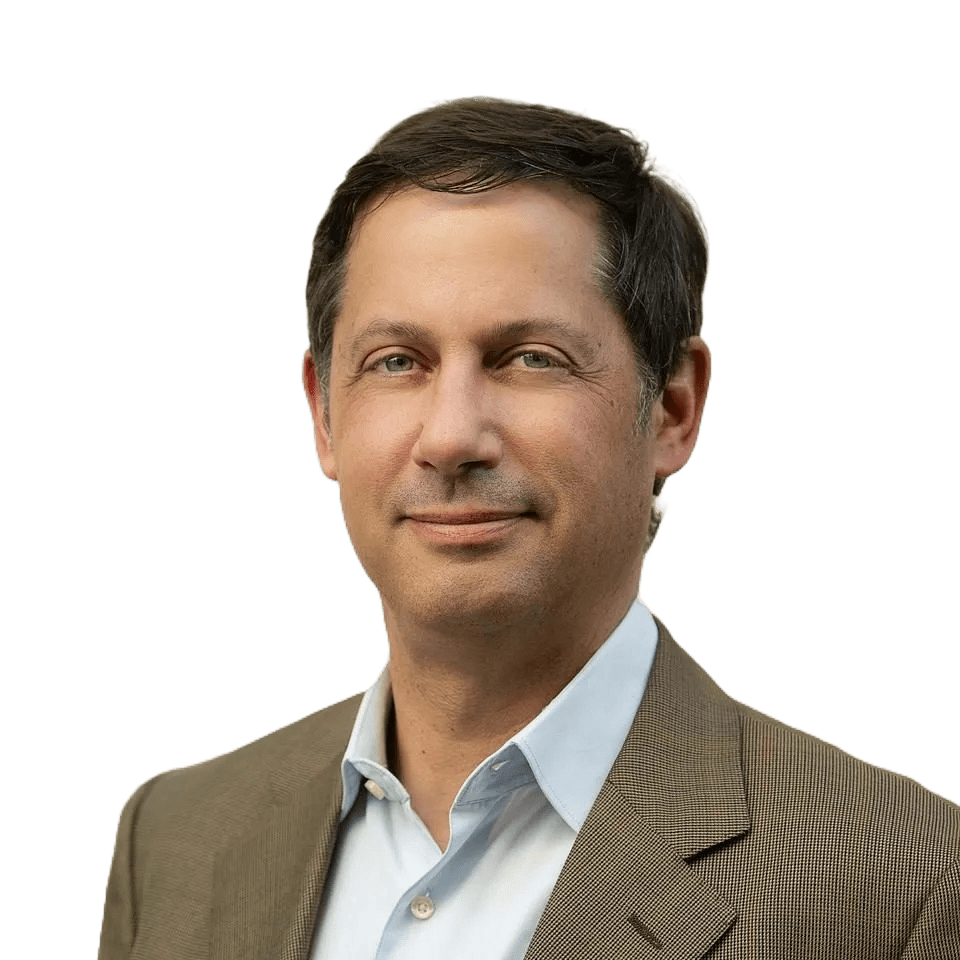


In City on the Edge: Technology, Politics, and the Fight for the Soul of San Francisco (out tomorrow from Atria Books), Jonathan Weber tells the story of San Francisco from the early 1990s to the present.
Weber, a longtime journalist covering the nascent tech scene for the Los Angeles Times in the 1990s, worked for The Industry Standard, and serve as the first editor-in-chief of The San Francisco Standard, had a front row seat as a niche-y, nerdy local industry grew into a global engine of wealth, power, and controversy.
But even giants start small — and sometimes larger than life figures like Steve Jobs had to call a journalist at his girlfriend’s place to beg for some press or Bill Gates insulted you to your face.
This interview has been edited for length and clarity.
You’ve been covering tech for longer than a lot of the current leaders of tech have been alive. What have you learned in that time?
The technology world is sort of driven by very ambitious creative and smart people with big ideas. It’s also driven by systemic forces. In the ‘90s, it was a pretty small industry, sort of intimate and personal. People had certain ideals and aspirations. When I first got here in 1990, I was working for the LA Times and people felt sorry for me. ‘Oh, you have to cover that boring tech stuff.’
“It’s not going to last like the savings and loan business!”
Yeah, exactly. I do remember the thing that changed. In 1992, John Malone, the cable mogul, made an announcement that we’re going to convert all our cable systems to digital and everyone’s going to have 500 channels of television. 500 channels of television was something that people could grab on to.
Back then, was it easier just to get somebody on the phone?
Yeah, it was much more intimate. You’d go to these events, you know, Bill Gates would be standing there in the hall, you’d literally be like, "Hey, Bill" and he’d say something shitty to you. He was an obnoxious guy.
Steve Jobs in those years, in the early 90s, was doing NEXT which was a failure. So he was kind of desperate and he had some NEXT thing going on. I don’t remember what it was, but he wanted my attention. I was in my girlfriend’s apartment in Palo Alto — I have no idea how he got the number — but her phone rings at 8 in the morning and she’s like, “It’s for you.”
I’ll never forget this. He says, “Hey, Jonathan, it’s Steve” I’m like, “Oh, hi, Steve.” But then of course next time I saw him, he looked right through me.
Give me a snapshot of what it’s like covering tech now.
There’s almost no opportunity where you could like, you know, we used to call it door-stepping, where you could door-step the CEO.
They’ve all got 17 doors to step.
They’ve got some huge compound, this sort of ultra-wealth. These sorts of billionaires who live in an entirely separate existence. They have their multiple giant houses, their private yachts. They don’t really interact with the world at all.
At what point did you start to think this is going to be a book?
I started thinking about this book after I left The [San Francisco] Standard. I wanted to write a book and I felt like somehow my long career, you know, watching the web become a thing from day one, there’s got to be a book in there somewhere.
How many people did you talk to?
About 200.
Was it challenging to get people to look back?
Yes, a little bit more than I thought. I was a little surprised. I thought that people would be interested in having their place in history. And that turned out to be less of a thing than I expected. I think in some cases it’s that people think that they’ve already written their history. They don’t need me to tell their history.
Did the book have any other titles before you landed on the one that you chose?
For a while I was kind of fixated on The Money and the Dream, but that would have been a bad title.
Sounds a little bit like The Sorrow and the Pity.
Yeah, I know. There were a few variations. It could have been Edge City. I don’t think there were any others that really got too close, but, man, I went through a lot of iterations. Part of the problem was that the publisher was pretty adamant that we needed ‘city.’
They wanted ‘city’ but they didn't want ‘San Francisco.’ I had a title that had San Francisco, but they felt that would be too provincial. I was like, “Look, San Francisco is a global brand!”
Editor’s Note: This story has been updated to clarify that Weber covered Silicon Valley in the 1990s for the Los Angeles Times and was not an editor for Wired.