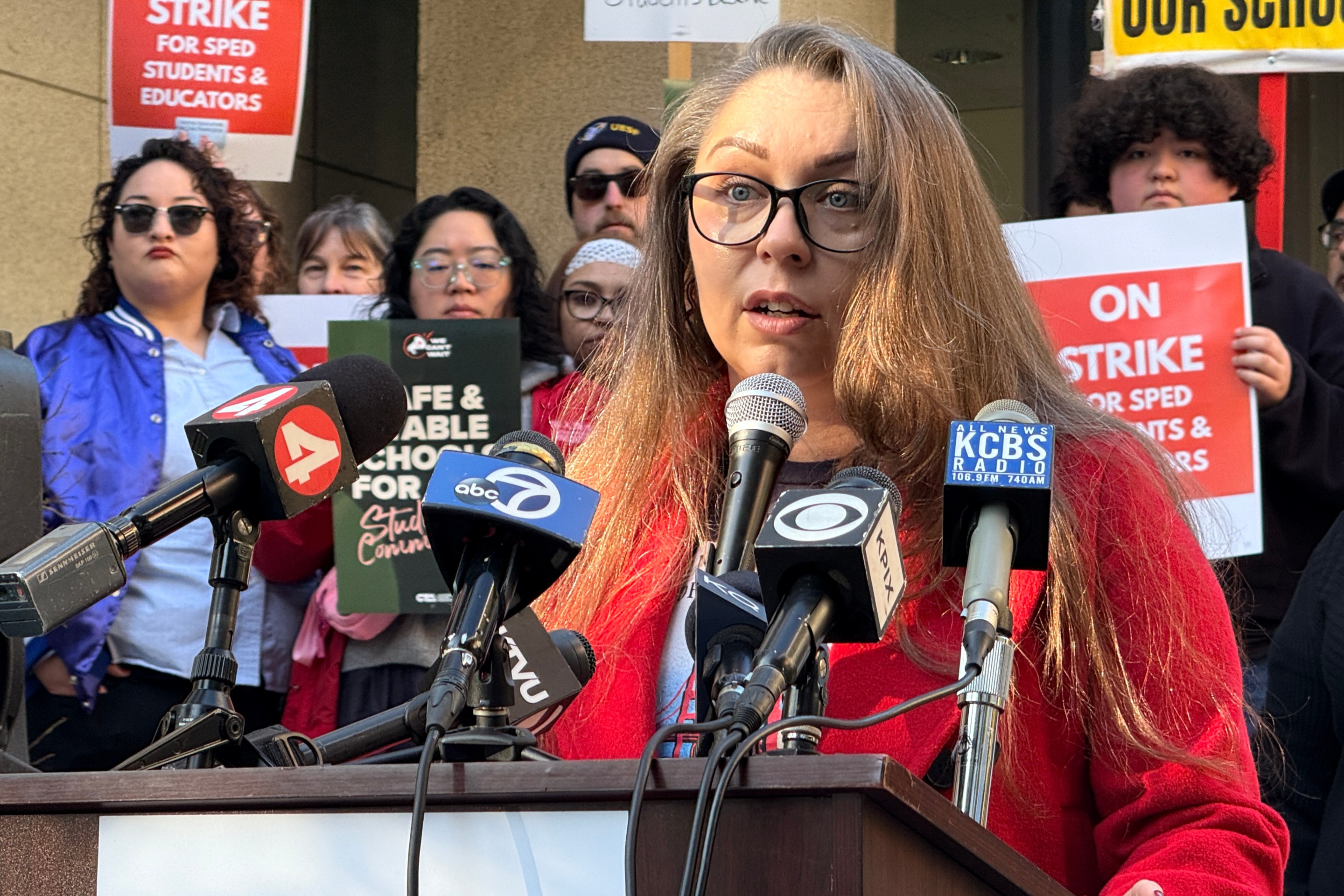

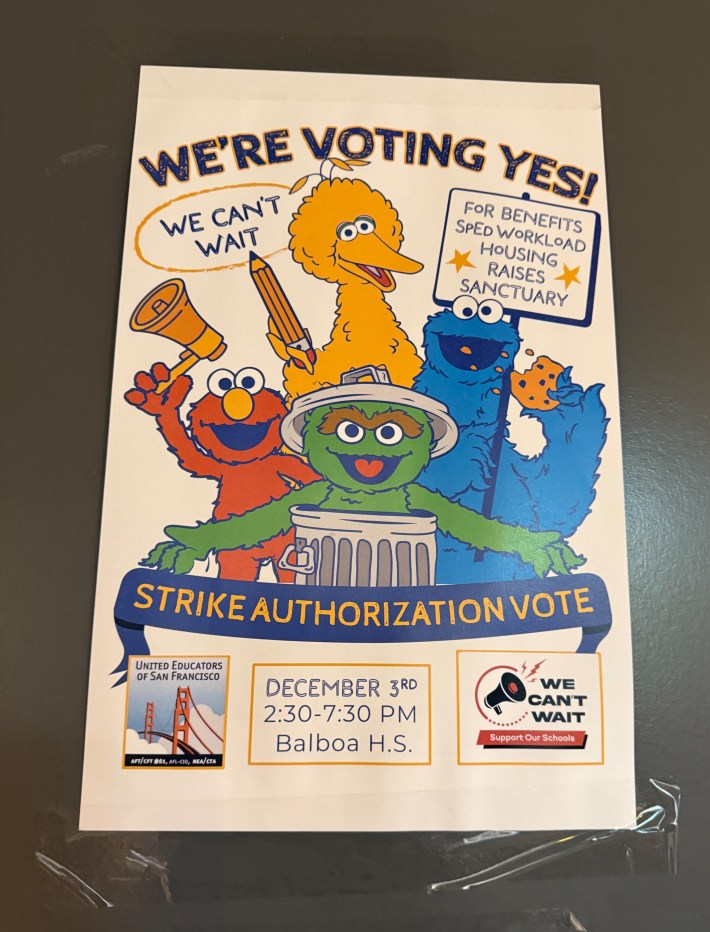
As the union representing San Francisco’s public school educators weighs a possible strike in coming weeks, special education teachers are hoping that a walkout, or the threat of one, will address their specific needs.
Since March, United Educators of San Francisco, the union that represents more than 6,000 teachers, security guards, nurses, and counselors, has been negotiating a new contract with San Francisco Unified School District. The two sides find themselves at an impasse over numerous issues, including UESF’s demand for fully covered family healthcare.
In a Zoom town hall Wednesday night, UESF leaders were coy about if and when a strike might be called. Though it could theoretically happen after any time after a Feb. 4 final report on recent negotiations, UESF President Cassondra Curiel repeatedly said the two sides may yet resolve their differences.
“The goal is to get an agreement,” Curiel said on Zoom.
Union and district negotiators remain far apart over contract language concerning the district’s commitments to its Stay Over program for homeless families, and sanctuary status and protections for immigrant families, according to Curiel. UESF is also demanding a wage increase.
SFUSD has rejected the union’s proposals over the two issues because of “managerial concerns about what they might be held liable for,” Curiel said.
The union has also prioritized improving working conditions for special education teachers, a longstanding problem that the district has heard about for years and not addressed. At the Town Hall, Curiel echoed the concerns from special education teachers who say they are overworked, burned out, and experiencing high levels of peer attrition.
“These are federally mandated and absolutely necessary educational services,” Curiel said.
Curiel suggested in the virtual meeting that if SFUSD could adjust workloads appropriately, the district could “attract quite a lot of special educators who are experiencing burnout in a lot of other districts.”
The reality for current teachers who spoke to Gazetteer SF seems far removed from that sentiment. For years, SFUSD’s special education teachers have told school board members and the union about the unyielding demands of their work. In interviews with Gazetteer SF, they described challenges that, they said, exceed the demands put on general education teachers.
Kids with special needs have individual education plans (IEP’s) that indicate how many minutes each day they should spend with their special needs teachers. Some of those teachers said there is often not enough time in a day to fulfill the required minutes. This leaves little time to plan students’ schedules, which their general education peers usually get, requiring special education teachers to catch up after regular working hours, or at home. They described a perpetual dearth of substitute teachers prepared to cover for paraeducators, the assistant teachers trained to help them. The shortages have been dangerous for both students and teachers, they said.
“Special ed teachers are the ones that go out on disability because they’re injured from their students,” said one special education teacher who spoke on condition of anonymity because they’re not permitted to discuss their work for the district. “You’re taking bites, and hits, and all sorts of physical abuse at times. We need to be more protected.” The teacher said she voted in favor of the strike.
In a Jan. 26 email describing a members only UESF meeting that was obtained by Gazetteer SF, a union representative told teachers to “be as prepared as possible for a future strike.” The email said the union will spend $500,000, if required, for portable toilets, water, and materials like bull horns. UESF has a commitment from other labor unions not to cross its picket lines, according to the email.
Among other demands, the email said, UESF is seeking a 14 percent pay raise and 35-hour work week for educators with a teaching credential; a nine percent raise for teachers without one; and an improved workload for special education teachers.
In interviews, special education teachers described support for the strike, along with misgivings about what it might require. They said the union has told them to remove any days off from their school calendars to be free to picket. Some worry they’re relying on a union that has not always been sympathetic to their concerns.
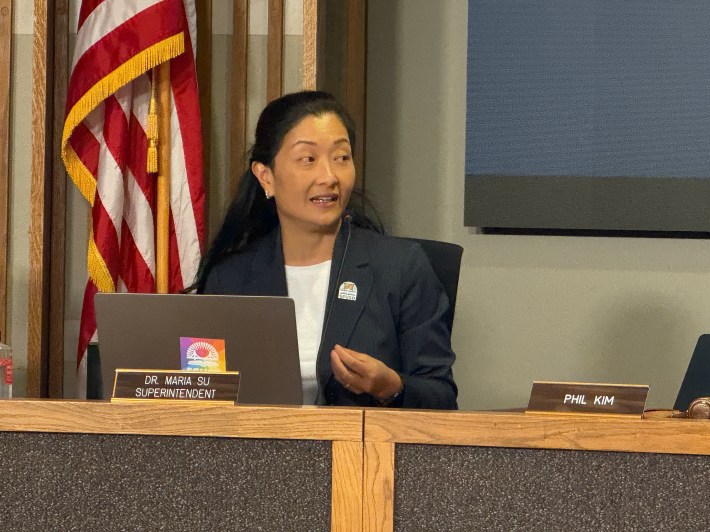
SFUSD Superintendent Maria Su faces an emboldened union as she has, so far, navigated the district out of a financial crisis. In a video sent to parents Friday, Su said the district had found a “fiscal pathway” to fully fund teachers’ family health benefits and a six percent raise over three years. Su said negotiators had offered “salary rate augmentations for hard-to-staff special education paraeducators,” and “solutions to address special education workload with a focused pilot program.”
At a Board of Education meeting Tuesday night, much of which was devoted to a discussion about how SFUSD can better inform and communicate with the public it serves, Gazetteer SF attempted to ask Su about the details of those offers. SFUSD head of communications Hong Mei Pang intervened, and directed Gazetteer SF to the district’s email newsline. In response to specific questions, we received a link to Su’s video and the text of the email sent last week.
One special education teacher who also spoke on condition of anonymity, described herself as a longtime trained educator who now makes about $100,000 annually. (The teacher said that special education teachers start at about $50,000 a year.) She said she voted to strike to “demand the respect of the profession” and to push for salaries that would allow teachers to live in San Francisco.
“It’s scary to think that we might have to go without pay to ask for what I consider is a pretty reasonable request,” she said. “I think about a lot of educators who live paycheck to paycheck.”
It’s not just her fellow teachers she worries about if the strike should happen. “I feel nervous for my students,” the teacher said. “They really rely on the consistency of school.”