
On a cool late October evening, Brewster Kahle was dancing in the streets.
Eyes closed, arms flailing about, Kahle stomped and twirled to a Traveling Wilburys cover band as hundreds of people danced, mingled, and snagged free ice cream bars outside the Parthenonic building that houses the Internet Archive, the digital library Kahle founded in 1996. A banner hung above the party, trumpeting an astonishing feat that was probably out of date by the time it was printed: “Web Pages Archived: 1,000,000,000,000.”
One trillion. It’s a number that boggles the mind, but then, so does the Internet Archive itself. With its lofty goal of collecting the world’s digital information, it could not be more essential or more out of sync with a moment in which history is being actively erased. Everything is in the Archive, from long-out-of-print books to TV specials ripped from old VHS tapes to more Grateful Dead concert recordings than any one person could listen to. And all of it is offered for free: another way in which Kahle’s site seems to be an artifact of a different time and a different internet.
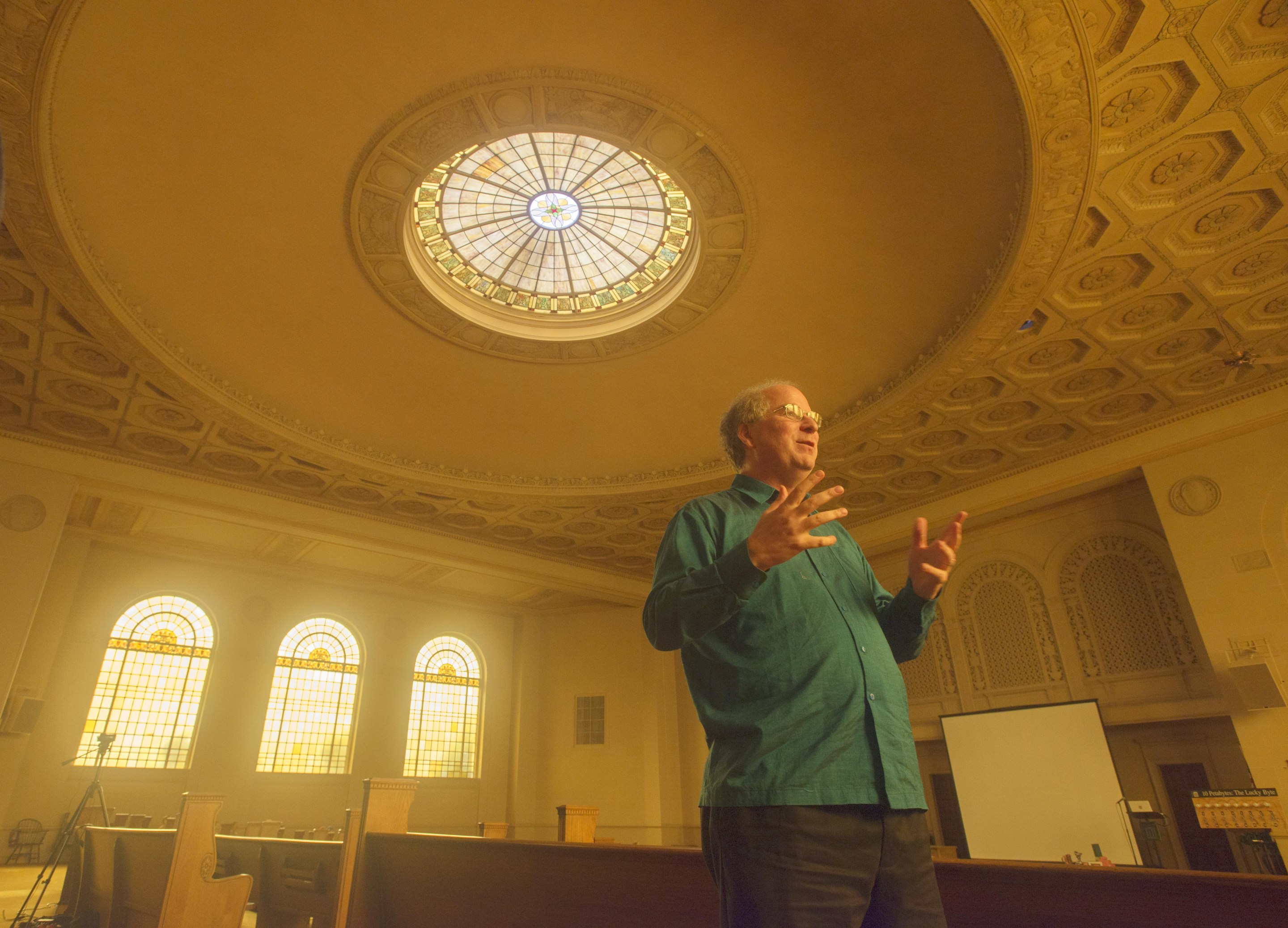
“We’ve given people the opportunity to make their voices heard, to write things down, to go and share them to the globe,” Kahle told the audience sitting in old church pews during the party. “There was this dream of an internet that was made for us, by us, to be able to make us better people.”
But not everyone has shared that dream.
In September, the Internet Archive finally put an end to a high-profile legal battle that threatened its very existence. In 2020, publishers Hachette, HarperCollins, John Wiley & Sons, and Penguin Random House sued the Internet Archive, alleging the site had violated copyright laws that protected the printed books the site had been digitally sharing during the pandemic.
On Aug. 11, 2023, a US district court ruled in favor of the publishers, finding that the Internet Archive’s digital library violated US copyright law. The case was finalized in 2024, resulting in the removal of over 500,000 books from the site.
Following the 2023 ruling, the same lawyers sued the Internet Archive once more, this time on behalf of Universal Music Group, over the site’s initiative to digitize over 400,000 fragile 78 rpm records from the early 20th century. Both parties in UMG Recordings, Inc. v. Internet Archive reached a settlement in San Francisco federal court in 2025.
There’s a long tradition of libraries being shut down and destroyed by the powerful. It used to be king and church; now it’s corporations and governments
“These aren’t mom-and-pop publishers. These are massive, multinational media conglomerates,” Kahle told Gazetteer SF over Zoom after the event. “These licensing things from publishers are dreadful. They’re in the process of structurally destroying the library system. It’s happening now.”
These lawsuits came at a time when public access to information feels increasingly threatened, whether by government agencies cutting public media funding, calls by (sometimes astroturfed) parents’ organizations for schools and libraries to censor books, or tech companies putting their thumbs on the scale to decide what news and information ought to be widely consumed. There’s never been a more important time for the Internet Archive and its digitized library of trillion-plus archived webpages to serve as a bulwark against censorship and a seed bank for the world’s information.
“There’s a long tradition of libraries being shut down and destroyed by the powerful. It used to be king and church; now it’s corporations and governments,” Kahle said. “The good news is, we’re still here.”
The Internet Archive celebrated another milestone last year: becoming a federal depository library, as designated by California Senator Alex Padilla in July. The designation establishes a partnership with the U.S. Government Publishing Office that allows the public free access to U.S. government information, including the site’s free compendium of published documents from over 50 government organizations around the world.
This includes tens of thousands of federal webpages either taken down or heavily modified after President Donald Trump took office for his second term. While webpages detailing critical information on gender identity, climate change, diversity, and historical information about slavery are no longer accessible on government websites, their old URLs can easily be located on the Internet Archive. While the administration would like us to forget, the Internet Archive remembers.
Meanwhile, as the Trump administration attempts to bulldoze history’s digital footprint, physical libraries are being hollowed out. In March 2025, the administration issued an executive order to eliminate the Institute of Museum and Library Services, the federal agency that funds state libraries and museums. Legal challenges have stalled the dismantling process, but litigation is ongoing. Libraries across the country wait with bated breath as the attack on public knowledge still looms large.
Yet even as Washington tightens its grip, librarians, archivists and technologists continue to partner with the Internet Archive through Archive-It, a program that helps more than 1,300 libraries, archives, and museums across 40 countries protect their digital memory.
Through Archive-It and its Community Webs program, the Internet Archive has partnered with the San Francisco Public Library since 2007, safeguarding the city’s history with scans of everything from activist Barbara M. Cameron’s 1980 Gay Freedom Day speech to mid-20th-century bilingual Chinese-English publication East/West to dozens of issues of the defunct SF newspaper, The Argonaut, from 1877.
“The partnership with Internet Archive has greatly enhanced access to archival collections and historical photographs that would not otherwise be available for the community,” SFPL City Librarian, Michael Lambert told me. “I’m glad that San Francisco can be a beacon and a model for everybody else in the industry.”
Against all odds — hundreds of millions of dollars in lawsuits, a 2024 data breach, and a federal government that has declared war on history — the Internet Archive’s preservation of history is its greatest act of resistance. A singular webpage from Democracy’s Library, for example, can arm generations to come with critical information about the Jan. 6 capitol attack or the end of each presidential term since 2008. The ability to access memory is a natural defense against the forces determined to forget.
“Archives in general have a foundational role in creating a past for society, so they have a vital political role today,” says Lisa Gitelman, NYU Media, Culture and Communications professor and author of Always Already New: Media, History, and the Data of Culture. “One of the great things about Archive.org is that it has this ethos of public access which is egalitarian down to its bones. So for them to create the Wayback Machine was just phenomenal, revolutionary.” '
Back at the Archive’s one-trillion party, attendees were greeted by hundreds of three-foot terracotta statues around the headquarter’s Great Room, each representing an employee who worked at the Internet Archive for at least three years. A soft buzz hummed from a wall of servers in the back. Blue dots rapidly flickered on its surface, signaling that someone was either downloading or uploading media onto the site.
One by one, guest speakers including State Sen. Scott Wiener, NPR CEO and President Katherine Maher, and representatives from Wikipedia, BBC News and Stanford took to the stage or spoke via video. Each congratulated the Internet Archive on its milestone or shared their experiences using the digital library.
At one point, the audience erupted in laughter as Annie Rauwerda, owner of the popular Depths of Wikipedia Instagram account, gave an energetic presentation on all her strange findings on the internet over the years. “I think bread should be photographed using radial motion blur more often!” she exclaimed into the microphone while stock images of bread loaves with the effect flew across the screen.
Others spoke to the site’s importance during a moment when public media is being slashed and burned. “These tools are so critical. They help us journalists fact-check claims, see how companies and governments may have selectively edited online materials, or even deleted statements or social media posts that they’d rather the public didn’t see,” said BBC News reporter Lily Jamali. “For a job that involves so much research, these tools are absolutely fundamental.”
Eventually, the party spilled out onto Clement Street again for more dancing. “I mean, why did we come to San Francisco originally if not to dance in the streets?” Kahle asked me later. “We have so many people showing really what human nature is good for. I think that’s great.”
A version of this story first ran in print in Gazetteer San Francisco Issue 2.