

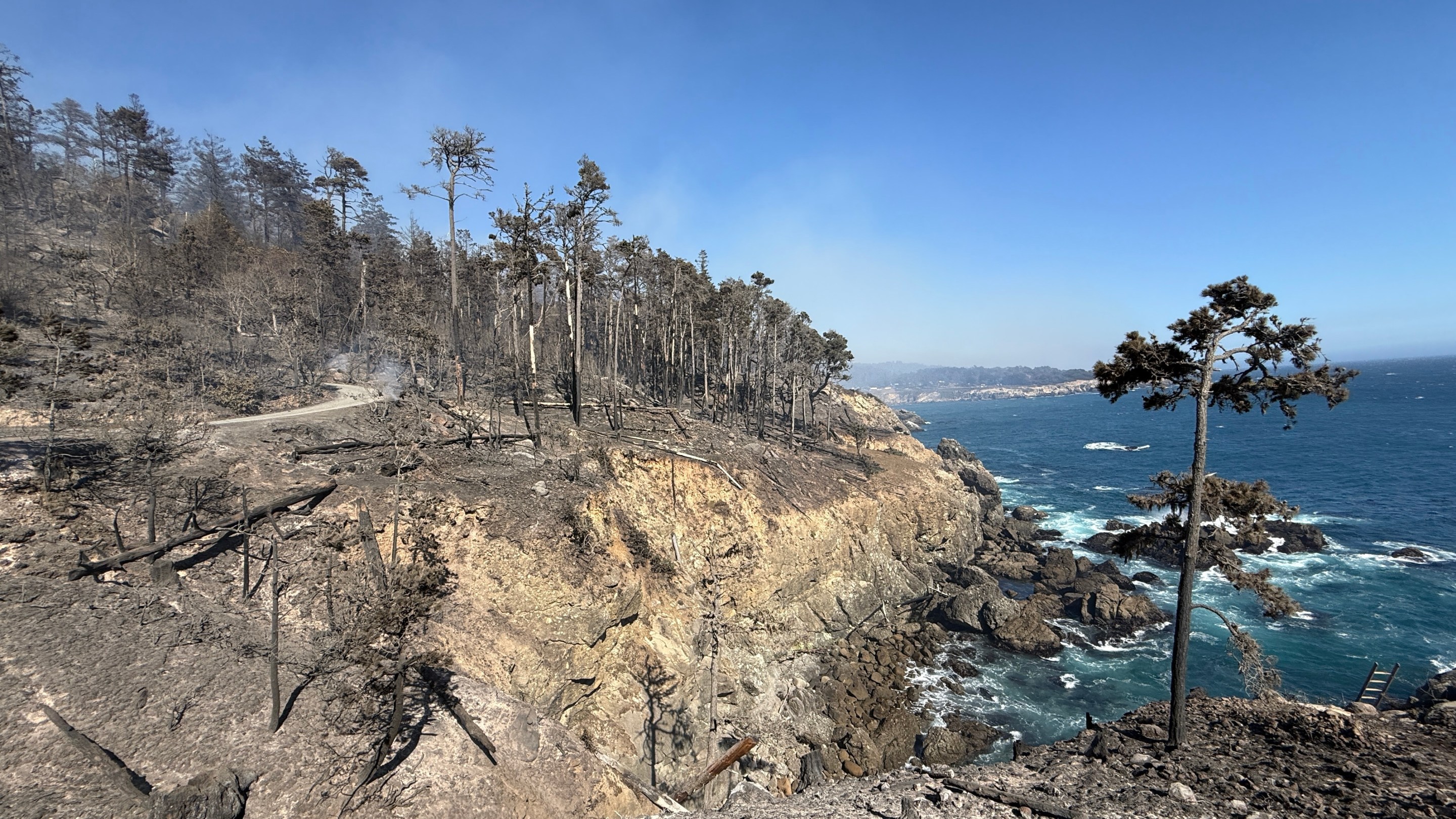
By Friday, the Woodside Fire in Sonoma County had spread to nearly 150 acres. The blaze, which jumped from coastal headland to coastal headland, shut down Highway 1 and forced several evacuations around Salt Point State Park — including the Driftwood Lodge in the small coastal town of Jenner, which had dozens of guests on their way for a wedding, and another 80-plus guests expected on Saturday for a wedding Sunday.
“There just wasn’t a choice. It was totally out of our hands,” said Orrin Franko, who owns the Driftwood Lodge with his wife, Katie.
Sonoma and Napa counties, two wine country neighbors known for their large estates, vineyard views, and beautiful (dry) weather, are in high demand for weddings. Sonoma County hosted roughly 3,000 weddings in 2025 alone, bringing in $133 million, according to wedding market research firm Wedding Report.
At Driftwood, weddings can cost more than $14,000. With five guest suites, trails, redwood trees, hot tubs, pygmy goats, ocean views, and 30 acres of nature, it’s become a popular wedding destination, especially in September and October.
Despite wedding and fire seasons going hand-in-hand, couples don’t seem deterred when they book. Local planners in Sonoma and Napa counties have gotten good at securing last-minute venues during fire season.
“Sometimes it happens so quick. People are either already here or they have family traveling, flights are booked. Often, when fires happen, it’s more so a matter of trying to find a different venue versus canceling or rescheduling,” said Britt Rogers-Hansen, the founder and CEO of wine country wedding planning company Run Away With Me.
Rogers-Hansen has been planning weddings in the Napa and Sonoma area for about a decade, including the aggressive fire seasons of 2017 — during which she and her lead coordinator both lost their homes — 2018, and 2019. Her team has set up weddings with masks on during smoky days and relocated entire celebrations to different towns in Northern California within 36 hours of the wedding.
For couples looking to wed during fire season, Rogers-Hansen says wedding insurance is a must, but not a foolproof fallback. In the event of a natural disaster, wedding insurance can pay non-refundable deposits and extra rescheduling costs. Plans are often triggered by mandatory evacuations, travel blockages, or catastrophic events. Cancellations over things like smoke are less likely to be covered.
“The one on Friday was kind of a no-brainer. I mean, we knew that they already had an evacuation order on Thursday. We knew by Friday morning the order hadn't been lifted. There was obviously smoke in the air and although we had the sense that they were getting control of it, there just wasn’t a choice,” said Franko, the Driftwood owner.
However, the couple to be wed on Sunday did have a choice. Ultimately, they opted to cancel their wedding at Driftwood, too, though the evacuation orders would be lifted by Saturday morning. In that case, wedding insurance will likely not cover the cancellation, leaving the venue in a sticky position.
“The evacuation order had been lifted, the air was clear by Saturday afternoon and certainly by Sunday, so technically they could have done it,” he said. “However, as you can imagine, a couple with 80 to 100 people coming into town can’t hope that the air will be clear and that the venue will be available and they had to make a decision basically Friday morning.”
The Frankos are not yet sure whether they’ll lose money over the cancellation. Weddings are booked around nine months in advance, and losing that income can be difficult for smaller boutique venues.
“These vendors are holding those days; their income is based on the dates they book for the year. So just canceling and refunding is not really a known practice in the wedding industry,” said Rogers-Hansen.
“Certainly our contract has a major clause stating that we’re not responsible for acts of God,” said Franko. They also require guests to have wedding insurance that at least partially covers natural disasters. Driftwood is currently awaiting communication from insurance regarding Friday’s event, and are navigating Sunday’s cancellation.
“There is the legal answer — what we have the right to do, which is to not give a refund — but then, of course, there’s the business answer, what you should do,” said Franko. “You don’t want to get a bad reputation or bad reviews. But at the same time, it’s a hard decision. Where is that responsibility?”
Despite two cancelled weddings, an evacuation, and nearly losing their business, the Frankos were mostly grateful for the firefighters and were very happy to report that all their animals, including their pygmy goats, were okay.
“It just brings you back to reality and reminds you that these can happen anywhere anytime. Sometimes we feel a little protected on the coast. It tends to be a little bit more damp. We got a little more fog. We're in a dense redwood forest. But it can happen anywhere, anytime,” said Franko.
Katie Franko chimed in: “We are so grateful for the responders. They had like, 30 engines… Our place is still there because of them.”