

This guest commentary reflects the views of its author. Gazetteer SF welcomes outside contributors to write about the issues and topics they are passionate about. To submit your own commentary for consideration, email info@gazetteer.co.
Walking. Talking. Finding the right words. These are things most of us take for granted. We do them every day without giving them a second thought. But what happens when something you've done your entire life suddenly becomes something you can no longer do?
There’s no playbook for that. Nobody tells you how to prepare for losing something you never imagined you could lose.
Three years ago, I had a stroke. I wasn’t sick, and I hadn’t experienced any warning signs. An artery in my neck developed a tear, and a blood clot blocked the flow of blood to the left side of my brain. Doctors performed an emergency procedure to remove the clot and restore blood flow.
The stroke affected the right side of my body and left me with aphasia, a condition that affects my ability to communicate.
During the first few months after my stroke, I made physical progress. Within two or three months, I was walking without assistance, and the drooping of my face had become much less noticeable.
My speech was another story entirely.
“Apple.”
It’s such a simple word. Something I’ve said thousands of times in my life. But after my stroke, I couldn’t say it.
During speech therapy, they showed me cards with pictures of everyday things. A door. A refrigerator. An apple. They asked me what they were, and sometimes I couldn't answer.
I knew exactly what I was looking at. I knew what an apple was and I knew what it tasted like. I could picture myself eating one. But I could not find the word for it.
Sometimes I would be shown the written word, and I still couldn’t say it aloud.
That's one of the hardest things about living with aphasia: I know what I'm thinking, but sometimes I can't find the words.
As I continued with speech therapy, I started experimenting with technology, including ChatGPT. Sometimes I could spell a word even when I couldn't say it. I could type the word in and have it read back to me. Then I could practice saying it myself.
“Apple. Apple. Apple.”
I kept practicing until I could say it again.
That might not sound like much to someone who has never had trouble speaking, but believe me, when you’ve lost the ability to say even the simplest words, it’s a big deal.
That experience changed the way I think about artificial intelligence.
Most people think of AI tools as writing assistants. Not me: I think of them as language assistants.
Sometimes I know exactly what I want to say, but the words aren’t always there when I need them. I might have three or four words when I need three or four sentences. ChatGPT helps me fill in the gaps. People have a lot of criticism of AI, but the technology has been essential to my recovery.
ChatGPT isn’t the only technology I use. I’ve also found other tools that help me with speaking and writing. One helps me turn my speech into text when I’m having trouble writing it myself. Another reads words aloud so I can hear how they’re pronounced and practice saying them. Both give me different ways to work through the challenges of aphasia.
Now that I’m back at work, I use these tools to write emails, prepare for conversations, organize my thoughts, and communicate. (I even used them to compose this essay.) Things that used to come naturally to me became difficult after my stroke. I still have the same responsibilities and decisions to make. It’s the way I communicate that's changed.
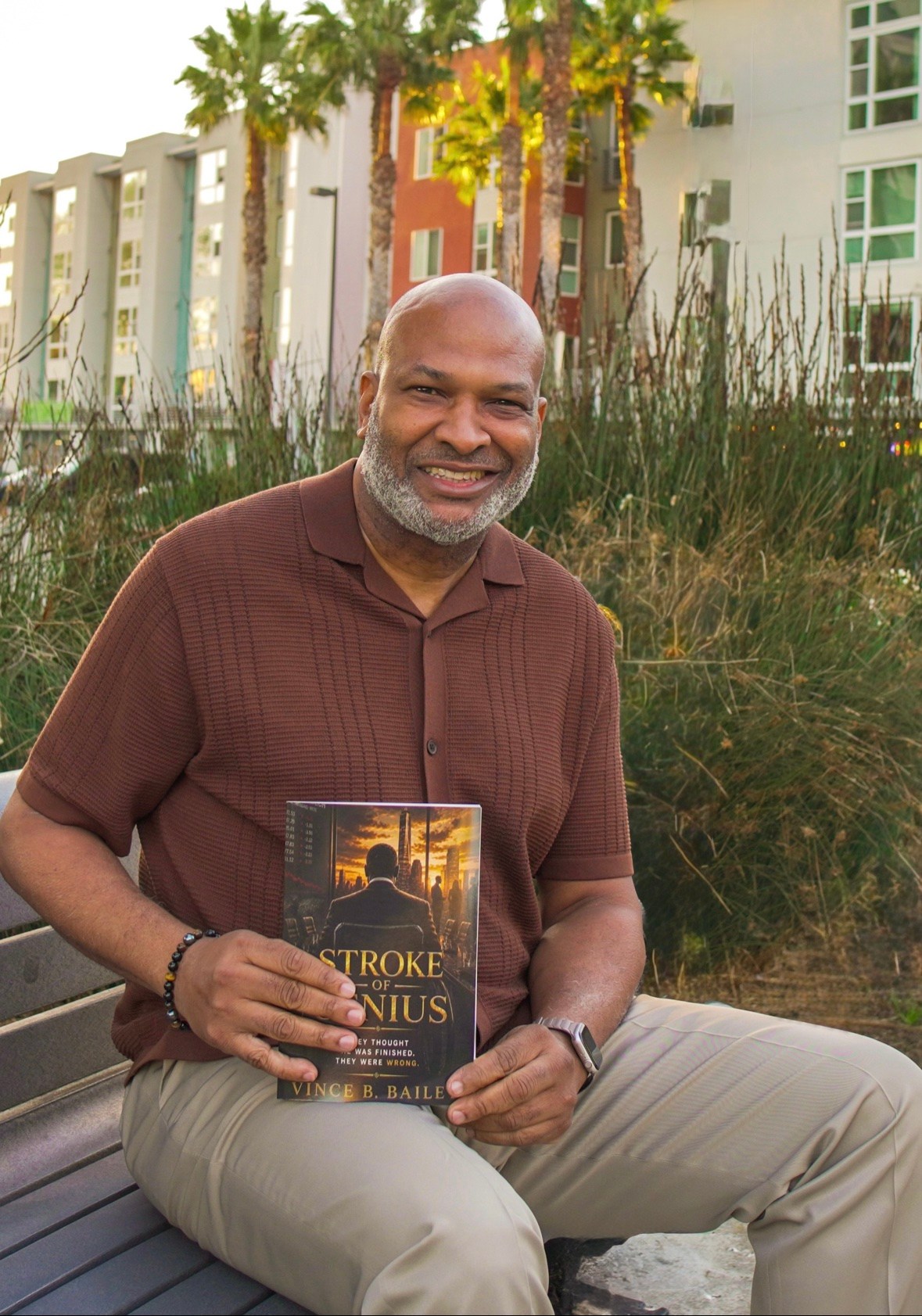
During my recovery, I wrote my novel, Stroke of Genius, to show what living with aphasia can be like. My main character, Frank Bennett, is a successful businessman who has a stroke and suddenly struggles to communicate while trying to save the company he built.
In one scene, Frank’s speech therapist employs some of the same tools I use. She shows him how he can type a few words into AI, even if they're not complete sentences, and get help putting thoughts into words. She also shows him how speech-to-text and text-to-speech work.
Frank is trying to find out what's happening to his company and who’s behind it. He has people he needs to talk to, but with aphasia, even a simple conversation can be difficult.
That’s something I understand personally. Aphasia may affect my ability to communicate, but it hasn't taken away my ability to think.
That’s something I wish more people understood.
Living with aphasia is still a daily challenge for me. I have days when I can’t find the simplest words, and sometimes communicating with my family, colleagues, or strangers is frustrating. But having these tools has made a difference in how I manage.
I understand why people have concerns about artificial intelligence. I worked in the publishing industry for decades and know that many friends and former colleagues are seeing their livelihoods damaged by AI. I share many of the AI critics’ concerns, including about AI’s impact on the environment and how it might be misused. Those are legitimate worries, and we shouldn’t ignore them.
But AI can also do a lot of good, and that needs to be part of the conversation around the technology. For people living with aphasia, this technology can give them a voice when they’re struggling to find the words. I’m proof of that.
Editor’s Note: Gazetteer SF has a strict policy against the use of generative AI but made an exception to bring you this commentary written with the help of ChatGPT.