
On a gloomy afternoon in June 2014, I walked out of the AMC Metreon and was momentarily surprised to find San Francisco still standing.
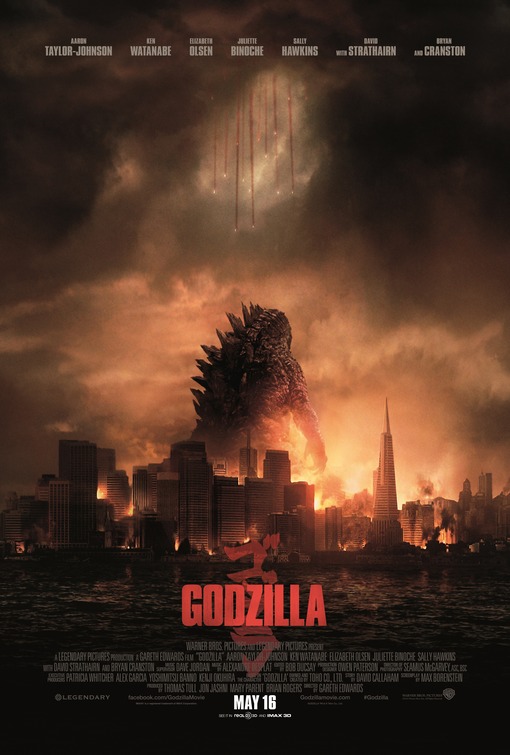
I’d spent the last two hours watching the latest franchise reboot of Godzilla. Its third act begins with the titular monster swimming beneath the Golden Gate Bridge before wading ashore to do battle with two MUTOs — giant mated insectoids that have turned Chinatown into their nursery.
The walk to Powell BART felt uncanny. Looking down Market Street, the buildings I’d just watched collapse and explode were still intact. I recalled how the military had turned BART stations into emergency shelters and based their operations in Oakland because San Francisco was a no-go zone. Even though the movie was over and I felt the wind on my face, I was still physically inside the film’s terrifying landscape.
I once asked a friend who was a marketing executive for a Hollywood studio: Why does San Francisco get destroyed so often?
His answer: Your city is instantly recognizable, and familiarity gives cinematic destruction its power.
When a filmmaker shows global audiences the Golden Gate Bridge, Alcatraz, or cable cars, they understand exactly where they are and what’s at stake. The Fast & Furious films rely on giant location cards when the action shifts, but with San Francisco, just a glimpse of the Transamerica Pyramid is sufficient.
I developed a kind of parasocial relationship with San Francisco long before I considered moving here in 1996. Consuming movies, TV shows, advertising, and books commodified the city and preloaded it with cultural and historical context. The Haight has hippies; Pacific Heights, the rich; the Mission, the working class. Audiences arrive knowing San Francisco in the broadest of strokes.
That’s why blowing it up is so damn effective.
Godzilla director Gareth Edwards did, however, have to drop a location card over his first shot of the city because moviegoers might not have recognized it from Potrero Hill at night. The first locals we meet are Ford (Aaron Taylor-Johnson) and Elle Brody (Elizabeth Olsen): He’s a Navy lieutenant on leave, she’s a nurse at San Francisco General. As they enjoy family time with their young son in a modest living room, we know immediately that this will be different from other monster movies; all of the destruction will be at human scale.
Wide-angle aerial shots are a mainstay of effects-driven movies, but cinematographer Seamus McGarvey keeps the story literally grounded, letting us experience much of the action from street level. As the mayhem escalates, characters gasp at massive kaiju through the windows of conference rooms and school buses. As with all San Francisco-set movies, the filmmakers take liberties with geography, but every so often, they cut high enough to remind us where the monsters are in the city before dropping back down among terrified office workers, families, and commuters reacting to the beasts’ rampage.
After a MUTO releases an electromagnetic pulse that blacks out the city, Elle helplessly watches a pilot silently parachute between two office towers. A reverse angle catches a dead jet tumbling into a skyscraper over her shoulder, and it jolts us back into reality: Where would you run if monsters attacked San Francisco while you sat at work? How would you contact loved ones if a prehistoric insect took down cell towers and nobody you knew had a landline?
She takes shelter at a BART station, turning just in time to see a MUTO engage Godzilla as the entrance door closes. Watching in IMAX, it brought me back to an afternoon in 2007 when a massive Airbus A380 doing a planned flyby plunged an entire block of Bryant Street into shadow. Parked at a stop light, I felt like a field mouse waiting for the raptor’s claws.
Godzilla is the first film in Legendary Entertainment’s MonsterVerse; we meet him again in 2019’s Godzilla: King of the Monsters, which transforms Boston into a giant octagon for MMA (mixed monster arts). The franchise returns to San Francisco in the Apple TV series Monarch: Legacy of Monsters (2024), where we find a sad, broken place populated with the survivors of G-Day.
Like New Yorkers who witnessed 9/11, their lives are divided into before and after: They know monsters are real, that they can return, and that no one can guarantee their safety. Their misery is compounded by trauma tourists and conspiracy theorists until the government turns downtown into an exclusion zone where looters are shot on sight. Within a year, overgrown vegetation and wild animals reclaim much of the city’s northeast. Talk about your doom loops.
The MonsterVerse explores the question disaster movies usually avoid: What happens afterward? We’re used to seeing survivors surrounded by smoking rubble embrace before the credits roll, but who rebuilds? How many leave due to PTSD or because they can’t afford to return? Who gets to stay and what are their lives like?
These aren’t abstract questions in San Francisco. After the 1906 earthquake, residents tended to each others’ wounds and prevented the city from being consumed in fire. Parks turned into refugee camps, and the fear of aftershocks was so great, many who still had intact homes slept and cooked their meals in the street.
In 1989, the cycle repeated itself with Loma Prieta, but this time, electronic news gave the world live feeds of exploding gas mains, buckling freeways, and collapsing buildings. I was watching the Bridge Series when the earthquake interrupted the game, but tracking the 24/7 coverage on TV from my college dorm room in Ohio felt like watching a disaster movie.
In a Los Angeles Times essay published three weeks later, journalist and author Andrew Lam wrote about how the San Franciscans in his orbit showed signs of trauma and anxiety, and more than a few acquaintances had made sudden decisions to transform their lives. “We are changed, our perspectives and behavior modified,” he wrote. “One senses a gloom in the air, a thin shroud of hopelessness.”
Given the city’s extreme income inequality, it’s hard to imagine a version of San Francisco that rises like a phoenix after Godzilla pays a visit. Roughly one in six households is estimated to have less than $2,000 in emergency savings for, say, an earthquake, let alone a MUTO attack, and the current administration is slow-rolling disaster relief for blue states.
Films set in San Francisco tend to center lone-wolf cops or tortured millionaires, but the Brody family lives in a Potrero Hill flat with wood paneling where they celebrate special occasions with boxed-mix cake. They go to work, commute, and worry about childcare. Unlike the characters in cataclysms like San Andreas (2015), they’re deeply rooted in San Francisco. Together, they’re financially stable, but even a couple with two respectable public-service incomes would have a hard time getting by after multiple systems fail simultaneously.
In Godzilla, monsters shatter the city’s landmarks to tell us where the destruction is happening, but the Brodys and their ground-level perspective show us who has to live with the consequences.