


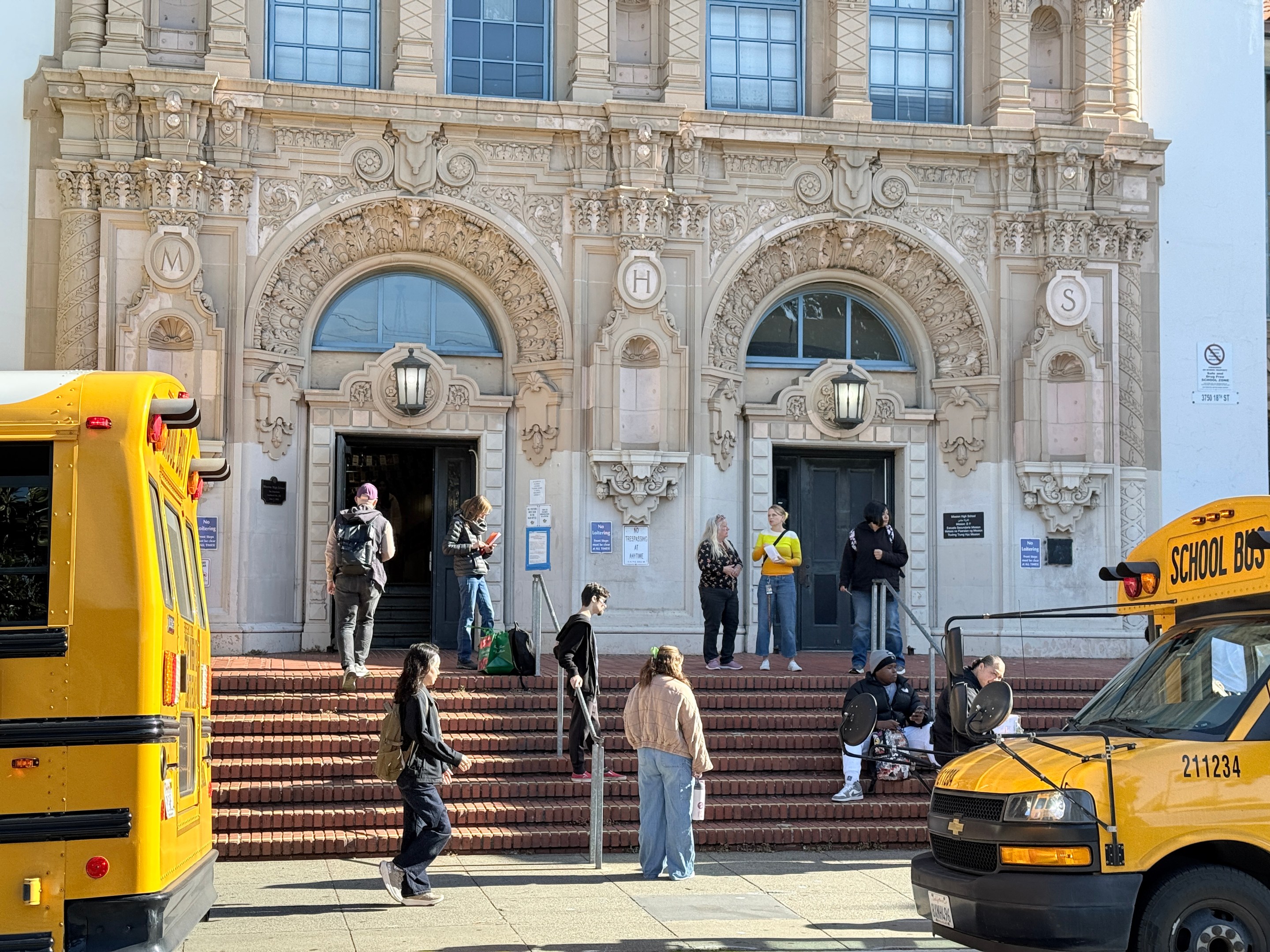

Julian, a freshman at San Francisco’s Mission High School, is certain that the extra five days of school that the San Francisco Unified School District has tacked onto the end of his year will be a waste of time.
“It’s unnecessary,” Julian told me Wednesday morning from Mission High’s steps, shortly before the start of the school day. (Like other minors interviewed for this story, we’re using only Julian’s first name.) By June 3, the originally scheduled end of the school year, exams will be finished, and report cards submitted. Why bother attending? “Not too many people want to go,” Julian said. He estimates that only two of his friends will be there. He’s still working on his parents to let him skip.
In March, SFUSD added five school days that students lost in February when teachers went on strike. According to the district, students are required to attend the extra days, which were added so they “receive their full instructional time.”
The truth is more complicated. The extra days were taken up as an agenda item at a school board meeting on March 24, as nearly the last item in a marathon, five-hour session. Some school board members expressed deep misgivings about how the extra days would disrupt families’ summer plans, including camps and vacations, as well as local programs designed by community-based organizations.
State regulators, however, require the district to provide 180 days of instruction every school year; SFUSD would be penalized for any days it falls short. Weighing the disruption to families against SFUSD financial penalties, the board voted 6-to-1 in favor of five extra classroom days.
What parents may not realize, and wasn’t discussed in any detail at the school board meeting, is that the district also loses funding from the state for absences. Meaning SFUSD is facing a situation in which the step it took to avoid financial penalties by the state will cost it revenue for each day kids don’t show up during the added week of school.
So Julian and his classmates will be back in school from June 4 to June 10 – unless their parents decide to boycott for them.
In an email to Gazetteer SF, Katrina Kincade, a spokesperson for SFUSD, wrote that “supporting student learning and attendance remains a top priority for the district and we look forward to welcoming students during the additional five days added to the academic calendar.”
Some principals are attempting to spread the district’s gospel. John Schlauraff, the principal at George Washington High School (where, full disclosure, my daughter is a first-year student), sent an email to parents explaining that the five additional days present an unusual opportunity of classroom time untethered by the “constraints of the standard curriculum.”
Teachers will be free to “explore fascinating topics, share personal passions within their subject areas, and create enriching activities that don’t typically fit into the traditional school year,” Schlauraff wrote. “Each department is working thoughtfully to ensure that these days are valuable and memorable for all students.”
Noah Ingber, a principal at Marshall Elementary, predicts a marked increase in absences for students, teachers, and staff across the district during the final added week. Substitute teachers will be in high demand, he speculated.
Ingber said the extra days are useful for families that aren’t sending kids to camps or going on vacations. For example, many families with kids at Marshall depend on school for child care, he explained.
Even so, Ingber acknowledged, a normal school year is already filled with classroom celebrations and end-of-the-year parties. I shared with Ingber a conversation I had with a fellow parent who groaned that teachers (or subs) will surely be rolling out the televisions during class time.
Ingber couldn’t disagree. “I do foresee more movies at the end of this school year than in previous school years, for sure,” he said.