



While the normies were resting, we mainlined tech discourse all weekend to bring you the latest trends, rumors, fights, and innovations from the most manic corners of the internet. This week: Tech Twitter’s deep-fried meme-o-ween, fears of the AI bubble deepen, and the AI safety movement’s election spending stokes suspicion.
This is Manic Monday.
Happy Hallomeme!
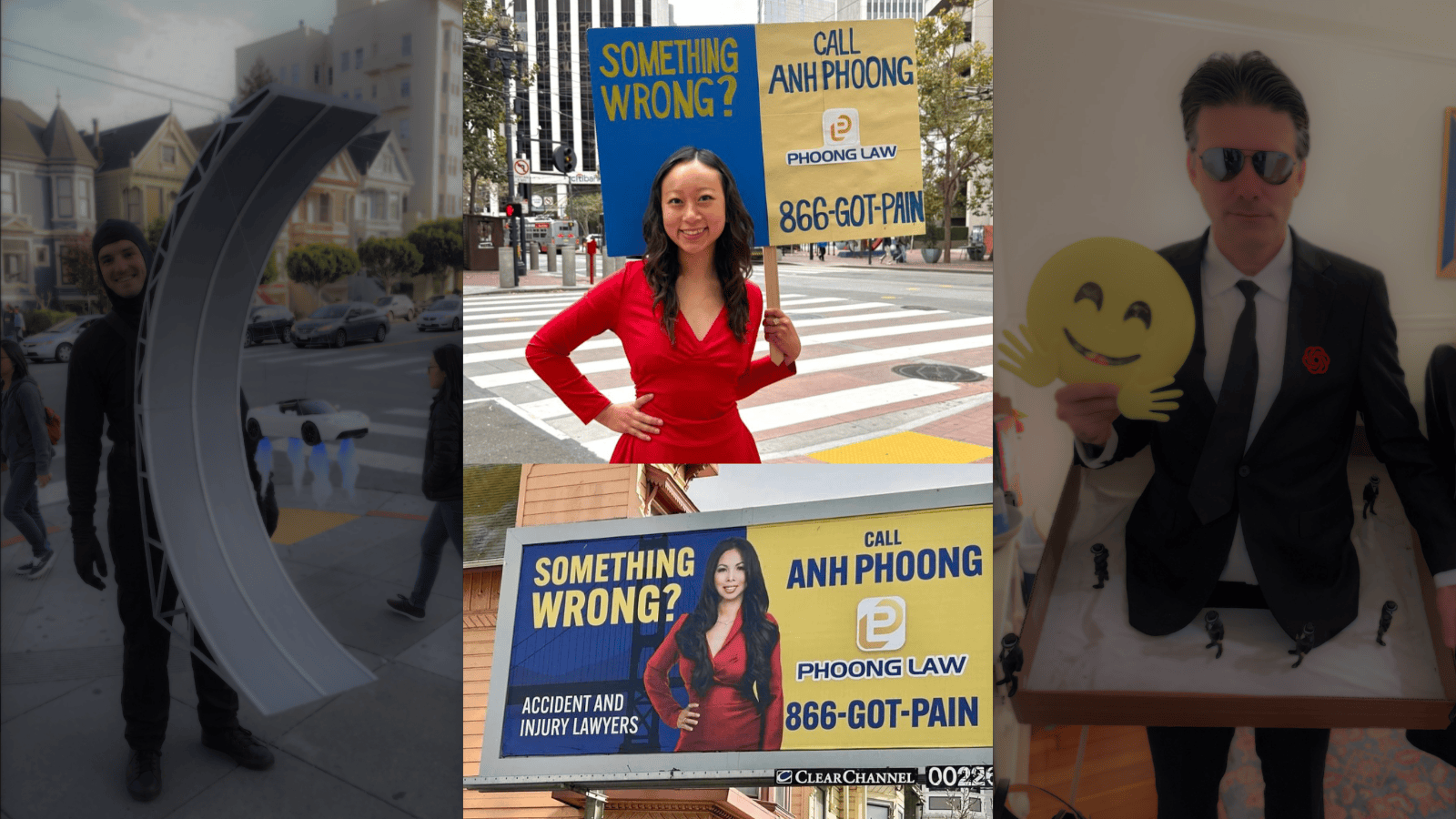
OpenAI’s rogue agent escaping its sandbox. The near-vertical ramp from Elon Musk’s flying car demo. A human in the loop. Ava, the AI BDR. On Saturday night, Tech Twitter’s most deep-fried memes came to life as Halloween costumes, to the great joy of our city’s most AI-pilled and brainrotted residents — and, probably, the great confusion of everyone else.
For example, if this weekend you ran into Theo Jaffee, host of the Andreessen Horowitz-backed podcast Monitoring The Situation, you could be forgiven for assuming he was dressed as a regular old king, instead of the Vaguepost King, a meme people use to respond to intentionally cryptic posts designed to bait engagement. Or, if you ran into Noah Smith, writer of the center-left Substack Noahpinion and floater in the effective altruist scene, you might’ve just thought he was a rocket, when really he was the red-shirted guy riding the bomb, Dr. Strangelove-style, from the hyper-niche “time to nuke SF” meme. But why would you know any of this, unless you spend several hours a day digitally waterboarding yourself with an endless stream of updates on the AI industry and its incestuous social scenes? The funniest one was the most esoteric: the Sankey diagram from Aella’s birthday gangbang. (Don’t ask.) It was also AI-generated, proving that any human tradition is grist for the machine. Consider me spooked! —Cydney Hayes
Hands off my RAM, Sam I Am
The AI billionaires can’t help saying things in public that make people mad, and the latest outrage comes after Sam Altman’s insistence that, actually, consumers are stupid for hoarding so much RAM for their daily computing needs. It is “quite terrible” for normies like us to “have a bunch of the world’s limited supply of DRAM sitting in their own computer and being used 5% of the time," Altman told the YouTube channel Cheeky Pint.
“You want maximum utilization in the cloud if you’re trying to deal with this very supply-constrained environment," Altman continued. "And somehow many people’s intuition is the opposite of that.”
My intuition is the opposite of that because a used PS5 Pro is now $1,400 due to hardware scarcity. RAM, aka random access memory, is crucial for processing data, especially if you’re running computing-intensive applications like video editing software or games with top-notch graphics. Gamers in particular are already suffering from a shortage of graphics processing units (GPUs), which, like RAM, are being used en masse in data centers. So, of course Altman’s out here claiming that AI companies need our RAM, too — y’know, for humanity.
The reactions on X can be summed up as, “How the hell is this our problem?” Even Elon Musk weighed in on Sunday, declaring “the people deserve to have their RAM, too!” Welcome to the resistance, Comrade Musk; hopefully, this fight will not end up in, uhm, gamers rioting over the chip shortage and holding public executions, which at least one X user has already posited. —Eddie Kim
AI bubble and global economy trouble
Halloween came early this year as several events stoked fears of the AI bubble bursting late last week.
First, Google saw its worst-ever trading day ever Thursday, after its latest quarterly earnings revealed how much AI Mode has disrupted its search revenue. Tech stocks plummeted the next day, losing more than $1 trillion in value, NBC News reported Friday. At the same time, the Financial Times reported that Anthropic will likely receive a double B grade from credit rating agencies, a “high junk” score that is considered a “non-investment” designation by lenders, indicating that the AI corporation will have a more difficult time than expected borrowing money following its IPO. All this — plus the major AI stock crash in China last week — has reignited worries about the AI bubble bursting, spurring a collapse of the global economy. Still, there is no consensus among financial analysts about exactly what’s going on or what will happen; some analysts have said the current situation has clear similarities to the dot-com bubble, while others point to continued spending on data center buildouts as evidence of the AI boom’s staying power. —C.H.
Wishing you could celebrate data centers? Dec. 12 is your lucky day
Data After Dark, the pro-data center party in Washington, DC that made headlines (and this column) is coming to San Francisco next month. Organized by the same three men who “work in libertarian and conservative spaces,” according to a Washington Sun report on the DC event, the local celebration of the controversial infrastructure will take place on December 12. The location still appears undecided, but considering the DC party was hosted at a crypto-themed bar called PubKey, this one will likely happen somewhere similarly irreverent. Corgi Cafe, perhaps? —C.H.
Safety for me, not for thee
One of the most confusing debates about AI safety is whether the big AI safety organizations pumping money into the election cycle are, in fact, benevolent actors looking out for the rest of us or savvy actors setting themselves up for real dominance. AI safety PACs have pumped some $44.4 million toward a variety of politicians, versus $27.9 million donated by “AI innovation” PACs like Think Big. Some wonder whether the “safety” organizations, which are in part funded by AI juggernauts like Anthropic, are really about safeguards, or simply seeking to gain influence over federal regulators.
As tech journalist Shakeel Hashim pointed out on Friday, “No candidate will be able to credibly say that they won or lost next week because of AI. But AI appears to feed into broader concerns about corruption, job loss and electricity bills (all topics which currently favor Democrats).” As the culture war over AI heats up, figures like Sam Altman and Dario Amodei may be hedging that a pro-safety PR blitz will play better to the masses. No shock that some are already cooking up theories of how AI regulators will take bribes while moralizing about safety.
I’m reminded of what David Sacks said about Altman and Amodei’s pro-safety talk back in September: “Stop pretending the motivation to slow down is purely altruistic,” Sacks wrote on X. “The easiest way not to build superintelligence is for you to agree not to build it. Demanding your preferred regulatory framework as the price of that will look like blackmail of the public and the political system.” —E.K.
The week ahead: Sam Altman argues that AI should get all of the water since when all jobs are eliminated, people won’t need to shower for work anymore.