

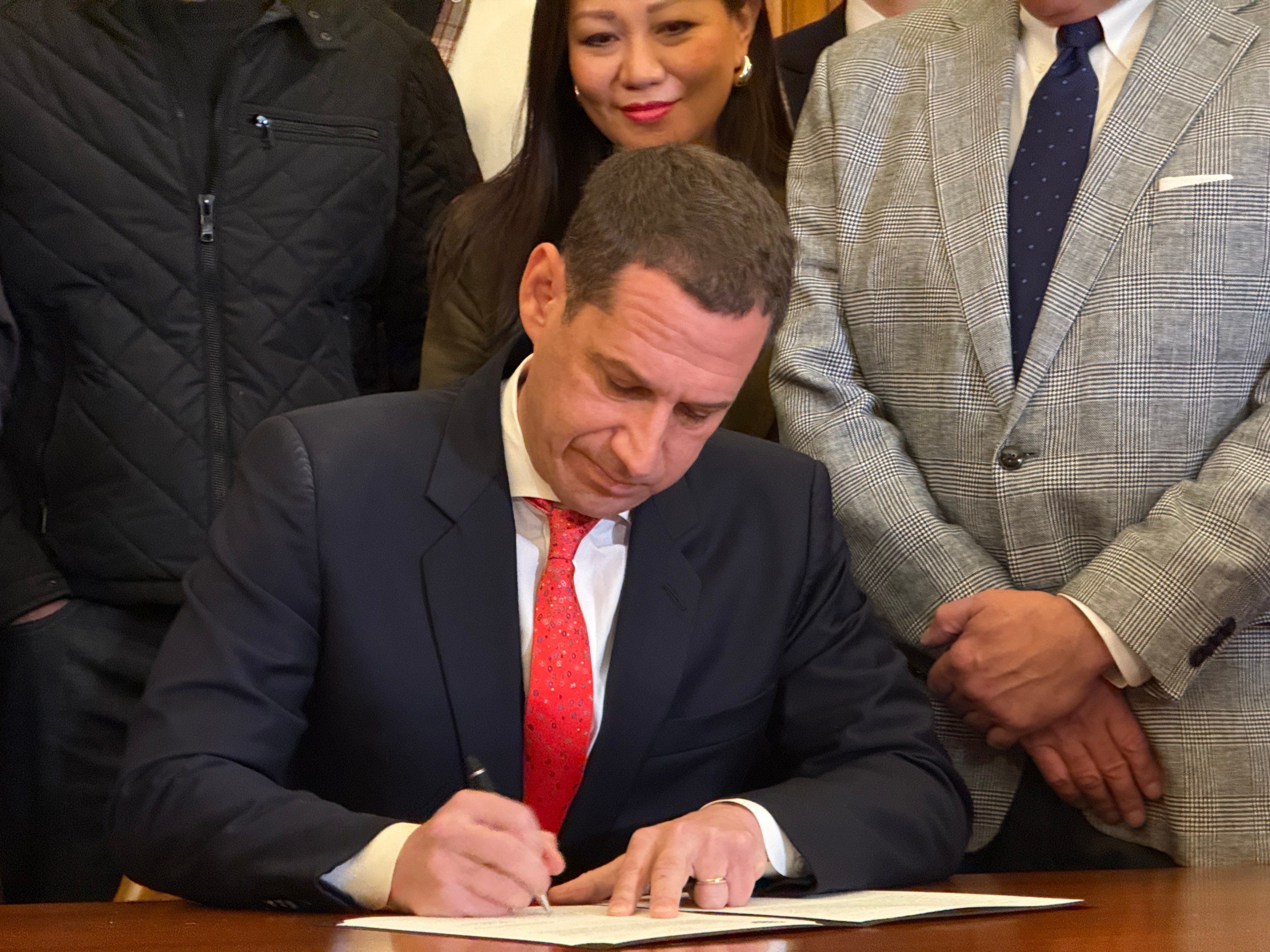

San Francisco Mayor Daniel Lurie on Tuesday signed legislation to create a new center where law enforcement officers will bring drug users off the street to sober up and seek options for treatment.
At a signing ceremony at City Hall, the mayor officially announced the RESET (Rapid Enforcement, Support, Evaluation, and Triage) center. Located in a nondescript building at 444 Sixth Street, the facility will have 25 reclining chairs and medical and psychological staff to treat patients brought in by sheriffs’ deputies and police officers.
RESET “allows our officers to arrest those engaged in public drug use at a speed and volume we have never seen before,” Lurie said. “If you use drugs on our streets, we will arrest you, but with this new resource, we will also give those suffering from addiction a real chance to choose recovery.”
The mayor explained the various initiatives his administration has undertaken to move drug users and homeless residents off city streets. “The RESET center is the next step in that effort,” he said, based on a “collaboration between law enforcement and public health organizations.” The center’s opening has been delayed, officials now aim to start treating patients in April.
RESET is in SoMa, represented by Supervisor Matt Dorsey, who stood next to Lurie. The mayor departed the ceremony without taking questions, leaving Dorsey and Sheriff Paul Miyamoto to field a question from Gazetteer SF about a memo the City Attorney’s Office issued to the Board of Supervisors detailing the potential legal exposure the city may face as it opens and operates RESET. The memo was first reported by Mission Local.
“What we’re doing is absolutely legal,” Miyamoto said, explaining the penal codes that allow law enforcement to take people off the street for public intoxication.
Dorsey, a 14-year employee at the City Attorney’s office, said the memo was a routine warning about the risk of litigation. Lawmakers may use the memo to legislate any required changes to reduce or eliminate such risk.
“We may need changes to state law,” he said. “I’m convinced, after reading that cautionary memo, that there is a way to do this without any kind of legislative litigation being successful.”