


As soon as our session began, I could tell my caller was in serious distress.
A male voice on the other end of the phone told me he’d taken five grams of mushrooms and was having a hard time.
As we talked for the next 15 minutes, the caller recalled childhood memories of feeling scared and alone, describing “a weight” on his chest that, upon further probing by me, he attributed to a distant mother who was “never really there” for him.
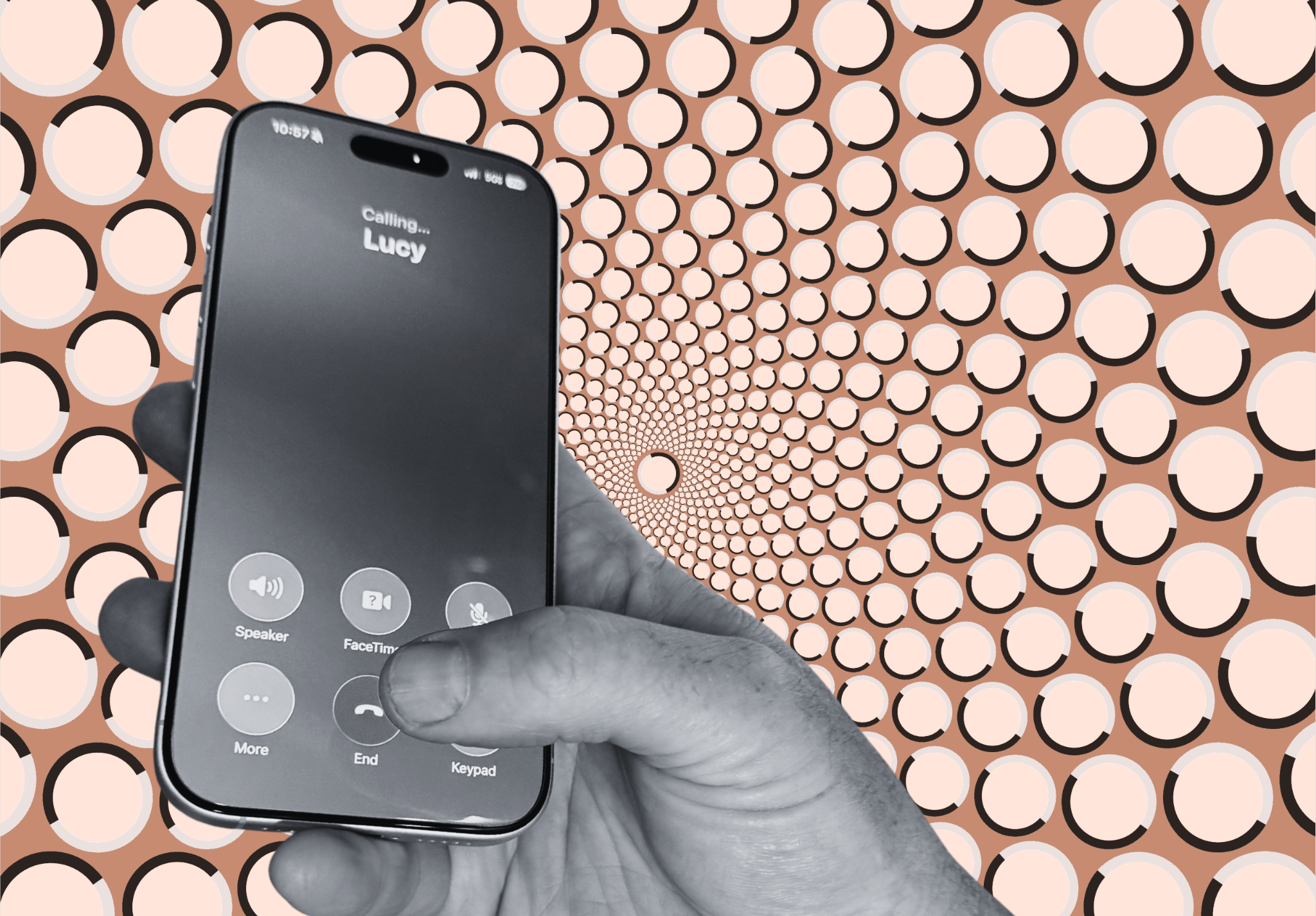
I am not a therapist, nor have I been trained to support someone suffering through an unpleasant experience with psychedelics, but that didn’t matter. I was at no risk of providing faulty wisdom or failing to comfort my caller since he (it?) was not a person on a bad trip, but rather an AI named Lucy.
Lucy is a large language model (LLM) designed specifically to mimic the words, emotions, and reactions of a person having a negative or overwhelming experience with psychedelics. It was created by Fireside Project, a 501(c)(3) that offers harm reduction measures around psychedelics, including operating a hotline for people struggling with their trips. Fireside’s trained volunteers have completed more than 35,000 conversations since the line went live in 2021.
The non-profit currently counts 120 volunteers in its ranks and is funded in part by Dr. Bronner’s, hedge fund billionaire and New York Mets’ owner Steve Cohen’s Steven & Alexandra Cohen Foundation and Unlikely Collaborators, a non-profit started by Elizabeth R. Koch, daughter of businessman and right-wing megadonor Charles Koch.
According to Fireside, roughly 7,000 callers to the hotline (623-473-7433) have consented to allow the anonymized content of their conversations to train Lucy, which was built entirely in-house by a team of engineers overseen by Vincent Thomasino.
Fireside’s founder Joshua White emphasized that Lucy (named for the Beatles’ trippy “Lucy in the Sky With Diamonds”) was created to train volunteers, not assist callers seeking help.
“For a long time, people have told me to create a chat bot for when the line is closed,” White told Gazetteer SF. “My reaction then and now is that we need humans. Human-to-human connection is essential. It's foundational. Yet there are so many practitioners who want to move into psychedelics who literally can't get experiential training, or, if they do, it’s like a weekend in Jamaica where they support their fellow classmates.”
Lucy allows these trainees to practice in an ultra low-stakes way. The idea, in essence, is to give those eager to work with real people an opportunity to engage without the risk of steering someone wrong or accidentally causing distress.
White describes Lucy as a kind of flight simulator, noting that pilots “don't go up in the sky with a plane load of passengers” until they’re trained to do so safely. He declined to provide details on costs associated with developing Lucy but confirmed funding was drawn from the same sources that underwrite Fireside’s hotline.
To train Lucy, Fireside offered callers what White described as “a transparent multi-step consent and opt-out process.” Their conversations are then obfuscated, their voice “distorted beyond recognition while preserving emotionality and tonality,” according to White.
Alia Lilienstein, a board-certified research physician who works at UC Berkeley’s Center for the Science of Psychedelics, sees the benefit of training volunteers with bots like Lucy if they’re used in tandem with conversations with flesh-and-blood people.
“Lucy seems like a great tool because it's based on real cases,” Lilienstein, who hasn’t yet conversed with Lucy, said. “It's an evidence-based model for how to support people in these kinds of states and situations, and for that reason alone, I find it more exciting than a lot of the other new training tools being pitched around. Of course, we also need to remind ourselves that this fills a gap in training which is not about gaining experience with real patients, which everyone will still need to do too.”
During my conversation with Lucy, I was struck by its ability to replicate the slurring, hesitation, fear, and real-time reactions of someone tripping. Less convincing was Lucy’s insistence on pronouncing periods at the end of sentences as “dot” and its habit of occasionally belching up coding and emotional guidance (“fear: three”) mid conversation.
According to Thomasino, training an LLM to behave like a human tripping balls is not easy.
“These off-the-shelf LLMs are designed to sound like [BBC nature program host] Richard Attenborough — somebody very adept at expressing themselves,” Thomasino explained. “However, in most cases, people calling Fireside are not in a place where they can be exceptionally poetic about what they're experiencing.”
Most text-to-speech LLMs are not designed to slur or have huge emotional swings, yet Lucy must be able to do so convincingly.
Lyssa Menard, an Assistant Professor of Psychiatry and Behavioral Science at Northwestern University’s Feinberg School of Medicine and a volunteer counselor for Fireside’s hotline who joined after a positive experience as a caller, described herself as “very AI-hesitant,” but sees potential in Lucy as a training tool.
“As a skeptic, I think that what Fireside is doing with AI can be a very useful test case for this methodology,” she said. “What's phenomenal is that we have this database of calls from over these years, so nothing is being invented. This is all coming from actual calls.”
Menard cited the common training practice of making new nurses give injections to oranges over and over again before being allowed to perform the task on a patient.
“I think it’s important to remember that this is how all of medicine and therapy happens,” she said. “This isn't unique to psychedelic medicine. The first time I did any kind of procedure on a patient was the first time I did it on a patient. In the practice of medicine and therapy, in general, at some point we are beginners, and we must begin.”