

On the first Monday in November, at least ten San Francisco officials from five different city agencies flew to Tucson, Arizona. Their destination: a crisis response center for psychiatric care and substance abuse operated by Connections Health Solutions, a privately owned company based in Phoenix, where it operates another similar center.
The day trip, described in city documents obtained by Gazetteer SF, included a lunch meeting and a drive to the facility less than 15 minutes from the Tucson airport, where they got a tour of the center and met with local law enforcement.
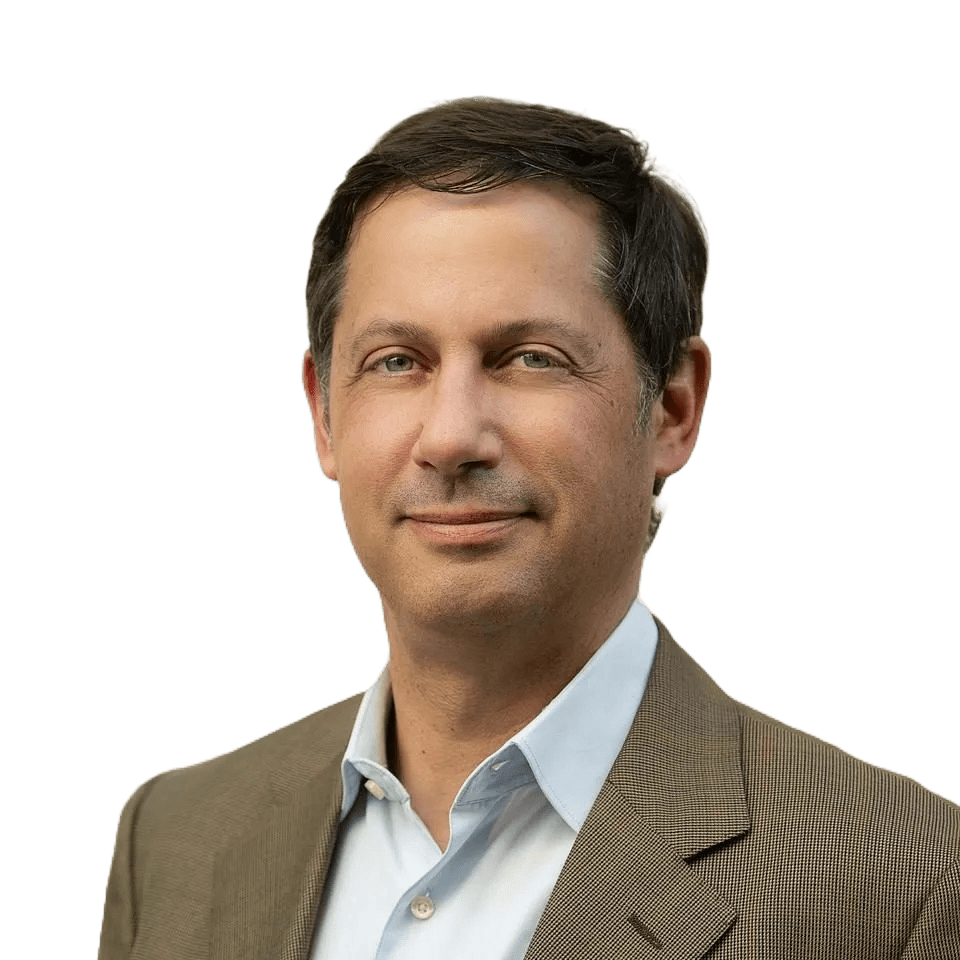
The group included Kunal Modi, Mayor Daniel Lurie’s chief policy wonk and a former partner at the consulting firm McKinsey; Department of Public Health (DPH) Director Dan Tsai, also a former McKinsey partner; and officials from the city’s police and fire departments, and sheriff’s office.
The trip was hardly necessary. Two weeks earlier, on Oct. 21, DPH official Krista Gaeta emailed the group traveling to Tucson to explain that Connections was “our top candidate for operating San Francisco’s 24/7 Deflection Center,” a reference to facilities, like Tuscon’s, that “deflect” drug users from jails or emergency departments and into medical and psychiatric treatment.
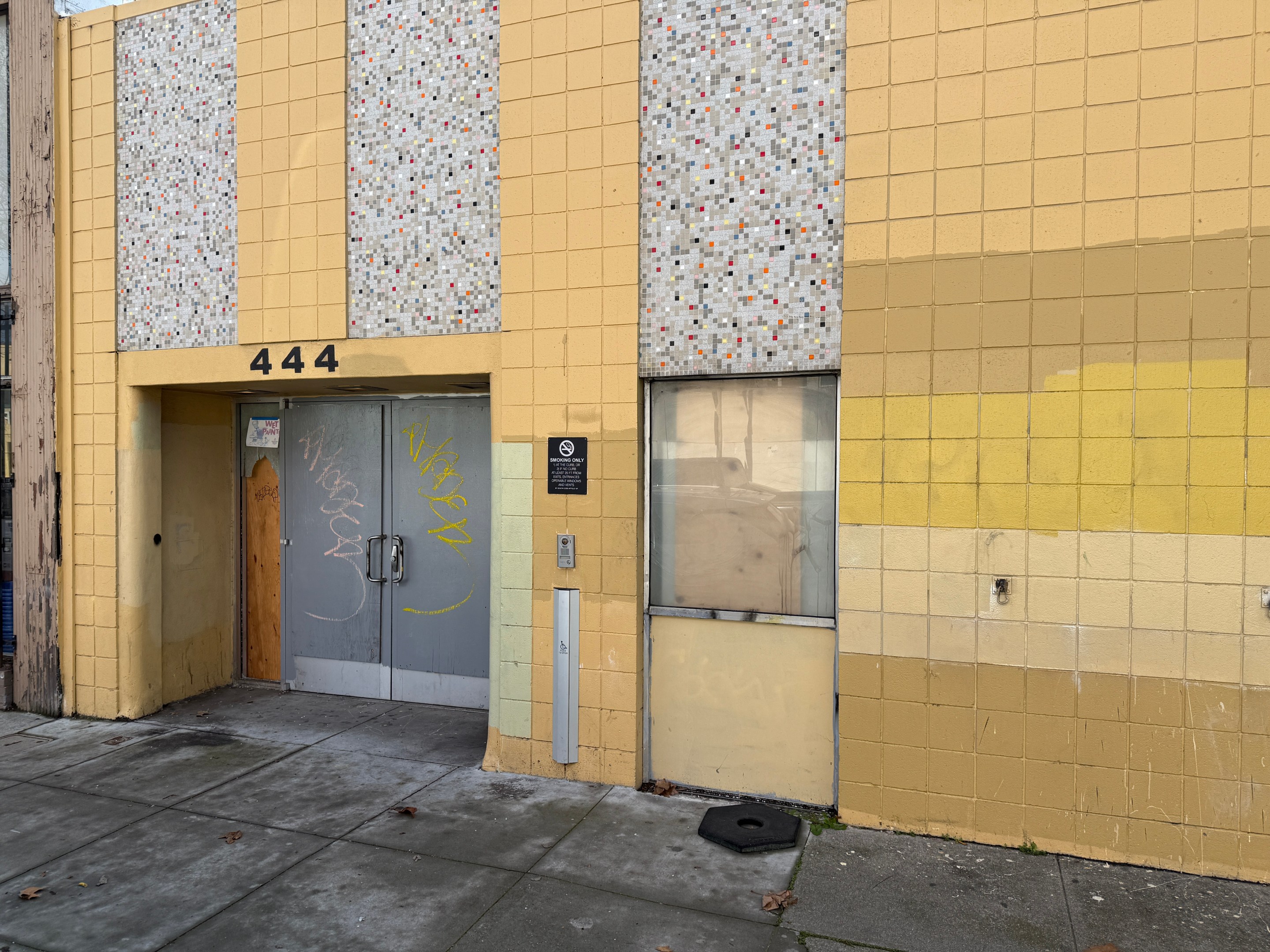
On Feb. 10, leveraging his soon-to-expire power to fast-track legislation, Lurie won approval from the Board of Supervisors for a $14.5 million contract with Connections to run a new crisis center in San Francisco for two years. Located in the South of Market neighborhood at 444 Sixth St., the city has named it RESET: Rapid Enforcement, Support, Evaluation, and Triage.
According to the city’s plan, RESET patients will rest in 25 reclining chairs for up to 23 hours to sober up, and then, ideally, move into longer-term care. Originally scheduled to open late last year, officials say it is now set to open in April.
Whenever it opens, RESET will be central to Lurie’s war on fentanyl. Hardly a week of the mayor’s first year in office went by when Lurie wasn’t asked about fentanyl, or raised the issue himself.
The rollout of RESET, however delayed it has been, is a high-stakes proposition. If it succeeds, Lurie will have taken a significant step forward in his promise to address the fentanyl crisis and related homelessness. If it fails, it will be seen as a setback for one of the most pressing problems the mayor was elected to solve.
RESET is hardly the first or only sobriety center in San Francisco, though it will be the only facility where drug users are taken involuntarily by law enforcement. The deepest skepticism about it comes from sobriety experts who predict RESET may get drug abusers off the street in the short term, but without meaningful longer-term treatment, they are unlikely to address their addictions.
The model of high-acuity care that Connections pitches is based on treating patients in substance use or mental health crises as quickly as possible. “The faster you get patients into care, the better their recovery is, the better the outcome is,” Colin LeClair, the company’s CEO, told me.
There’s also the financial pitch. By diverting drug users to RESET, the city stands to save the expense, resources, and time required to process and care for intoxicated people sent to jails or hospitals.
At about a half dozen centers across the US, Connections also pitches its “No Wrong Door Policy,” under which it claims it never denies treatment to anyone, no matter what state they’re in, if they are brought in by first responders or transferred from an emergency room, or whether or not their admission is voluntary.
Once a patient at RESET is stabilized, the center must match them with services that can help with continued addiction treatment, homelessness, or mental health issues. “This is the beginning of a path to recovery,” LeClair stressed. “It’s not a panacea.”
The deepest skepticism about it comes from sobriety experts who predict RESET may get drug abusers off the street in the short term, but without meaningful longer-term treatment, they are unlikely to address their addictions.
On a chilly night recently, I stood on Sixth Street just off of Market Street, four blocks from the site of the RESET building. All around me, the problem of the fentanyl crisis was starkly visible.
I was greeted by an older man, sitting in a chair on the corner, who said his name was Uncle Baldy. He offered to procure any drugs I might want. I asked him about fentanyl.
“I don’t mess with it,” Baldy told me over the thump of Cumbia music pouring out of Club OMG. “Look how many people it’s killed.”
According to data from the Office of the City Administrator and the Office of the Chief Medical Examiner, 624 people died of unintentional drug overdoses in San Francisco last year, 467 — just about 75 percent — by fentanyl.
Baldy told me fentanyl is easily available for $10 a “point,” or one-tenth of a gram. “Look around, you see them leaning over,” he said, referring to its users. A half-block away, outside the Rumpus Room, one man inhaled from a glass pipe he moved across a piece of tinfoil. He was surrounded by about a half dozen people stooped over.
Directly across the street, an SFPD officer sat in his vehicle with his sirens flashing but silent. He agreed to talk with me on condition of anonymity because he’s not permitted to speak on behalf of the police department.
The officer said he was well aware of the fentanyl use, but he wasn’t there to make drug arrests. That job, for now, remains the purview of the multi-agency Drug Market Agency Coordination Center, he said. The officer explained that his duty that night was to serve as a “scarecrow,” positioned to make sure pedestrians could safely pass by.
In February, Mission Local reported that the San Francisco City Attorney’s Office issued a memo to the Board of Supervisors warning that RESET poses a “very high” legal risk because it doesn’t meet state standards of a detention center.
Sheriff Paul Miyamoto brushed the concern aside. “What we’re doing is absolutely legal,” he told me.
Supervisor Matt Dorsey, who represents the district RESET is located in, said the City Attorney routinely issues such warnings, and told me if necessary, state law could be amended. (The Board of Supervisors approved RESET’s funding by a vote of nine to two.)
When it opens, RESET will be a place for San Francisco law enforcement to bring drug users they pick up off the street. “No walk-ins” will be permitted, according to a city pamphlet printed for the public. Everyone who passes through its doors will first be arrested for public intoxication, a misdemeanor.
This approach is the kind of “heavy hand” San Francisco Sheriff Paul Miyamoto has long pushed for. Patients will have to remain at the center until they’re sober in order to get a certificate of release, which allows them to leave without being charged.
“We don’t want to criminalize people in crisis, we want to get them help,” Miyamoto said. “But we’re past the point of having that be a voluntary kind of thing. We want to break the cycle that they’re in, and this is the kind of tough love approach to breaking that cycle.”
Modi, the McKinsey consultant turned Lurie’s chief of health, homelessness, and family services, explained at a recent public discussion at Manny’s that the arrests won’t be on people’s records. The point is “not to add to someone’s rap sheet, it’s to get them into a pathway to treatment.”
That is, if they can find a place to get treatment. “There aren’t enough beds anywhere,” said Shannon Smith-Bernardin, a co-founder of the National Sobering Collaborative.
A registered nurse for two decades, Smith-Bernardin has worked at sobering centers in San Francisco for at least half that period. Drug users who are homeless, on Medicaid, and even those with private insurance must wait three to six months to get a bed at organizations that offer detoxification and rehabilitation programs, she said. San Francisco can have “the best sobering center in the history of the world, and still not get people anywhere unless they’re running a detox themselves,” Smith-Bernardin said.
In September, Lurie told me about the need for “the right kind of beds” to help the homeless and addicted. The right kind of bed, meaning one where people can get the type of treatment they need, has become a kind of shibboleth among members of the mayor’s administration; Modi repeated it at Manny’s several months later, noting the city is undertaking “interesting pilots” to place drug users in crisis, once sober, directly into shelters.
Sheriff Miyamoto, too, said that to address the fentanyl crisis, “the biggest key is getting beds.”
Even without a more concrete plan, Miyamoto’s deputies and police officers will start arresting more drug users and sending them to RESET. Some of these people may seek treatment after their mandatory stays; others may wind up back on the street.
Smith-Bernardin told me she’s seen patients who’ve gone to sobering centers a dozen or more times before she hears them say the one phrase that, in her experience, signals their openness to long-term treatment: “I’m tired.”
A version of this story first ran in print in Gazetteer San Francisco Issue 2.