

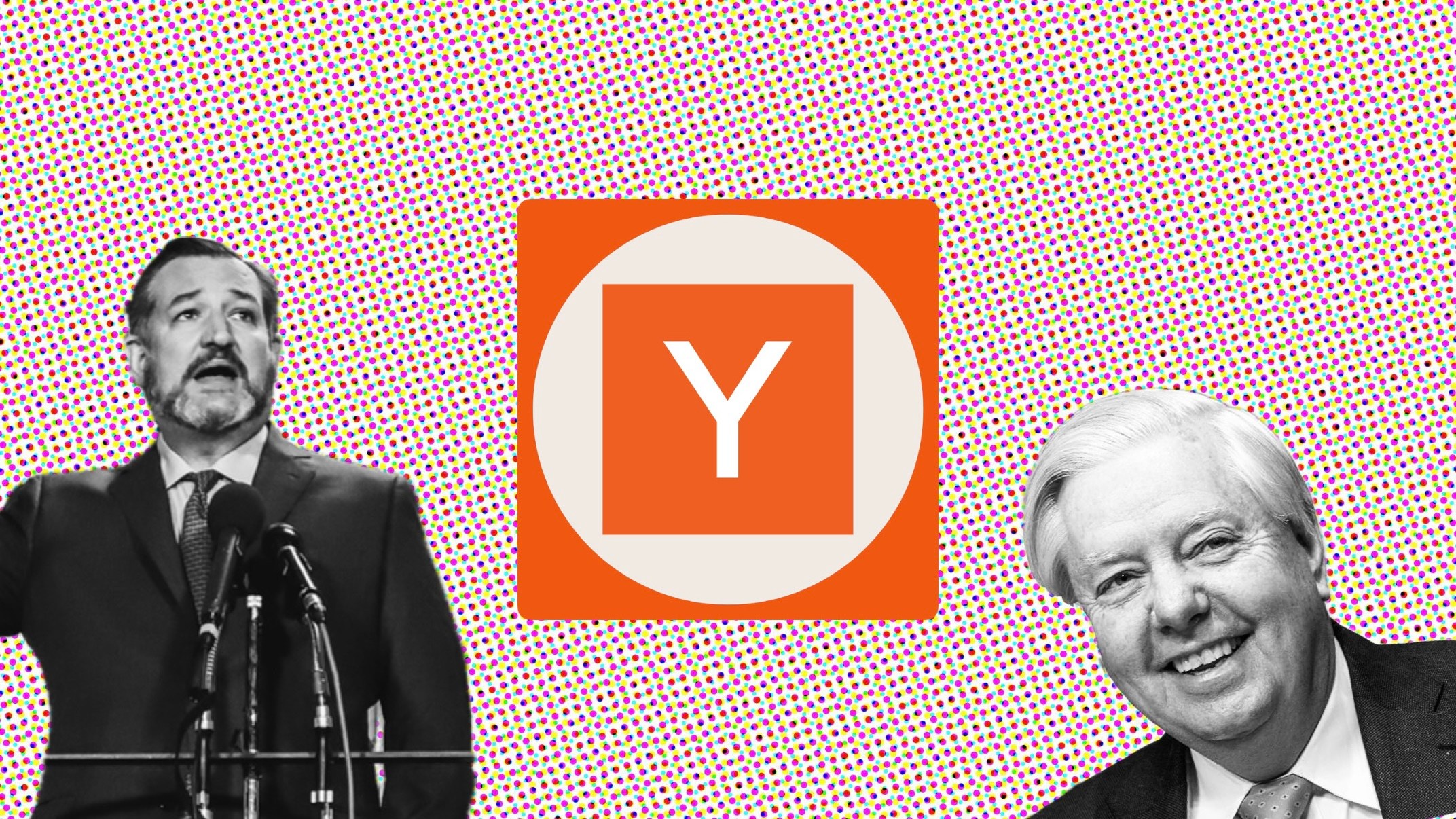
Top figures at Y Combinator, one of the most influential tech incubators in the world, are working to influence the 2026 election cycle with contributions to 66 different federal political action campaigns (PACs), nearly half of which are supporting Republicans.
The Y Combinator Management LLC Political Committee, also called the Little Tech PAC, has spent $117,647 to bolster candidates ranging from progressives like Rep. Lateefah Simon of California and Rep. Pramila Jayapal of Washington, to staunch right-wingers like Sen. Ted Cruz of Texas, Sen. Josh Hawley of Missouri, and the late Sen. Lindsey Graham of South Carolina.
The PAC was registered on Dec. 15, 2025, according to its FEC filing, and has raised $200,000 from 40 contributions, nearly all from YC employees, executives, and their partners.
Top figures from YC include co-founders Paul Graham and Jessica Livingston, president and CEO Garry Tan, and head of public policy Travis Lowe. The latter was the first person to contribute to the Little Tech PAC on Dec. 18. Many contributors gave $5,000, the maximum allowed in a year, in both 2025 and 2026, including Lowe, Tan, YC partner Jared Friedman, and managing director Jonathan Levy. The “designated agent” of the PAC is Verene Prescher, head of finance at YC. The treasurer is Justin Phillips of Aristotle, a powerful election consulting firm that claims it has worked with every sitting president since 1983.
The contributions have gone to support candidate PACs from coast to coast, with the highest number in California, followed by DC, Texas, and Virginia. The vast majority of the money has gone toward the reelection of incumbents in Congress, rather than to support challengers.
It’s unclear what, exactly, the Little Tech PAC is trying to accomplish by supporting such an array of candidates for re-election, but several of its favored politicians have worked on AI and tech policy for the federal government. The nickname of the PAC refers to Tan’s advocacy for “little tech” early-stage companies versus “Big Tech,” which Tan has criticized as slowing innovation and concentrating economic and political power to corner the market.
“We want 10,000 flowers to bloom and for startups to have every chance to give consumers choice and for there to be truly free markets that create prosperity everywhere,” Tan wrote on X in March 2025, ahead of YC’s Little Tech Competition Summit in Washington, DC.
The group gave $3,500 to a PAC supporting North Carolina Democrat Rep. Valerie Foushee; Foushee serves on the House Committee on Science, Space, and Technology, as well as the New Democrat Coalition AI Working Group and the House Bipartisan AI Task Force. On her website, Foushee states that she wants to “unleash our full potential in scientific achievement,” including by leveraging the 2022 CHIPS & Science Act — a bill that incentivizes superconductor production.
The PAC supporting another Democrat, Rep. Adam Smith of Washington, received $3,000. Smith is the Democratic leader and ranking member of the House Armed Services Committee. In the past, Smith has emphasized the Department of Defense’s need to acquire new tech and develop more advanced command-and-control systems for the military.
The chairman of that committee is Republican Rep. Mike Rogers of Alabama, who praised the committee’s securing of more than $1 trillion in additional military funding for, among other things, “restocking the Arsenal of Freedom.” Rogers recently drew controversy after an investigation by The Lever uncovered that he holds between $1.7 and $2.6 million in companies that would benefit from streamlining of tech regulations and pro-AI policy. A PAC supporting him received $3,000 as well.
The Little Tech PAC has also given money to support an array of pro-AI legislators without committee positions, such as Alaska Republican Rep. Dan Sullivan, who stated on Sept. 17 that American AI progress, and ensuring “Communist China does not win the AI race,” is a priority for him.
In one case, the Little Tech PAC is working against the agenda of House Democrats, supporting Virginia Republican Rep. Rob Wittman (who backs Donald Trump’s “Genesis Mission” to accelerate AI in America) despite an ongoing effort to flip the seat, per reporting by Politico.
A number of these candidates, despite supporting AI, have backed various types of data center moratoriums and regulations on the industry. That includes Sen. Josh Hawley and Cruz, who have been vocal about the harms of Big Tech and the monopolizing of AI power while still supporting AI development in America.
Y Combinator and the PAC did not respond by press time to questions from Gazetteer SF about the PAC’s contributions and goal.