
Editor's Note: This story is an update to a 2024 piece that explained the lawsuit against Urban Alchemy and the information in the plaintiff’s initial complaint.
In February 2024, a man residing at a camp for unhoused people in Sausalito sued the nonprofit service provider Urban Alchemy, claiming that one of its employees attacked him as retaliation for speaking out about alleged unethical behaviors on the site.
After two years of legal back-and-forth, a federal court in Northern California tossed the lawsuit last week, concluding in a summary judgment that the plaintiff, Arthur Bruce, had failed to show sufficient evidence for two claims: That Urban Alchemy and the City of Sausalito worked in concert to deprive him of his constitutional rights, and that Urban Alchemy was negligent for employing the man who allegedly assaulted Bruce.
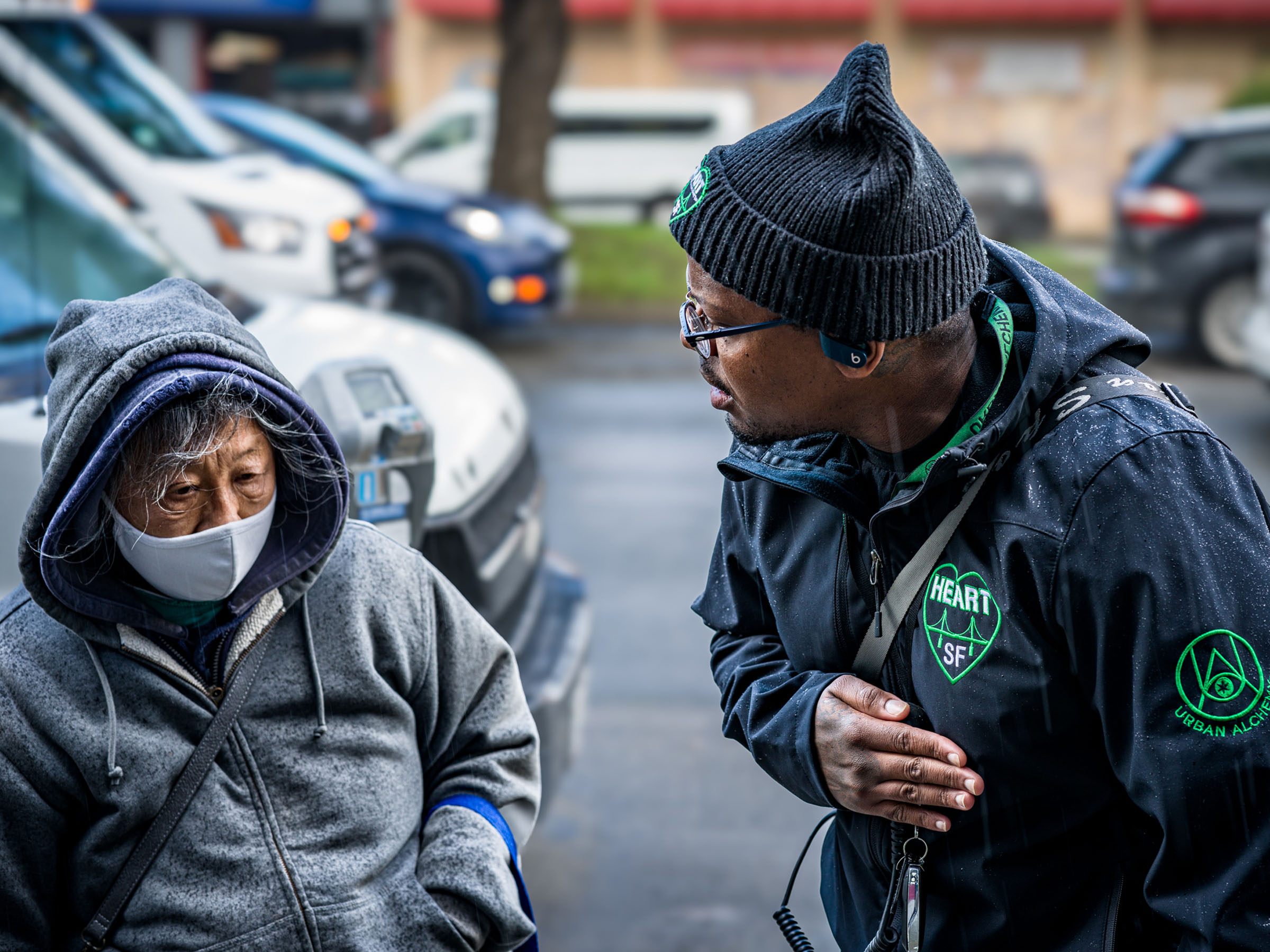
Urban Alchemy has become a fixture in the Bay Area’s response to drug use, homelessness, and other problems that unfold on sidewalks and public spaces. In San Francisco, Urban Alchemy’s “practitioners” can often be seen roaming around Downtown, SoMa, and the Tenderloin, sometimes observing and, at other times, intervening to offer assistance or move people along.
The company was contracted in Sausalito to oversee “Camp Cormorant,” a temporary site where about a dozen people resided in 2022 and 2023. That included Bruce, who claimed in his initial complaint that several Urban Alchemy employees were involved in drug distribution and sexual exploitation of residents at the camp. Bruce said that he was targeted by those employees after speaking publicly about the allegations, and that one worker, Troy Young, assaulted and injured Bruce in 2023.
Urban Alchemy spokesperson Jess Montejano told Gazetteer that the company has “firmly and publicly denied Mr. Bruce’s baseless allegations” from day one. The efficacy of Urban Alchemy’s model is “proven,” Montejano said, adding that “negative allegations” in the press paint an improper image of its work.
“We know individuals try to shake us down because they think we’re vulnerable and can take advantage of a perceived trust deficit, but we don’t play that game. This lawsuit was unfortunately another example of the racism and stigmatization Urban Alchemy faces because of who we are.
“We will always fiercely defend our team and organization from baseless accusations because our Practitioners come to work everyday to help the people we serve be the best versions of themselves and lead healthier, more stable lives.”
Despite the court’s judgment in favor of Urban Alchemy, Bruce maintains that the court “did not find that no assault happened,” nor that Urban Alchemy’s employees did not engage in unethical or illegal behavior.
“Instead, the ruling was procedural in nature. The Court found that I did not meet the evidentiary and technical standards required at the summary judgment stage,” Bruce, who represented himself in the lawsuit, said in an email to Gazetteer. “Federal civil rights litigation imposes strict procedural and evidentiary burdens, especially on individuals proceeding without counsel.”
Bruce disagrees that his complaint was in any way racially motivated. He also feels that the case has had a “broader impact beyond the courtroom,” suggesting that it generated public attention on conditions at Camp Cormorant. Increasing scrutiny and accountability of city-contracted service providers “are meaningful outcomes,” Bruce said.
(In order to pursue litigation against Young, his alleged assaulter, Bruce had to serve Young within 90 days of filing the lawsuit. Bruce failed to do so, according to the summary judgment.)
Urban Alchemy has received criticism in the past regarding its operations, including most recently from a city financial analyst who said the nonprofit had “knowingly overspent” its budget for a large homeless shelter in the Tenderloin. Urban Alchemy is now in the process of ceasing its operations in the 280-bed shelter at 711 Post St.
It continues to operate a tiny-home site for formerly homeless people at 33 Gough St. The City of San Francisco also recently awarded a contract of $24 million to Urban Alchemy to expand its street services around the city.