
In June, a few hundred people gathered inside Y Combinator’s 60,000-square-foot warehouse at Pier 70, a handsome space framed in floor-to-ceiling windows with steel trusses on the ceiling. The hulking remains of an industrial air compressor, a throwback to the building’s shipbuilding past, rises from the center of the venue, signaling to visitors that this is a Place Where Big Things are Built.
The crowd had assembled that afternoon to see Garry Tan, Y Combinator’s president and CEO, interviewing Governor Gavin Newsom. This was not a Y Combinator event. Rather, it was for Garry’s List, the political nonprofit-cum-blog Tan launched in February as a shiny new vehicle for his activism. Tickets cost $50 for the standing-room-only section, the money serving as a contribution to Garry’s List Action, a PAC that functions as Tan’s first real foray into institutional campaign funding. (I paid to attend like everyone else.)
Tan, 45, has built a cult of personality, not just because of his influence in the VC and startup world, but for his pugnacious approach to politics. His acolytes are often young founders of would-be unicorns, many new to San Francisco. To them, Tan is like a big brother or a resident advisor. In April 2025, a tech founder was attacked by someone wielding a pipe, prompting one X user to ask Tan "how can we bring justice here?"
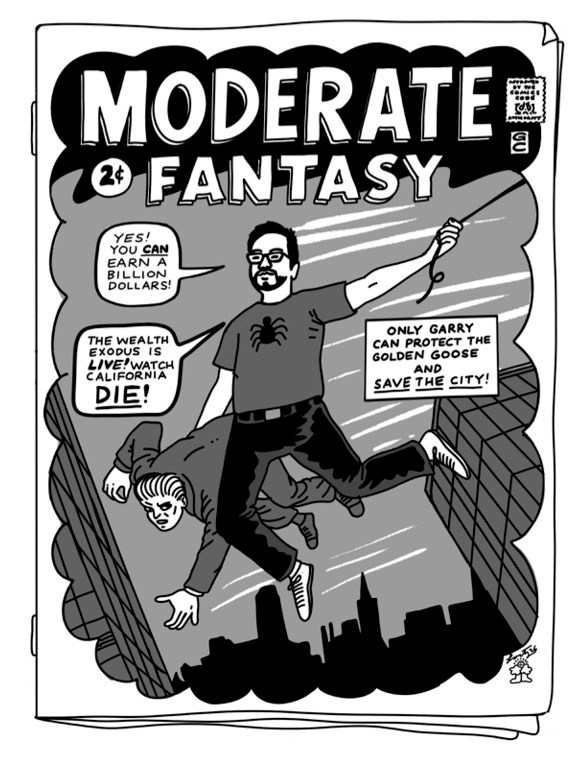
Writing about the incident, the San Francisco Standard dubbed Tan "the Dork Knight," a sobriquet Tan liked so much he briefly made it his X handle. But Tan is no tortured figure driven to revenge like Bruce Wayne. Looking at Garry’s List and Tan’s web of influence brings to mind a different superhero: young Peter Parker as the friendly neighborhood Spider-Man, naive but bold, sailing clumsily through the city with an eager cockiness. Reading Garry's List for the last six months, it's possible to see Tan swinging (sometimes wildly) from one thing to another, briefly sticking to topics before peeling free, always, always spinning.
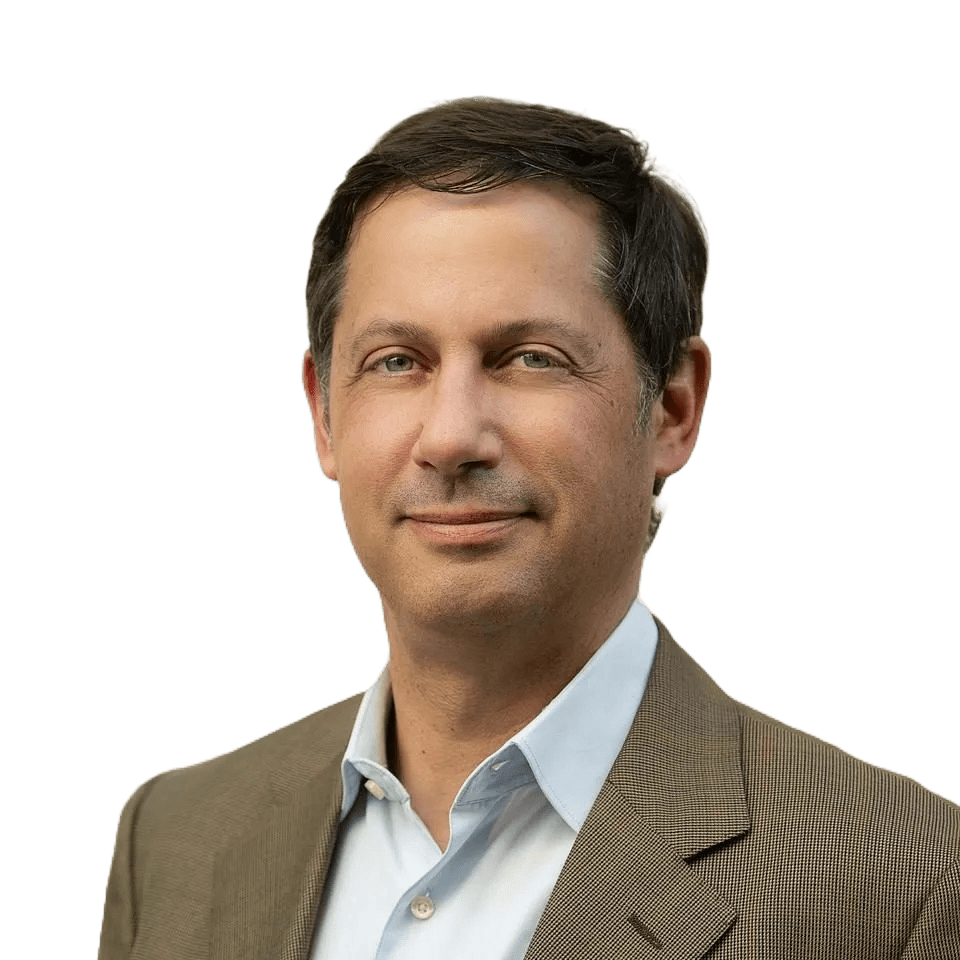
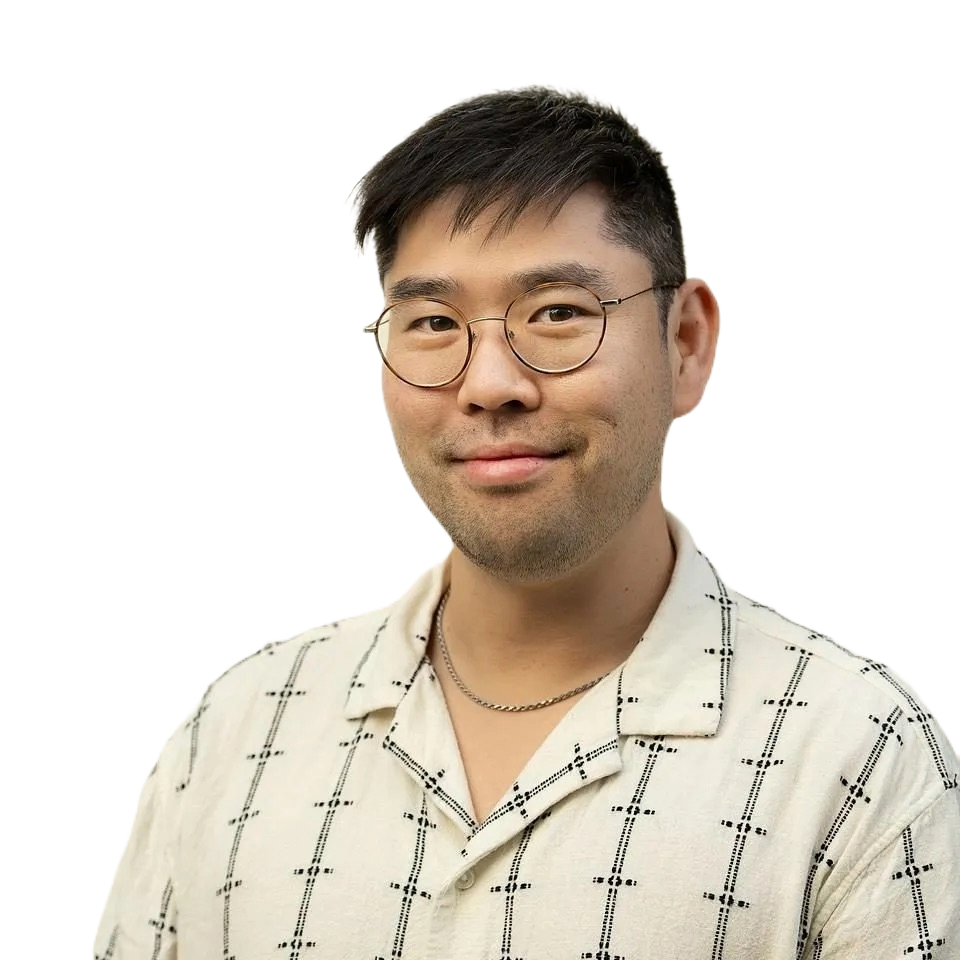
In person, Tan is small in stature, his face framed by simple black glasses and a simple taper cut. A former coder who worked for companies including Palantir (he designed their logo), Tan went on to found VC firm Initialized Capital before joining YC in 2023 as its head, a job previously held by Sam Altman. He is a son of Fremont, the site of his self-mythologized upbringing as an immigrant kid who got a job making webpages at 14 so he could help his parents buy their first home.
Despite his unassuming presence in real life, Tan’s online persona is swashbuckling. On X he’s a relentless gadfly and protector of San Francisco’s “golden goose,” an amorphous term he uses to describe the tech-driven prosperity he thinks can only thrive under “meritocracy” and “law and order.” In Tan’s crystal ball, restrictive guardrails and progressive activism are readying to kill the bird.
How Tan wants to guard the goose has crystallized in the last five years. He advocates for centrist policies, replacing progressive members of school boards, ousting left-wing legislators, doubling down on the tech economy, and rejecting local wealth taxes. He has spent hundreds of thousands of his own dollars at the city, state, and federal level to affect policy, beginning with his $100,000 contribution to the 2021 recall of progressive district attorney Chesa Boudin. This year, the PAC sponsored efforts to block Prop D, the city’s “Overpaid CEO” tax that failed to pass in the June election.
More than an X super user, Tan wants to be an avatar of what he repeatedly calls “common sense” politics in San Francisco. He’s a fan of Newsom generally, but doesn’t shy from criticism: As recently as February, Tan posted on X: “California spends $150B more per year than 6 years ago, but what do we have to show for it?”
Which is why I expected more of a battle between him and Newsom. I would wager attendees, who ran the gamut from city politicos to Silicon Valley heavies, were expecting that, too. Otherwise, why would such a crowd show up? (It couldn’t be for the catering: The crowns of chicken skewers were about as cold as the free beers in the adjacent fridge.)
Many of the biggest names, however, didn’t show despite their reserved front row seats: Ripple’s Chris Larsen; Marco DeGeorge, owner of athleisure brand Alo Yoga; and Akash Jain, the CTO and president of Palantir's US-government partnership. Mostly, the audience was made up of junior executives in cheap suits, backpack-toting coders, Europeans in slim-fit shirts, techfluencers with designer bags, and a few guys who looked more IT than AI.
Despite his unassuming presence in real life, Tan’s online persona is swashbuckling.
The big players didn’t miss much: Tan let Newsom dominate the conversation, the governor frequently speaking for several uninterrupted minutes while Tan nodded along. The few times Tan did interject, he went soft as silk, unwilling to unsheathe the sharp rhetoric he wields online.
One such moment came in the middle of the interview, when Newsom brought up Big Tech. Tan loves a billionaire, but despite his centimillions and YC’s status as probably the most famous tech incubator in the world, he played the role of King of the Underdogs, celebrating “Little Tech,” aka… startups.
Tan invoked Elon Musk, joking that “Elon wouldn’t be able to be Elon” if he focused on creating jobs in his businesses, all but erasing Musk’s political extremism.
The vibe seemed to shift. Newsom leaned in: “That goes into a deeper conversation,” he said. “You know, think about capitalism. We’re all talking about capitalism. The issue of Big Tech, we, you, all of you —”
“You’re looking at Little Tech here,” Tan interrupted with a smile.
“Yeah, little tech,” Newsom responded. You could practically hear his eyes rolling amid the scant laughter in the crowd. Tan couldn’t help but grimace, if subtly. The slight had cut the king.
Looking at Garry’s List, one gets the sense that Tan wants to say his piece without interrogation. The site is an impressively robust enterprise that presents Tan’s ideology and media strategy, but spending time with it, his signature righteous indignation begins to grate. A steady stream of op-eds and articles broadcast Tan’s aggrieved views on, well, everything: data center critics (anti), Zohran Mamdani (anti), Daniel Lurie (pro), YIMBY reforms (pro), and fast food business models (sort of mixed!)
Garry’s List is also a 501(c)4 nonprofit for political funding, not unlike efforts made by groups like GrowSF or the now-defunct TogetherSF, blending commentary and advocacy with political fundraising. For a time, Tan served as a GrowSF board member and benefactor (he’s given more than $50,000 to the group), but he stepped down on January 1, 2025, stressing that he remains a “supporter and friend.”
The difference between an organization like GrowSF and Garry’s List is that the latter’s output is not the result of a faceless coalition. It’s all about the guy whose name is on the site. Garry’s List prints hundreds of pieces under Tan’s byline, making the site something of a miniature universe with Garry Tan at its center.
Garry’s List is run by people who’ve been in Tan’s orbit for some time. One of Tan’s cofounders is Shaudi Fulp, a former lobbyist in Sacramento best known for helping to push California politics to the center. Tan’s right-hand man is Forrest Liu, a Stop Asian Hate activist who set up a Chinatown patrol during the pandemic and blames progressives (including “activist judges”) for being soft on criminals. Tan also quietly poached Dion Lim, the longtime reporter and anchor for ABC7, to serve as the chief strategist of his foundation. Lim’s coverage of anti-Asian crime drew Tan’s attention: He portrayed her as a truth-speaking hero battling what he saw as crime-loving extremists. Garry’s List’s spokesperson is Sam Singer, a crisis management pitbull who was once described as “the predator’s press man” thanks to his work with clients like Chevron. According to Singer, the nonprofit’s cash on hand is $220,220.85.
One mystery of Garry’s List is how Tan manages to find the time to publish, on average, more than a dozen op-eds and articles a month under Tan’s own name, often with dramatic headlines like “The Wealth Exodus Is Live: Watch California Die” and “Yes, You Can Earn a Billion Dollars.”
These pieces appear at a clip that would be impressive for a full-time op-ed writer, much less the busy president of a tech accelerator and father of two. One reason for this may be a reliance on generative AI. Excerpts from five articles scanned by three different top-rated AI detectors showed a high likelihood that the copy was written with AI, although most of the content was deemed to include some human writing. Gazetteer SF reached out to Tan about this and received a response from Singer, who pushed back on the AI analysis.
In an email, Singer wrote: “Our edge is data. Garry’s List processes a volume of primary-source government material, meeting records, filings, budgets, proceedings, that no traditional local newsroom has the capacity to cover. We do use AI as the engine to surface and make sense of all that data in real time.”
Singer also wrote that the mission of Garry’s List is “taking esoteric documents and making them understandable, with commentary on how they actually affect people. Every output is directed and reviewed by our team — it’s a capability we’re improving every day.”
Whatever the “esoteric documents” he’s drawing from are, Tan’s targets are the same ones he decried for years on X and his now-dormant YouTube channel: hate crimes against Asians, criminal justice reform, ‘wokeism’ in public schools, billionaire taxes, homelessness nonprofits, and anything standing in the way of new housing in the city. Tan frames these and other issues as existential threats to not just people like him, but all of us. His is a worldview borne from new money wealth crossed with old money attitudes on race, inequality, and social collapse.
Tan sees himself as a classic Democrat, one left behind in the culture war. That may be true, but Tan has shown himself to be comfortable serving as handmaiden to right-wing titans like Musk and Peter Thiel, who was a special guest for a casual fireside chat on political theology in 2024 at an event at Tan’s home called “Holy Guacamole.” (Tacos and tequila were served.) That same year, Tan had to apologize for telling Aaron Peskin and six fellow progressive SF supervisors to “die slow, motherfuckers,” a mask-off moment when his loathing for the “hard left” got the better of him.
Gil Durán, the author of The Nerd Reich: Silicon Valley Fascism and the War on Democracy, has followed Tan’s machinations for years and told me that Tan is one of a number of Silicon Valley figures who “believe it is their destiny to remake politics in their own image.”
“His ambition for power is accompanied by a profound ignorance of history and policy that will end in disaster,” Durán said. “He’s a big mouth attached to a big bank account.”
“Strangely, he calls himself a Democrat while praising Elon Musk, worshipping Peter Thiel, and rarely finding anything negative to say about Trump’s MAGA fascism,” Durán continued. “Without the moneybags, he’d be laughed out of town.”
Garry’s List prints hundreds of pieces under Tan’s byline, making the site something of a miniature universe with Garry Tan at its center.
I wanted to discuss this and my memory of him claiming he was a “lefty” in an old X exchange with me a few years ago. Tan didn’t respond to repeated requests for a one-on-one talk, but through Singer, he did answer a single question: What about Garry’s List has made him most proud?
“What I’m most proud of is that Garry’s List is bringing together diverse voices and engaging the little tech community in ways that haven’t been done before. We’re democratizing the tools that let our members find others in their community who share their priorities, and giving them a way to channel that energy into action,” Tan stated.
“A big part of that is taking esoteric documents and proceedings and making them genuinely understandable. This is all a work in progress, and we're constantly iterating and improving.”
Not only does this statement reiterate Singer’s invocation of “esoteric documents,” but the response sounded like something whipped up on Claude. If these issues are so important to him — and he’s so proud of “bringing together diverse voices” — why was he sending me buzzword slop?
After years of reading him (and occasionally squabbling with him) on X, when I finally found myself in the same room as Tan, I was left with a different question: Where was the Dork Knight?
What I witnessed was a stump speech by the governor, with Tan more or less serving as the stump. Newsom — no one’s idea of a spontaneous or even very human human — came off as much spikier and livelier than his would-be interrogator. At one point, Newsom addressed Tan’s critique of him in the past and offered an olive branch wrapped in thorns: He apologized for attacking success. “Not a good look, man. Can’t begrudge your success.”
Then, in classic non-apology form, Newsom continued with his point.
“But, it is about growth and inclusion,” he said, looking into the crowd as if lecturing schoolchildren. “And we got to get the inclusion part right.”
“That sounds like the California republic I know,” Tan responded with a tight-lipped smile.
As the session wrapped, the crowd swarmed Newsom, iPhones on selfie mode; Tan was ushered in the opposite direction. Finally, I saw my chance for a chat with a man I’ve been observing for years.
When I introduced myself, Tan nodded at me as we mimicked a (brief) walk-and-talk straight out of an Aaron Sorkin script.
“How come you were so soft on the governor?” I asked.
Tan just shrugged. “I had to,” he said.
Then he disappeared through a nondescript doorway, back into the Garryverse where I was definitely not welcome.
A version of this story first ran in print in Gazetteer San Francisco Issue 4.