
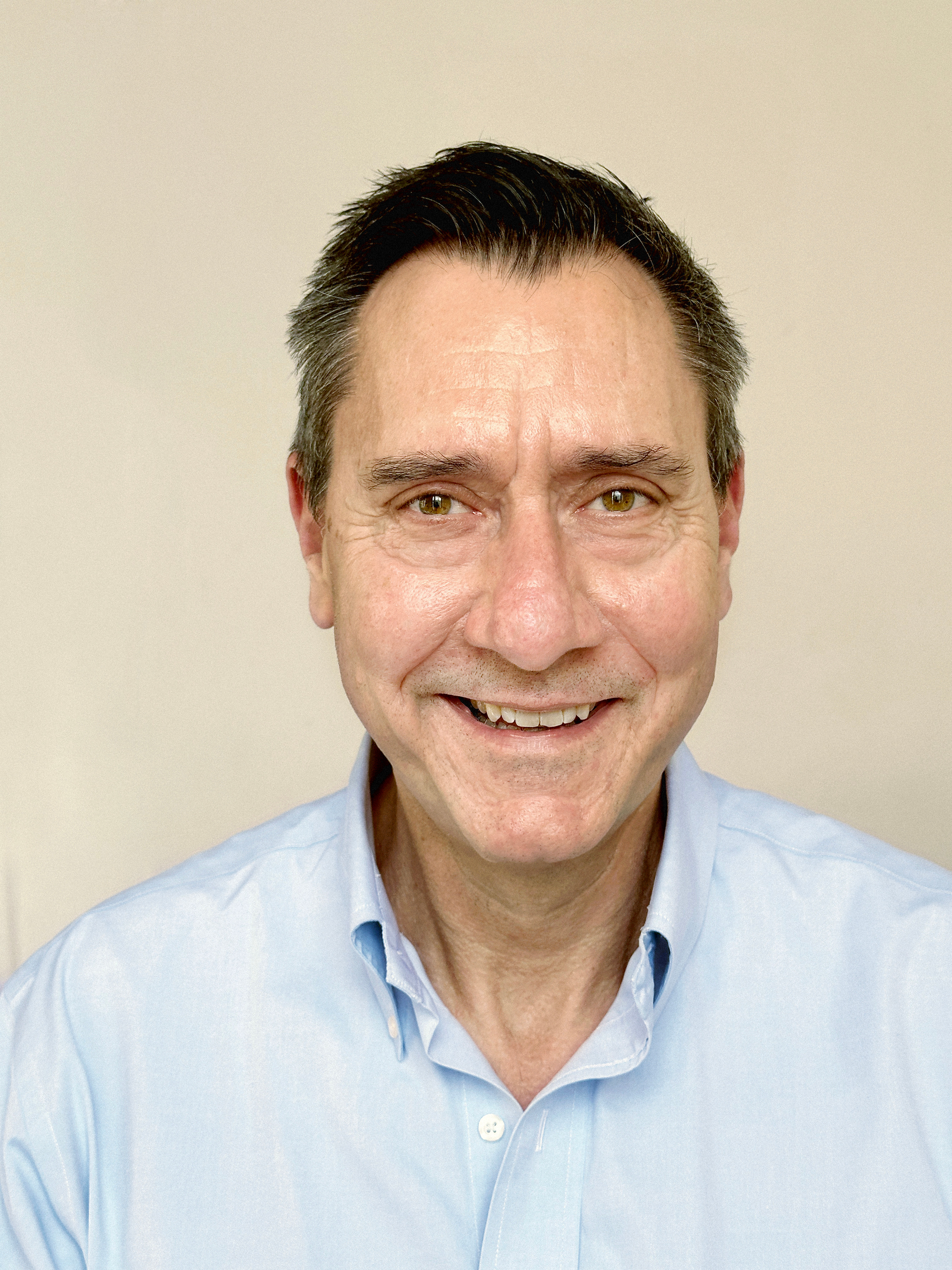
Luke Barr had a classic Bay Area upbringing: hiking Strawberry Canyon, a part-time gig delivering the San Francisco Chronicle, walking dogs on the beaches of Sonoma County, and dinner at the home of legendary food writer M.F.K. Fisher, who just happened to be his grandmother’s sister. This early exposure to the best of French cuisine helped shape the New York Times bestselling author into a Francophile with an appetite for chewing on the social and cultural history of food.
Barr is the author of Provence, 1970, which examines one fateful winter his grandmother and great aunt M.F.K. spent in the south of France, joined by some of the world’s leading culinary voices including Julia Child and James Beard. Ritz & Escoffier examines how famous hotelier César Ritz — yes, the Ritz — joined forces with chef Auguste Escoffier to nurture a new social order and define modern luxury.
His third book, The Secret History of French Cooking, comes out tomorrow, March 17th. It details the development of the nouvelle cuisine movement of the ‘60s and ‘70s. This era in French history forever changed the culinary landscape and laid the foundation for many of the fine-dining tropes and traditions still prevalent today.
The following conversation has been edited for length and clarity.
Forgive me if this question is redundant given your family history, but what got you into food writing and especially these historical deep dives?
Yes, my great aunt was M.F.K. Fisher and I would go and visit her and my grandmother. They were both up in Sonoma.
Then, many years later, I was working at Travel + Leisure magazine… It’s funny because there's a certain kind of article that, as an editor, I would always get pitched by writers and I would always say no to because we got so many of them. It was such a cliché. And that was either the story of someone who would like to travel in the footsteps of this famous writer, you know, Ernest Hemingway or whoever, and they want to do a travel story in this famous person's footsteps. That’s one kind of story that would get pitched constantly, and I would always say absolutely not. The other type of story that we would always get pitched would be someone who wants to travel to certain locations to trace their family history, you know, “My grandparents came from there and I want to go back.”
But then ironically, at some point I pitched that exact story to my boss at Travel + Leisure. I said, my great aunt is M.F.K. Fisher and she traveled to Provence all the time. I grew up hearing all these stories about my dad and his brothers and my aunts and so forth on these great trips to France and I want to go travel in her footsteps and trace my family history.
It was exactly the kind of story that I always said no to, but in this case, my boss said, “Great, I love it. Let's do it.” So I wrote the story about going to Provence. It was a standard Travel + Leisure feature story and I just mentioned in that article that back in 1970, my great aunt was here in Provence with my grandmother and they were visiting Julia and Paul Child and James Beard was there — and this is just a paragraph buried in this article. Then, my agent called me and said, “Hey, that could be a book!”
Where’d you get the idea for Secret History?
The starting idea was that post-1968, there was a shift in the culture. And so, that’s what I mean about food being a way into talking about other things. Sex, drugs, and rock and roll, the Baby Boomer generation and all that stuff was happening all over: in France, in the States, everywhere.
There was a sort of a new generation of chefs in the late ‘60s, early ‘70s who thought, why should they just do the same old recipes, the same classic standard dishes that they've been cooking, for decades, even centuries. Why not try something new? Why can’t the chef be an artist, an auteur, and invent something?
The group of chefs surrounding Paul Bocuse were labeled nouvelle cuisine and it was this exciting, trendy moment in cooking for a while. Then there was, of course, big backlash and then all sorts of things happened but that was the starting point for this book: That cultural moment of the chef deciding that he could be an artist.
I said “he” there deliberately because this was also a moment when women chefs were excluded from the culinary establishment. Once I started doing my research into nouvelle cuisine, I very quickly discovered another story, which was this group of women chefs fighting for recognition at the same time.
Talking about this pivotal moment in culture and history around 1968 when everything is getting grittier and art is booming…
It’s movie-making, it’s in novel-writing, it’s in politics. Everywhere you look, there’s kind of an anti-authoritarian mode.
Why was France the place to focus on?
You know, in the '60s, if you wanted to go to the best restaurant in San Francisco or any place, generally speaking, the best restaurant was a French restaurant.
French cooking had a lock on haute cuisine, on what was considered to be the very best. And so, that’s why when this new generation of chefs in France started doing these experiments, they got so much attention, including over here. I mean, there was a huge amount of press attention.
The other thing is that it wasn’t just rethinking French cooking; chefs were traveling more. They were going to China, going to Japan, finding international influences. So, this is also the beginning of a kind of globalization of taste.
This book contains secrets, gossip, and lore from over half a century ago. What was the research process like?
I call it the Secret History for two reasons… I mean, what I was just describing about all the media coverage, that was not a secret. But the fact that there were these women who were fighting for recognition, that story has never been told. And so that was a little bit of a secret.
Then there’s this other element which has to do with the most powerful food critic in France, if not the world at the time and for many many years, who has a role to play in this whole story. That's the story of Robert Courtine, the food critic for Le Monde, and his history has never been fully told.
I went to France and interviewed everyone who was still alive, including many of the women that I write about in the book, who created this organization called the ARC to promote women's cooking and women-owned restaurants. They really did succeed in changing things. Slowly in the ‘70s into the ‘80s, more and more women were able to get work in restaurants. At the time in the late ‘60s to early ‘70s, a woman in France could not get a job at Paul Bocuse’s restaurant. There were only men in the kitchen.
Tracking down these women and interviewing them — some of them still operating restaurants, at age 80 or whatever — it was an incredibly fun and wonderful to do.
So the research was mostly talking to whomever I could find. Then, I also went digging into archival materials and old newspapers and things like that.
Where in France did you travel for this?
I travel to France quite a bit, but for the main research trip, I was based in Paris and then traveling around the country down to Lyon to visit Bocuse and [Joël] Robuchon, then down to the southwest where Michel Guérard has a restaurant, and then up north. So I was traveling all over France interviewing people. It was delightful research, what can I say?
In your experience traveling to France and beyond, can you sense the influence of the people you cover in Secret History some 50-plus years later?
It’s easy for me to say yes. If you go to any Michelin three-star type restaurant — which I honestly do not do very often — but when you do, it’s always an experience that is heavily colored by this history in this book. It’s very meticulously inventive, you know, the idea that a plate comes out of the kitchen and it's in and of itself beautiful. The idea of the large plate with the food in the middle of it and this kind of graphic presentation. That’s the cliché of nouvelle cuisine.
Of course, it very quickly succumbed to being overexposed and there was an enormous backlash against this idea of these gigantic plates and these tiny portions of food and these super high prices. But still, if you go to that kind of restaurant today, you can see that influence. The whole trend of molecular cuisine or Ferran Adrià or any number of these avant-garde chefs, they owe a huge debt to the nouvelle cuisine movement because that’s where this all began.
And then needless to say the existence and the success of so many women chefs, you know, owes some debt to this history in the ‘70s.
Just one last question: What's next?
I'm writing a book about sushi.
Oh, that’s a pivot!
My wife is Japanese. We met in college, so I’ve been going to Japan for many, many years. I have written over the years in various magazines and so forth about Japan, but I’ve always wanted to write a book about Japan. And also, I don’t think the definitive book about sushi has been done. I mean, there are books about the history of sushi, which is sort of dry. I’m talking about how sushi kind of broke through in the ‘80s and became the quintessential modern chic food. And of course now, it’s all over the world and in every supermarket.
I want to go back to the ‘80s and the moment that it kind of broke through culturally. This is coinciding with the time when there was this bubble economy going on in Japan. Japan was hugely powerful, you know — Japanese companies buying Rockefeller Center and buying Columbia Records. There were all kinds of politics in the background, but then the foreground was also this rise of sushi and the sort of Japanese avante-garde and Comme des Garçons fashion and stuff like that. So, that’s my new book. A total pivot toward the east.