
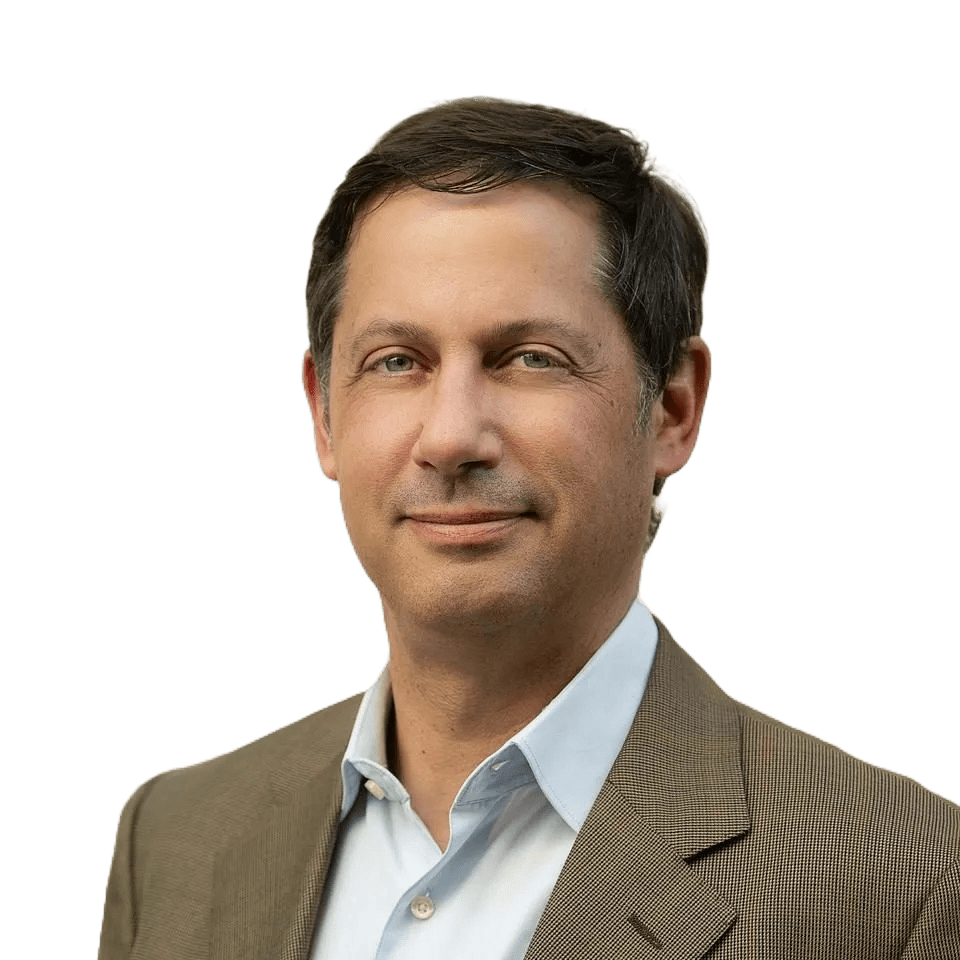

Richard Zieman had 60 seconds to make his case for why San Francisco should add more of the speed safety cameras. Installed last year around the city, the cameras are intended to reduce automobile collisions and fatalities.
Speaking Thursday during the public comment period at a Public Safety and Neighborhood Services Committee hearing at City Hall, Zieman got to the point: “Our son, Andrew, was killed by a speeding car at the bottom of Franklin Street in front of Sherman Elementary,” Zieman said. Andrew, a 30-year-old teacher, was heading to work when he was hit by a car going “about 40” miles per hour, among others moving even faster, Zieman said.
“I’m sure there are more Franklin Streets and Sherman Elementaries out there that aren’t being dealt with, that need more than just basic traffic calming measures,” he said.
Zieman was one of about a dozen people, some from Walk San Francisco and Families for Safe Streets, who urged the committee to expand the camera program. Some shared their own experiences of being struck by speeding cars, stories full of violent and disturbing descriptions. Eleven pedestrians have been killed in San Francisco so far this year, according to Walk San Francisco. Sixteen pedestrians were killed in the city last year, and 24 died in 2024, according to the organization.
District 6 Supervisor Matt Dorsey, who chairs the committee, called the hearing on the one year anniversary of the installation of the cameras. San Francisco was the first California city to implement the $7.4 million pilot program under a state law.
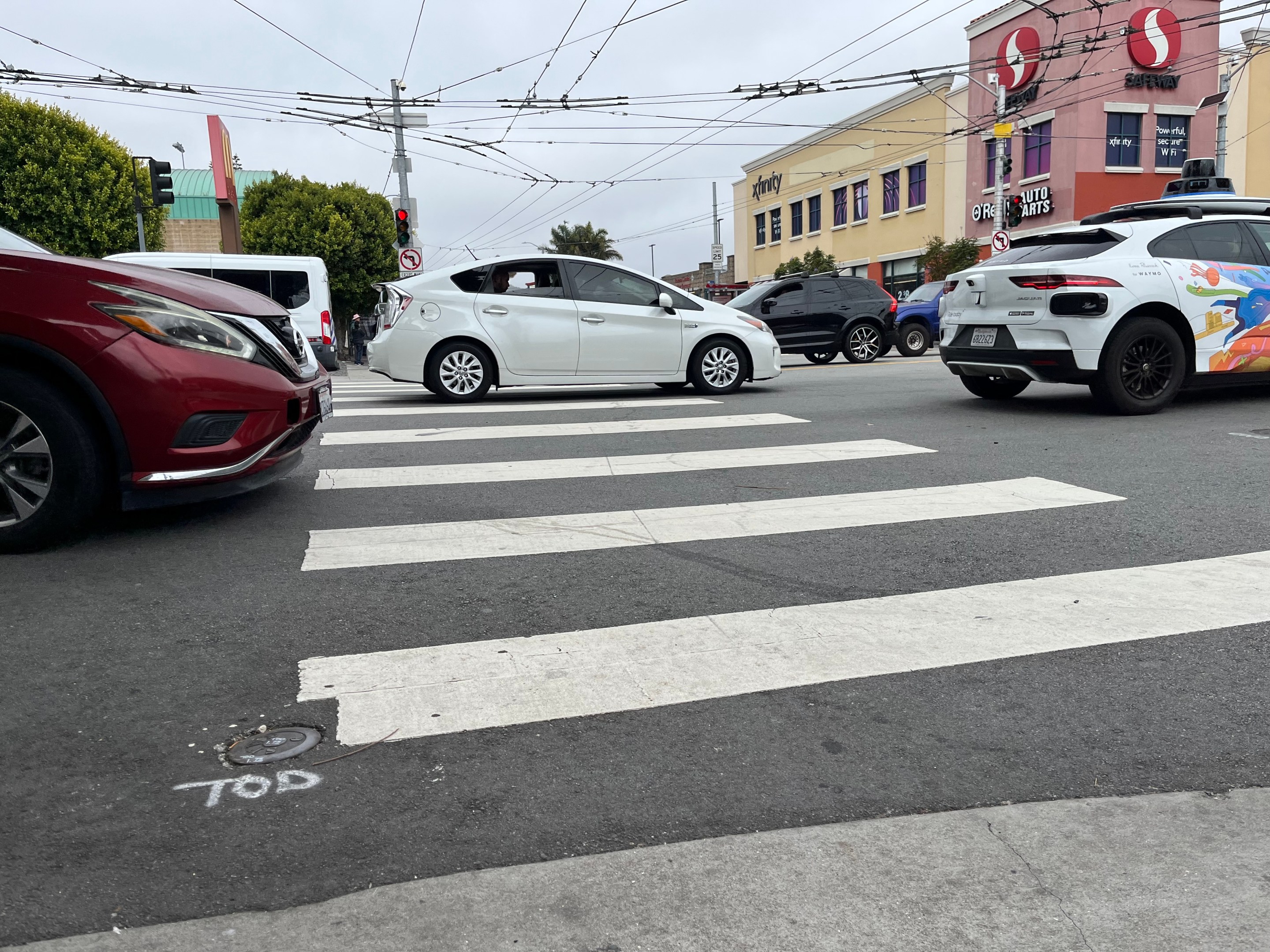
Relying on camera data, the San Francisco Municipal Transit Authority issued warnings to speeding drivers starting in June 2025, and began issuing citations about two months later. The SFMTA makes no secret of where its 33 cameras are located, and map apps will dutifully warn drivers about them. Dorsey, citing SFMTA numbers, said that speeding has dropped an average of 80 percent at the 33 camera locations since the cameras were installed.
“This program is proving why we should have even more of this life-saving technology,” Dorsey said at the hearing. District 4 Supervisor Alan Wong and District 3 Supervisor Danny Sauter joined Dorsey in sending a resolution to the full board next week endorsing the cameras.
Though largely symbolic, it was a first step in trying to get more of the devices installed. The resolution puts “San Francisco on record in saying we should support it, that we believe the state legislature should strengthen and expand it,” Dorsey told those in the chamber.
After the hearing, Richard Zieman spoke to Gazetteer SF. He explained how on Nov. 10, 2021, just before 8 a.m., his son, Andrew Zieman, a paraeducator at Sherman Elementary, was waiting on the sidewalk when a car ran through a red light at Union Street. The vehicle was struck by another car speeding down Franklin Street, which hit and killed Andrew.
Zieman told me that both he and his son attended Sherman Elementary as students. For years before the accident, the school’s educators, principal, and Parent Teacher Association urged the city to slow traffic on Franklin Street, he said.
“It was no secret to anyone that there was a speeding problem on Franklin,” Zieman said. “No one was surprised that it was a speeding car that killed Andrew. They just didn’t want to do anything about it.”
Testimony in civil litigation, including an unsuccessful suit Zieman filed against the city, revealed that the timing of street lights encouraged speeding, he said.
“It’s not a fatality without the speed,” Zieman recalled expert engineers testifying at trial. If the driver on Franklin wasn’t speeding, the crash wouldn’t have reached the sidewalk, they acknowledged in court, according to Zieman.
San Francisco’s own expert testified that if the driver wasn’t speeding, he wouldn’t have reached the car on Union Street in the first place; the city’s top engineer acknowledged the intersection wasn’t prioritized because it wasn’t on the high injury network, Zieman said.
After Andrew was killed, the timing of the lights was changed. Because the intersection is near a school, it was already marked as a 25 mph zone, so the city added bulb-outs, or curb extensions, to slow traffic and better delineate the cross walk. Speeding drivers still weren’t deterred until last year, he said, when a camera was installed to monitor traffic on Franklin Street between Union and Green Streets.
The speed cameras are effective not because the fines are severe, but because of the certainty speeders will get caught, Dorsey told Gazetteer. (Drivers exceeding the speed limit by 11 to 15 mph pay a $50 fine). Dorsey expects his resolution will be easily adopted in a vote Tuesday by the full Board of Supervisors, and then passed along to Sacramento. “Hopefully the legislature will be inclined to expand the program,” he said.
The supervisor explained that the growing population density of the Mission Bay neighborhood in his district has exposed the dangers of its street design. He pointed to the death of a two-year-old girl in March, who was struck by a car on Fourth Street in the neighborhood. It was the second time in three years that a child was killed on the street.
“It really elevated for the entire neighborhood that we have to prioritize this,” Dorsey said.
Editor’s Note: The story has been updated to clarify that Richard Zieman quoted third-party expert witness engineers, not engineers employed by San Francisco.