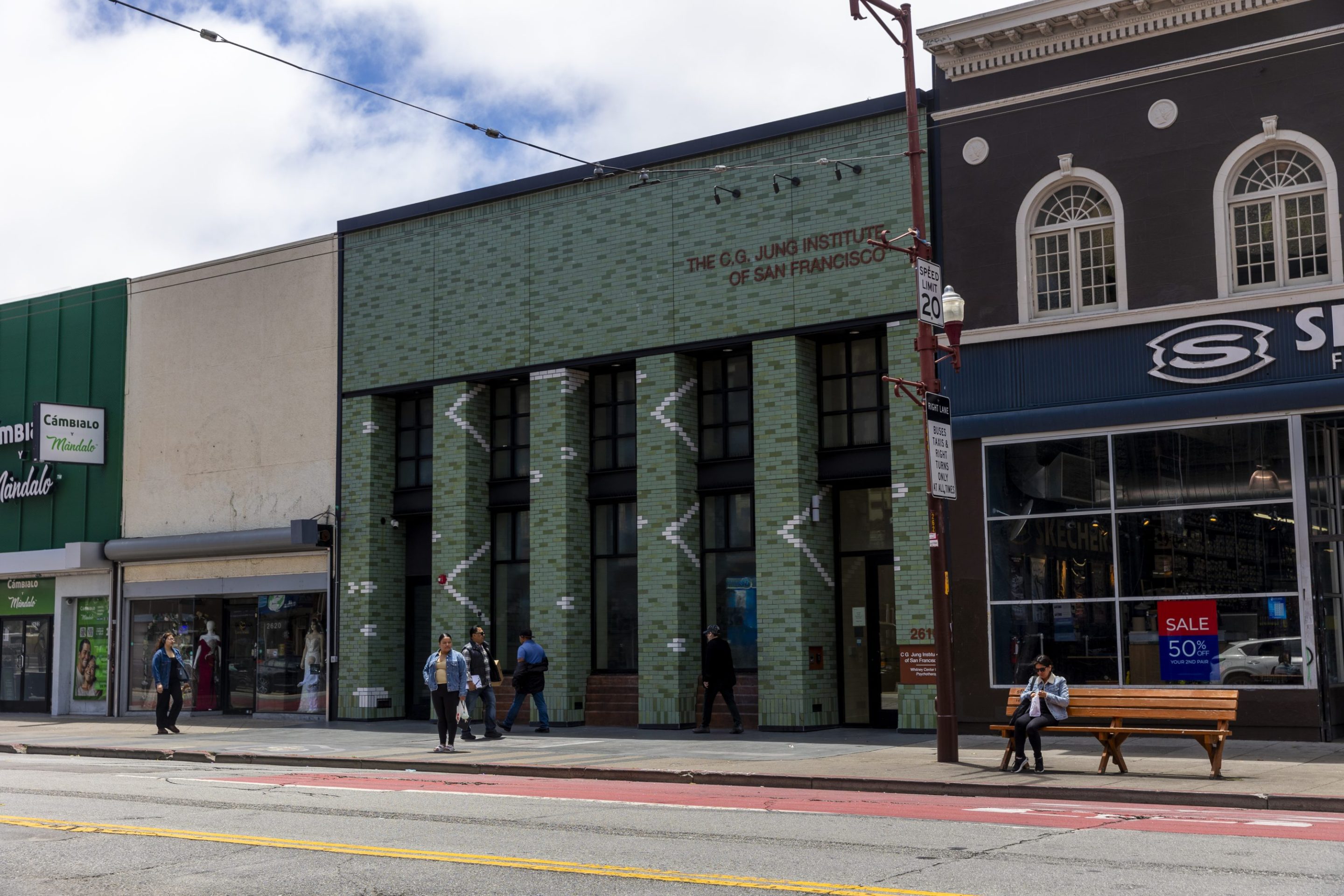


San Francisco’s municipal curbside composting program began in 1996 as a pilot in the Richmond District. Within several years, a city ordinance mandated that every single residence and business in San Francisco use compost bins. In its now 30-year run, the program, which is overseen by privately-owned Recology, has diverted 2.9 million tons (5.8 trillion pounds, or colloquially, a shitton) of organic material from landfill disposal.
Thanks to those clunky green bins, our food scraps and yard trimmings (instead of rotting in a graveyard with Labubus and 7-11 Big Gulps) evolve into compost that, in turn, helps improve soil health and crop resilience, grow sturdier, more nutrient-dense fruits and vegetables, and reunite urbanites with the food system.
“It's saving landfill space, it’s turning food scraps into compost, it’s helping make the soil more healthy on local farms, it’s helping reduce methane emissions,” said Robert Reed, a public relations manager at Recology. “So, you know, there’s tremendous benefits for this program and it’s being replicated.”
In his 33-year tenure, Reed has celebrated the program while hosting compost-curious representatives from more than 100 countries hoping to imitate San Francisco’s implementation. (Upcoming visitors include interested parties from Mongolia.) Reed’s vacations, few and far between, are often spent in France, where SF’s municipal program inspired a national law requiring every municipality to make composting convenient to residents and businesses.
In the early days, industry naysayers were fixated on the issue of leaky trucks spilling juices on the road, which was ultimately addressed with some rubber and minor augmentations. Landlords bemoaned slow uptake among tenants, especially the elderly. Special green bags were a frustrating addition to grocery store receipts. Residents feared their sidewalks would soon be filled with flies, rats, and smelly smells. The city, at the time, was grappling with a growing, emboldened rodent population and some folks were weary about compost bins serving as all-you-can-eat buffets for vermin. As it turned out, an attached lid worked wonders to stave off murine scavengers.
Green waste in San Francisco now outpaces recycling: The city collects some 550 tons of waste from green bins every day, versus 450 tons from blue bins. Both the compost and recycling programs have helped the city achieve an enviable 80 percent waste diversion rate, which means 80 percent of the solid waste collected in San Francisco does not end up in landfills. (By comparison, waste diversion rates in New York City and Los Angeles sit at just 20 percent and 40 percent, respectively.)
Recology owns and operates eight different composting facilities on the West Coast. Green waste from the city goes to a facility east of Livermore, along Interstate 5. It takes about 60 days, through a process of natural heating, aeration, and churning, to turn scraps from our homes, corner stores, community gardens, and restaurants into finished compost that is then sold to hundreds of local farms. Currently, 95 percent of Recology-made compost is sold to farmers. It runs them $5 to $12 per cubic yard, depending on how many truckloads a farm purchases. The minimum order is one truckload, which holds 40 cubic yards.
Compost and cover cropping — the process of planting accessory crops such as mustard grass and daikon radishes to manage erosion and weeds — have proven to be incredibly useful for restoring soil health. Used together, they improve root mass, increase yields, and help the soil pull more carbon from the atmosphere. The results can include more consistent, disease-resistant crops, and eventually, more nutrient-dense produce.
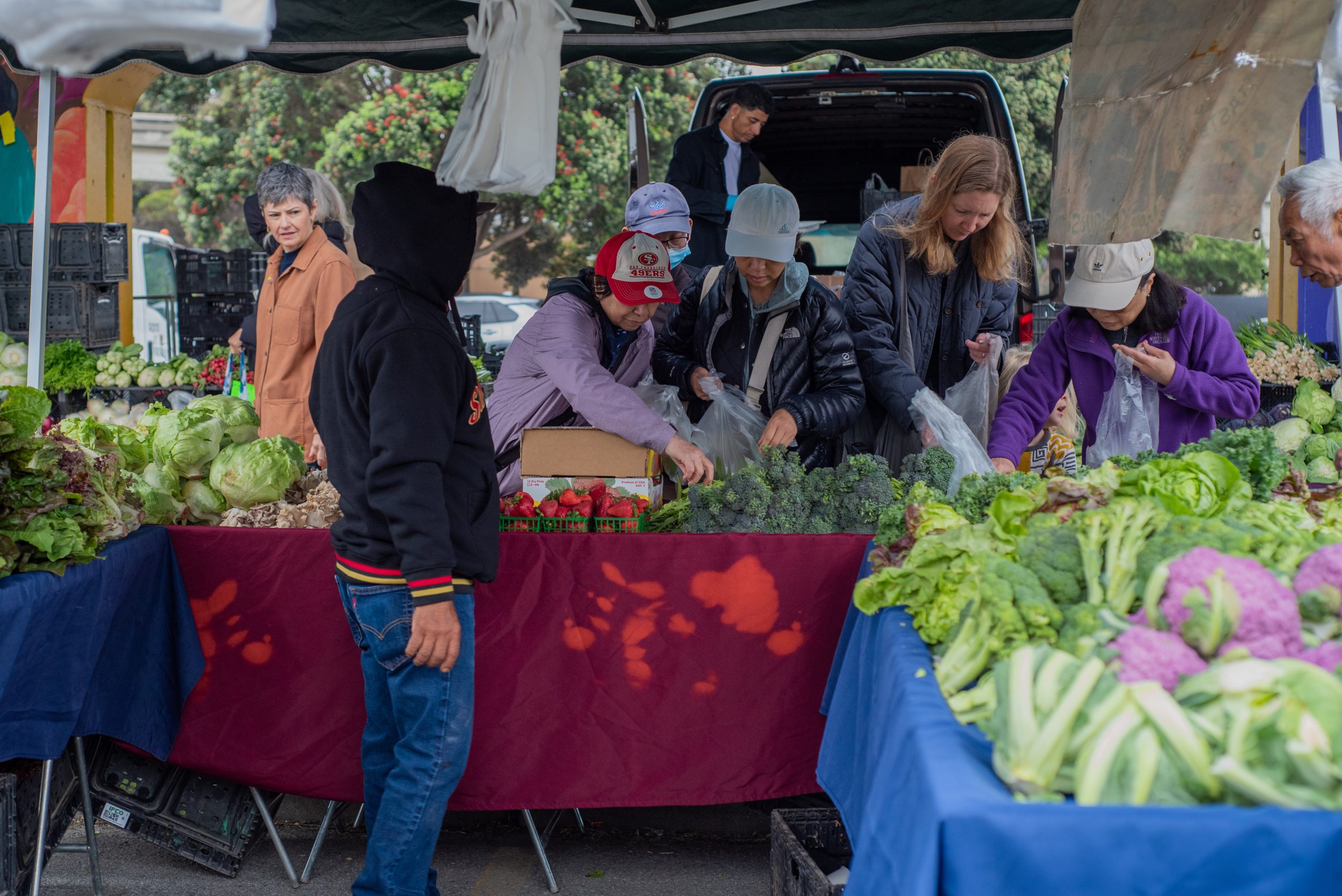
Walk around any of the city’s farmers markets, and you’ll see what I mean. Stalls of organic farmers are eager to extol the virtue of compost, some purchased and some homemade, and they have the crates of colorful fruits and vegetables to back them up.
“We as farmers spend our life learning how to make really good food and trying to get the food to the market. If the food is wasted and thrown into the landfill, it's extremely depressing,” said Bob Shaffer, an agronomist and agricultural consultant based in Hawaii. Shaffer advised Recology’s compost program with the goal of making a marketable product that would benefit farmers and the people they feed.
“When I go visit farms, these are often very talented farmers having serious problems,” he said.
The pursuit of maximum crop productivity through fertilizers, herbicides, and pesticides kills soil microbiomes and threatens farms. On farms across California, decades of chemical use has depleted the dirt of essential nutrients and killed off bacteria and fungi that are essential to soil health.
“If you don't feed me for two days, I’m not going to work very hard. If you don’t feed me for three years, well, we know what that results in… The soil doesn’t die, but it becomes dysfunctional to the point where it doesn’t work anymore, even with fertilizers,” Shaffer said.
“One of the complaints that I get from farmers is that the fertilizers aren’t working,” he added. “The fertilizer works just like it used to. It’s that the soil microbes can’t respond to it anymore.”
Another major downside of fertilizer use is cost: Global fertilizer prices have leapt at least 30 percent since the closing, opening, and re-closing of the Strait of Hormuz, endangering shipments of urea and ammonia, both of which are made from natural gas. Add to that the tariffs the Trump administration put in place last year and you can understand why finding a local, sustainable alternative to fertilizers appeals to farms of all sizes.
To compete with the customizations that fertilizer can offer, Recology has what they call available amendments — additional organic materials such as rice hulls, or potent minerals such as gypsum or sandy loam — to help tailor each order of compost to the farmers’ specific soil needs.
“The roots and the crops love [the compost], and we didn’t pay a penny for it,” explained Shaffer. “We didn't import any oil for it. We didn’t fight a war for it.”
Recology’s compost arrives at farms steaming on its 18-wheeler chariot. It’s moist and spongy when it first hits the ground, but over time, the top layer will dry leaving the inside pile moist for months. It smells potent, earthier and woodier than mulch and but less crisp than a wet forest. Surprisingly, it lacks rotten notes, unlike the countertop composting devices that can fill homes with a throat-tightening rankness.
Zoe Davis, owner of Full Circle Farm, became enamored with farming and compost while earning a doctorate in microbiology. Davis’ Gilroy farm teems with busy vegetable plots and flowers tended by hand or android, no gas-guzzling tractors or tillers in sight. Chickens, which add precious nitrogen to the soil via their droppings, run freely or are taken out on walks beneath a robot-driven mobile coop, the future and the past existing in a peculiar, very 21st-century California harmony.
Davis knew that composting would be an essential piece of her farming ethos, but she also defends it from a cost perspective. “For our scale for our type of farm, it ends up completely making more cost sense for us to use compost instead of synthetic fertilizer,” she said.
Compost also helps with other costs. “Water is front-of-mind all the time. Having a layer of compost on the top of the soil dramatically helps retain moisture in the soil. So even on a boiling hot day, you can reach down under the compost and feel moisture in the soil.”
According to Davis, the true expense of implementing compost is the cost of delivery, as well as transitioning equipment from fertilizer sprayers to manure/compost spreaders, which are often tractor-mounted.
As she sees it, knowing that your household waste is contributing positively to the food you’re buying has the added benefit of connecting each of us to what we eat. “Consumers are feeling increasingly alienated from the food system,” Davis said. “There's just this kind of this lovely circularity about it: We are both being fed by the community and we’re feeding the community.”
A version of this story first ran in print in Gazetteer San Francisco Issue 3.