

State health officials released a wealth of educational materials in several different languages on Wednesday and doubled down on their warnings against foraging wild mushrooms following the death of a Sonoma County man last week.
California is in the midst of its deadliest mushroom season in decades, with 35 poisonings since Nov. 18 across eight counties: Alameda, Contra Costa, Monterey, San Francisco, San Luis Obispo, San Mateo, Santa Clara, and Sonoma. It’s unclear whether the victims originally found or ate the mushrooms in those counties, but nonetheless, experts say the risk is statewide.
The recent death in Sonoma County marks the third this year. Three of the surviving victims required liver transplants, state officials say.
A standard season would expect to see some five poisoning cases statewide, and roughly three deaths nationwide. Due to this drastic increase in poisonings, state officials are urging residents to avoid eating wild mushrooms altogether during what they have deemed a super bloom of toxic death caps.
“Early rains and a mild fall have led to profusion of the toxic death cap mushrooms in Northern California,” Dr. Michael Stacey, the county’s interim health officer, said in a release. “Eating wild mushrooms gathered without expert identification can be unsafe. Some harmful varieties closely resemble edible mushrooms, even to experienced foragers.”
Professional foragers strongly emphasize education rather than preach abstinence.
“If you're going to eat something, you need to get at least three points of confirmation of your identification,” Dr. Gordon Walker, a Napa-based scientist and author, told me last month. “This can be an ID on iNaturalist, uploading a photo to a local group or forum of sorts, cross-checking photos and characteristics in a guidebook or other printed reference, and sending a photo out to foraging friends for confirmation.”
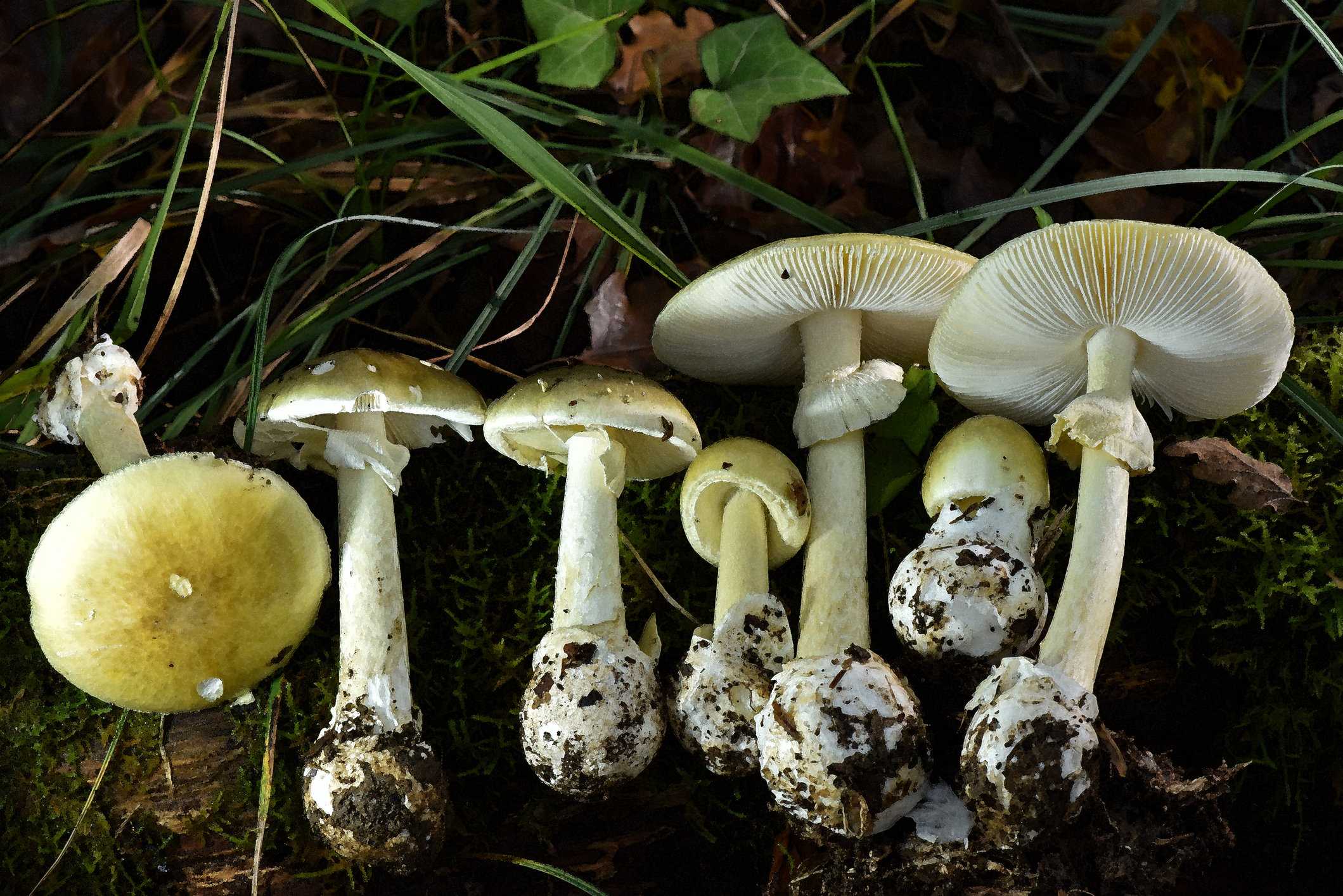
Death cap mushrooms, or Amanita phalloides, can be easily mistaken for edible varieties. Cooking, boiling, drying, or freezing the mushrooms does not make them any safer to eat.
“Anything resembling a death cap — so a white or sort of greenish tinted mushroom — avoid,” professional forager Bryan Jessop told me.
Dangerous death cap run-ins are common among immigrant communities in the US, as they can resemble edible mushrooms native to parts of Southeast Asia, Central America, and Europe. That confusion has contributed to a number of this year’s poisonings, including seven individuals of the same social “cohort,” Dr. Craig Smollin, UCSF emergency physician and medical director of the California Poison Control System said at a December press conference.
Officials note that parents should keep a close eye on children and pets when exploring outside where mushrooms grow. It’s important to act quickly if you believe you’ve eaten poisonous mushrooms. Symptoms of mushroom poisoning include abdominal pain, cramping, diarrhea, and liver damage. Symptoms can arise anywhere from 6 to 24 hours after ingestion.
But their top recommendation, bulleted and bolded across several fact sheets and press releases: “The best way to stay safe is to not eat wild mushrooms.”