


The good news: It’s SF Tomato Week. The bad news: No one told The Tomato Guy.
“I didn't even know Tomato Week was a thing,” said Spencer Huey, a Bay Area celebrity of sorts known for his green thumb. “I'm kind of sad about that.”
His tomato week was months ago, in fact. Huey is a cook at Chez Panisse and the executive officer of the restaurant’s unofficial tomato plant program. Every spring, he propagates tomato plants from his personal garden — this year, in the ballpark of 1,200 — and sells them at an annual, early spring event.
“Oh my goodness. I know. It was crazy,” Huey said. “I loaded them up in my car and brought them to work every week and stored tomato plants literally all over the restaurant.” And after the sale, not a plant left behind.
Huey’s grand tomato bazaar began as a pandemic-era farmer’s market sale and weekly online drop on Chez Panisse’s site. The plants would routinely sell out within five minutes. Huey, then working as a director of a children’s program at a Bay Area church called the Cornerstone Fellowship, frequently fantasized about a career pivot to the kitchen. Suddenly, his hobby had opened the doors to one of the Bay’s most prestigious restaurants. “I was able to visit this place that I have always loved and looked up to every week,” he said. When a position opened in the summer of 2021, he went for it and hasn’t looked back. (He can’t; he’s too busy tending to the tomatoes.)
In his early years, he grew six varietals, then 12, then 24. This year, Huey grew some 55 varietals, per his spreadsheet.
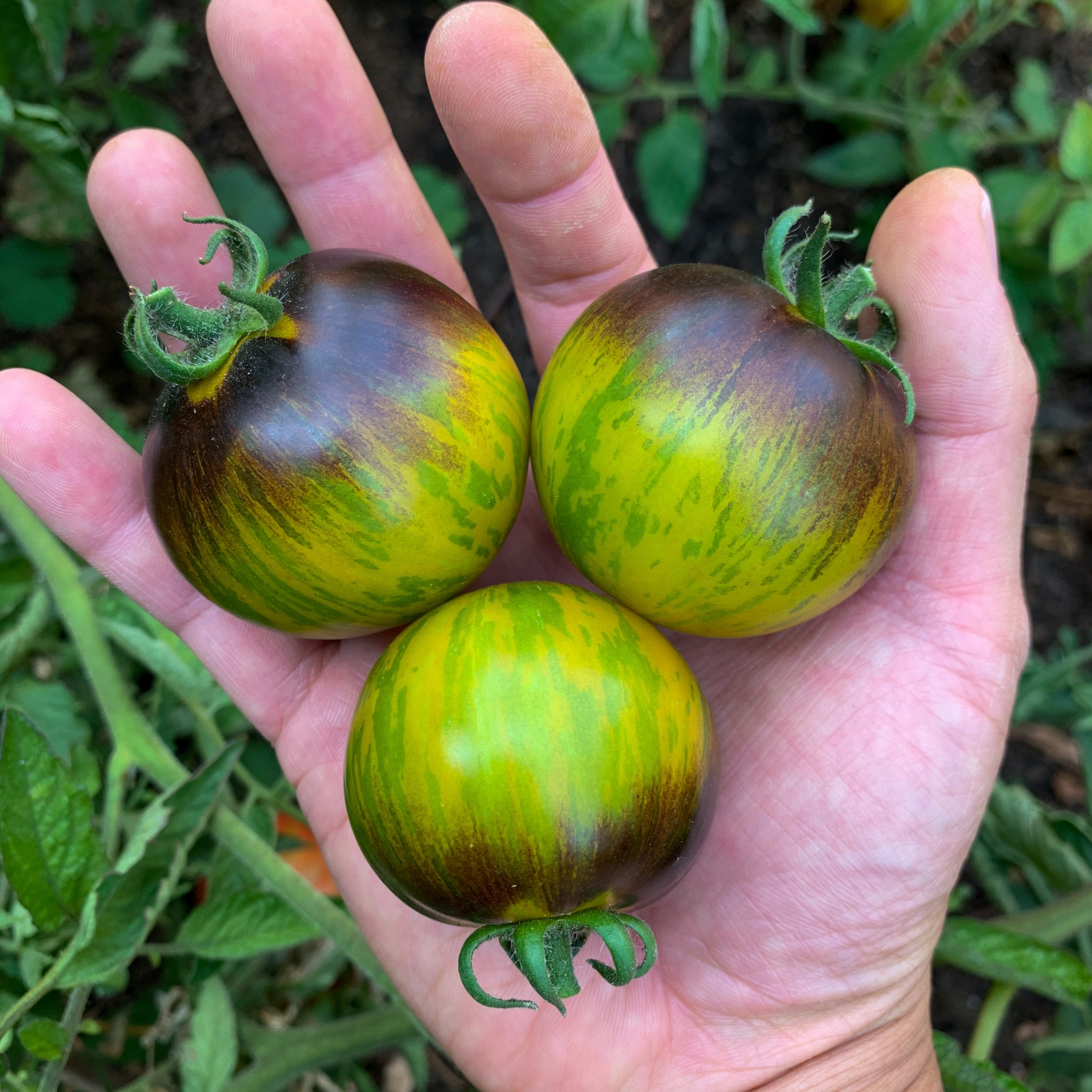
“I love the rare, I love the unique, and I love the very colorful tomatoes, so I grow a lot of varieties that you really can't find elsewhere,” said Huey. But mostly, “I love food so much because it brings people together. And I just love how tomatoes have brought the little East Bay community and beyond together.”
It’s been four months since his tomato plant sale in April, and backyards all over the Bay are bursting with his bounty. Recently, a couple dining at Chez Panisse flagged Huey down to show him a brown paper bag full of tomatoes they’d grown from his plants this summer.
“People message me pictures of their tomatoes,” Huey said. “It’s so funny. In the restaurant people walk past me like, ‘You’re the tomato guy!’”
California cultivates upwards of 10 million tons of tomatoes every single season, a quarter of the world’s tomatoes. Drive along the 5 on a midsummer morning and you’ll share the road with mostly trucks transporting tomatoes. NorCal is a hot house of tomato innovation, from drip irrigation efficiency that saves water to experimental nurseries pumping out the next psychedelic-skinned atomic flavor blasted tomato. This access to top-notch produce has inspired and transformed the Bay Area’s dining scene, popularized by — but certainly not limited to — establishments like Chez Panisse and Greens. With access to some sunlight and a few tomato plants, newcomers are entering the farm-to-table game.
“We’ve always taken a passive approach to menu writing. We take what we get and make stuff out of it as opposed to dreaming up dishes and finding things,” said Craig Stoll, co-owner of San Francisco Italian restaurant Delfina. “Not that we don’t dream about food all the time.”
Stoll and his wife, Annie, grow some of the produce that they use for their restaurants. A friend of a friend who had helped build the French Laundry’s garden suggested the Stolls turn their new home’s “Martha Stewart-y” garden into a production farm, and they “kinda fell for it.”
“It’s cool to pick them out of the earth ourselves,” Stoll said. “There are literally days where we pick tomatoes in the morning and they’re on the plate that night.”
These days, tomatoes from the Stolls’ yard make their way down to Delfina a few days a week. It’s not easy work, especially this summer. (It can also be emotionally draining when a crop is ailing.) Both Stolls and Huey lamented that cooler-than-normal temperatures — even for the Bay — have stunted growth and disrupted yields. But right now is the perfect time to enjoy the fruits (yes, fruits) of their labor.