
Queen City of the West. Sodom by the Sea. City of Bachelors. San Francisco’s queerness has earned it many nicknames over its history. From Ohlone two-spirit identities to citywide Pride celebrations, the city has held tensions between freedom and oppression, revolution and rollback since the very beginning.
As far back as the Gold Rush, when prospectors used ‘hanky codes’ or in the 1880s when Oscar Wilde made local headlines while here on a book tour, queerness is part of the foundation upon which San Francisco was built.
Elsa Gidlow, was a lesbian poet from Canada when she arrived in a city where Prohibition-flouting saloons were caving to jazzy speakeasies and queer communities were experimenting with genderbending.
A world war brought young people from every corner of America for one last night of fun before they shipped off to combat in the Pacific. A ban on gay service members would eject thousands of them by “blue discharge,” many, like Lorraine Hurdle, choosing San Francisco as the place to build their lives around freedom.
Even as pioneering lesbian and gay rights groups, the Daughters of Bilitis and the Mattachine Society, made San Francisco their headquarters in the 1950s, safety for folks like Lorraine and Elsa was not guaranteed. Queer groups and spaces were subject to the same racism and sexism that the rest of society was grappling with, often double-IDing or harassing nonwhite and nonmale people.
One pioneering WWII veteran, José Sarria escaped exposure in the military only to be outed while cruising at the St. Francis hotel in Union Square. At the time, being arrested for solicitation meant your name, place of work, and home address were all printed in the newspaper. Sarria found reinvention instead of ruin, creating the drag persona, The Nightingale of Montgomery Street, while performing at the Black Cat Cafe. The bar would win a gay rights victory fighting for the right to serve “known homosexuals” and Sarria would make it his campaign headquarters when he became the first openly gay man to run for office nearly 17 years ahead of Harvey Milk’s historic 1977 win.
Early freedom fighters seldom got the credit they deserved as the 1960s brought a new wave of queer identity and new tactics for gay liberation that nearly eclipsed them. Young Black and brown trans women, many teenagers, moved to the city and found “a readymade classroom” in Tenderloin “queens hotels.” Gay runaways chased a vision of acceptance featured in LIFE magazine’s June 26, 1964 “Homosexuality in America” spread which crowned San Francisco as “America’s gay capital.”
This fresh energy transformed the city. Queer community groups like Vanguard rose up against injustices by everyone from newspapers to psychiatrists. At Compton’s Cafeteria, a 1966 uprising against police marked a shift of trans and queer resistance (years ahead of Stonewall in New York) and defined the center of the country’s first, and so far only, Transgender Cultural District.
With the rise of radical queer resistance and victories like Harvey Milk’s campaign for supervisor came a homophobic backlash. Public figures like Anita Bryant and state senator John Briggs led regressive campaigns to undo LGBTQ gains. Gay bashing became common. Milk was assassinated.
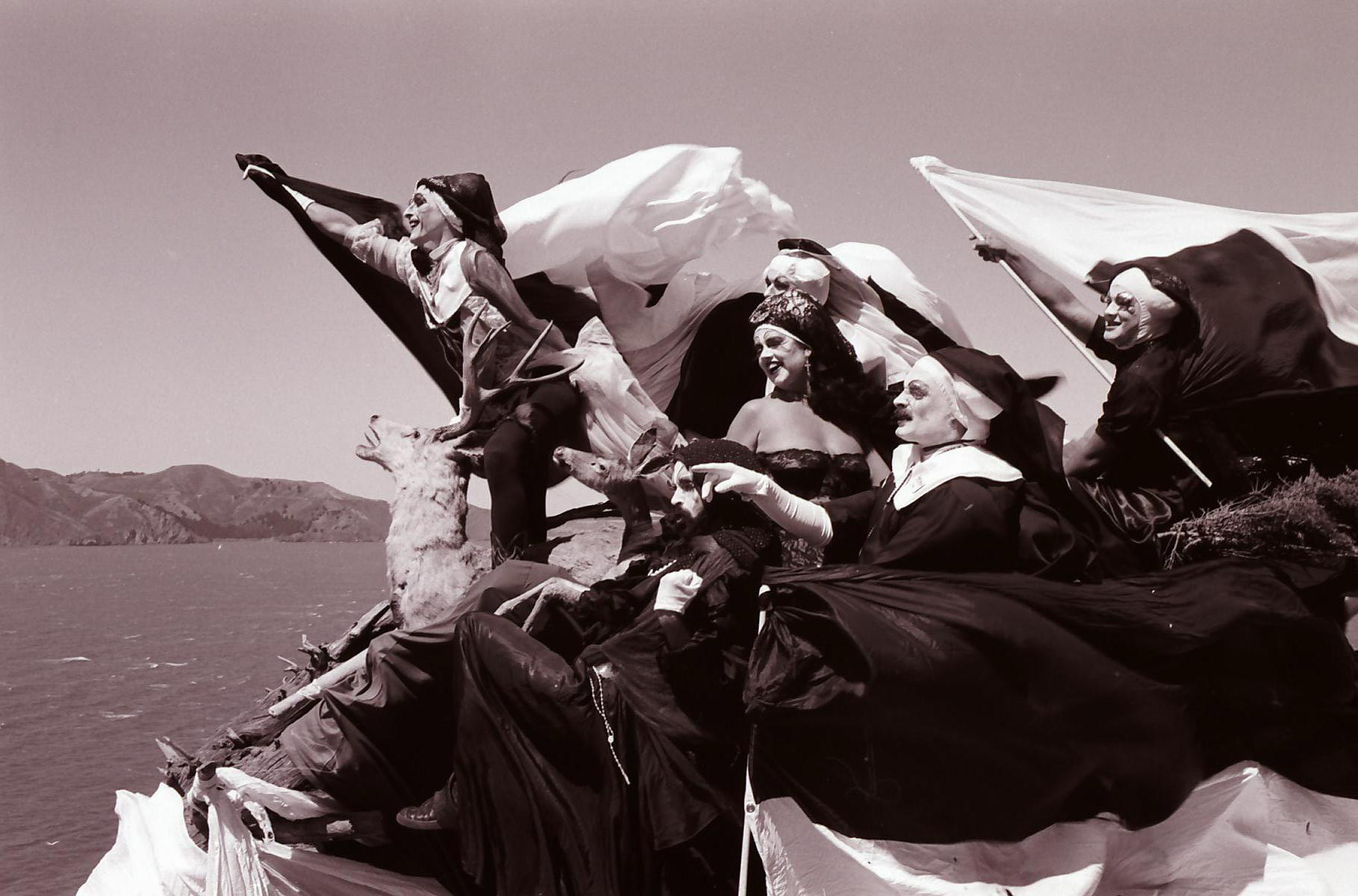
Organizations like the Imperial Court and the Sisters of Perpetual Indulgence used glamour and counterculture to create connection and challenge power structures. Their work would become an essential lifeline in the 1980s and ‘90s as the AIDS crisis devastated the city, killing 61% of men between 25 and 44 at its peak in 1990 according to a 1993 study. While the sheer volume of loss threatened to unravel the queer social fabric that had been built over decades, solidarity and defiance saw San Francisco through, the AIDS Quilt project and ACT UP holding people up and together in the face of so much death.
Today’s threats to the community are no less real: loss of civil rights; the un-personing of trans people by the Trump Administration; a purging of gays and lesbians from school curricula, history books, and public life.
Another threat is one all San Franciscans know: cost of living in places like the Castro has become unattainable to many, a quieter but no less violent form of erasure.
Can our beloved Queen City of the West reinvent herself again? Somewhere out there, amid the fog and ghosts, the next generation prepares to ensure queer belonging and make its mark on history.
A version of this story first ran in print in Gazetteer San Francisco Issue 3.