

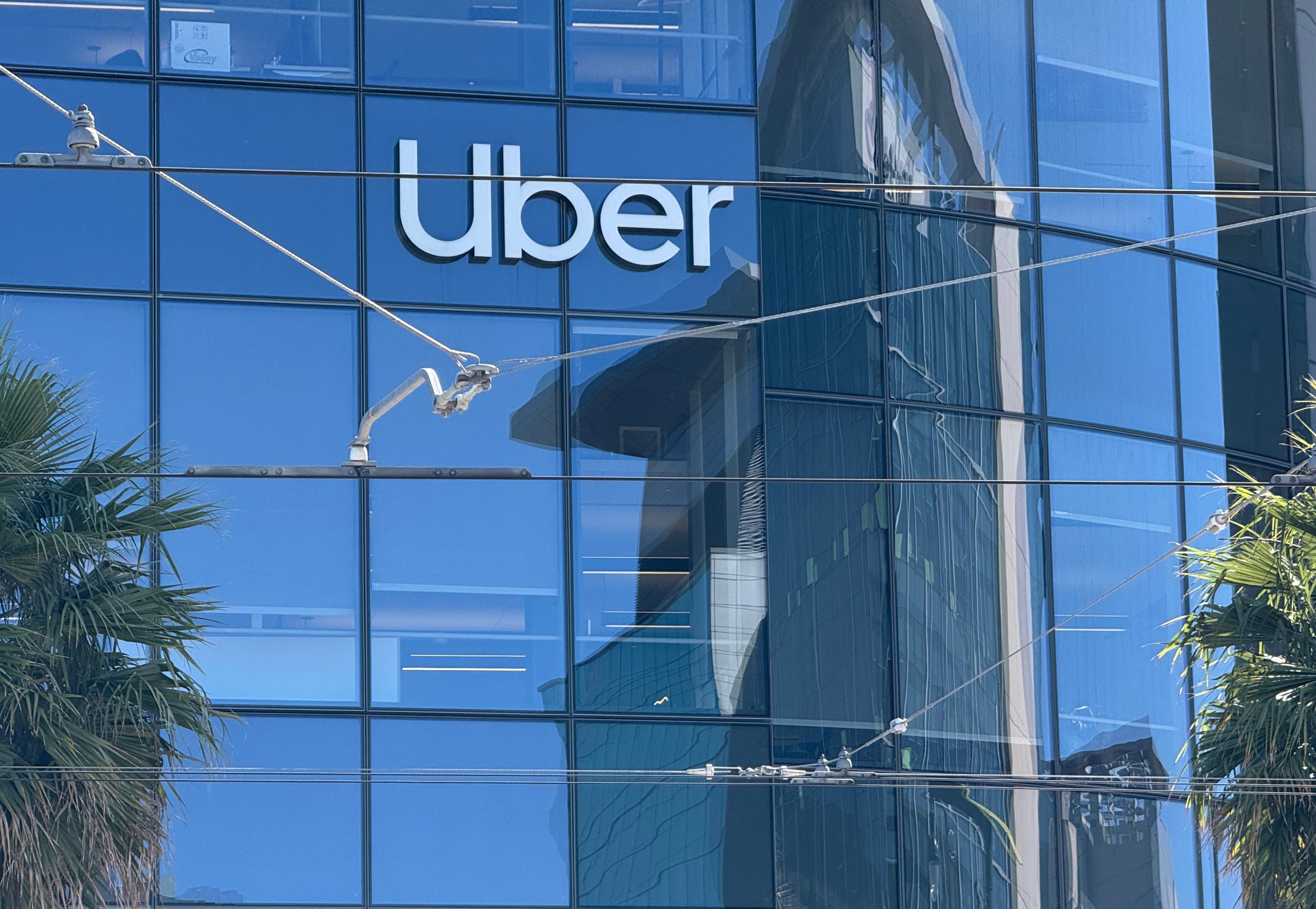

At a hearing Thursday afternoon, US District Judge Charles Breyer said he is likely to define Uber as a “common carrier,” opening the global ride-hailing app to higher potential liability if its drivers are found to have sexually assaulted passengers. If Breyer sticks with his tentative ruling, it would mean that Uber, not just its drivers, is responsible for safely transporting passengers.
The ruling at issue applies to one of the more than 3,000 sexual assault cases filed against the company in federal courts across the US. Designated as multi-district litigation, or MDL, these cases have been collected in San Francisco federal court. About 20 of the lawsuits were selected as bellwether cases, or representative samples for the broader pool.
Breyer is preparing those bellwethers, and previously agreed to Uber’s request to return at least some of the cases to be tried in the districts where they were originally filed. In the first of the bellwethers to go to trial earlier this year, a jury in Phoenix found Uber liable for rape by one of its drivers. The company was ordered to pay $8.5 million.
Breyer traveled to Phoenix to handle the trial. This month, he will travel to Charlotte, for the second bellwether trial starting April 14. In that case, a woman, identified in court filings as WHB 823, claims that on March 26, 2019, when Uber driver Jeffery Richardson reached her destination, he grabbed her upper thigh and made sexualized remarks. In court Thursday, Allison Brown, a lawyer for Uber, said Richardson denies the allegations.
Richardson’s liability will be for a Charlotte jury to decide. What Breyer is figuring out ahead of trial is if Uber also liable as a common carrier, and therefore on the hook for any damages, if Richardson is first found liable. Breyer is making the determination under North Carolina law, but the rules and regulations governing ride-hailingshare companies are similar throughout much of the US. His ruling will likely be extended to many of the other MDL cases.
Andrew Kaufman, a lawyer representing the plaintiffs suing Uber, told Breyer that the company holds itself out as a transportation business, and, as such, is a common carrier. Uber selects the driver, controls the ride, and controls its communications with both the passenger and the driver, Kauffman said. Brown argued that Uber isn’t a common carrier, because it’s simply an app that “makes a connection to the independent drivers, who do the transportation themselves.”
“No one can ride an app,” Breyer interjected. “You don’t get on an app and ride it somewhere. You ride a car, and the app is access to the car.” The question, the judge said, is does Uber have any control over the cars? “And I think the answer is, ‘Oh yes, they do.’”
Another measure of Uber’s control is determining whether the company dictates the routes of its rides, Breyer said. Uber argues the route is dictated by the driver.
“That comes as news to me,” Breyer said.
In the approximately 300 Uber rides he said he’s taken in San Francisco, “I generally get into an argument with them, with the Uber driver, saying you should go up this street,” the judge said. “‘I’ve lived here for 84 years, I’m telling you, this street is better than the other street,’” Breyer said. “Sometimes they agree, sometimes they don’t agree. They’re perfectly reasonable,” the judge said. “Nevertheless, it’s Uber that controls the path.”
If Breyer makes a final determination that Uber is a common carrier, and the plaintiffs mount a winning record in the bellwether trials, Uber is likely to settle all of the sexual assault cases. If both come to pass, Uber’s price to settle the thousands of cases will climb exponentially, possibly into hundreds of millions of dollars.
The judge said he’ll issue his final ruling any day before the April 14 trial in Charlotte.