

In February, I got an email with the subject line: “You’re Really Ghosting Us Huh.”
Did I make a dinner reservation that I forgot about? Maybe it was the gym that I called a week earlier asking about their membership passive-aggressively trying to get me to sign up?
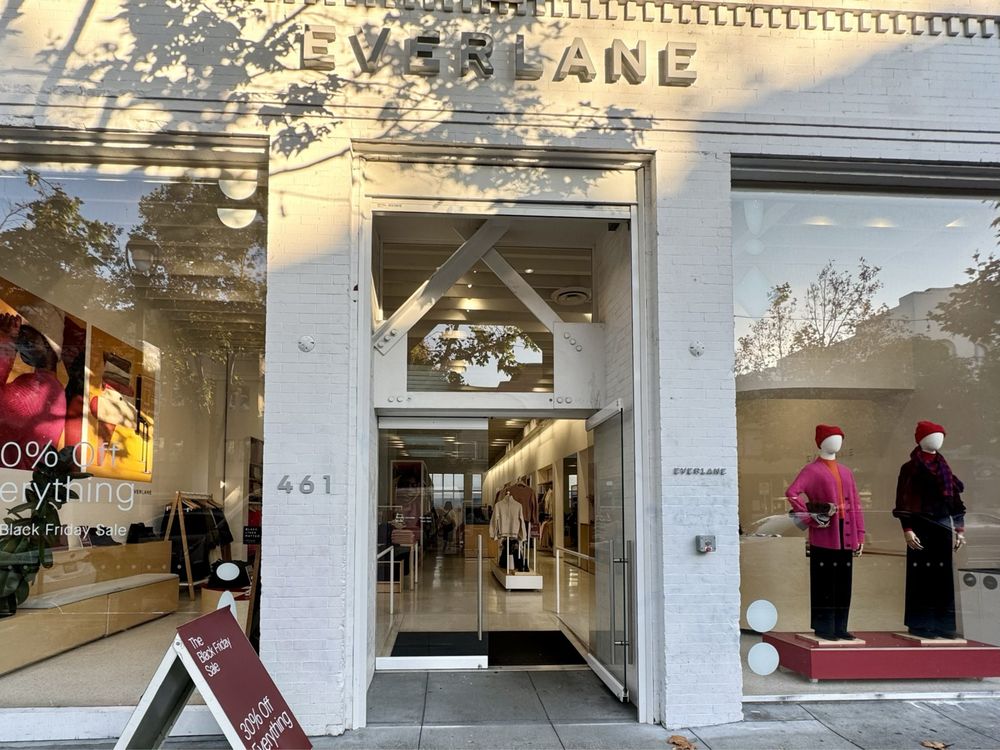
Turns out the sender was Everlane, the formerly San Francisco-based direct-to-consumer maker of (slightly) elevated basics.
The email started off with “Welp,” and ended with coupon code “MISSYOU20.” I had apparently not opened their emails for a while. This was only the first of their ceaseless promotional emails: There was an extra 20 percent off menswear, and a bunch of new items that had just gotten marked down 70 percent, and, oh yeah, the 30 percent-off-everything Friends and Family Sale, too. Even with Everlane’s traditional minimalist branding — slim serif type over dull earth tone backdrops — the bombardment of percentages and “act-fast” email subjects had the desperate feel of a fire sale. For months on Instagram, often the first ads I was served while scrolling through my Stories were more Everlane sale promotions.
This was rather unbecoming of a brand that, since its launch in 2011, prided itself on quality goods at a fair price. All of their stuff was stylish and affordable and well-made enough that nothing ever felt like a bad deal, even at full-price. You could reasonably dress yourself in an all-Everlane outfit and feel put together, even if not necessarily standing out. (That was a benefit to some people.)
Those thirsty emails now make sense: Last week, Everlane was sold to the Chinese e-commerce juggernaut Shein to the tune of $100 million, according to Puck’s Lauren Sherman. Sherman had been reporting on signs of trouble for the company for months. They were trying to rid themselves of their inventory for their new, ultra-fast-fashion owners, and their prices reflected that.
Among other money troubles: We first reported a month ago that Everlane owed back rent to its San Francisco headquarters’ landlords. According to Charles Barr, one of Everlane’s landlords, a large portion of the debt is still outstanding. (Everlane reps didn’t respond to a request for comment.)
To onlookers, the sale felt like the antithesis of the brand’s identity: Everlane was built on an image of ethically-made, high quality-adjacent apparel that felt immune to trend-chasing and low quality fast fashion. Shein, meanwhile, is the ur-example of dubiously ethical, trend-chasing, low quality fast fashion.
It’s a shame that no one wants anything from Everlane, even now. The Women’s Low Rise chino, is a steal at $26 (from an original $128), still has a full size run in black, heathered oat, and ash brown. The Cheeky Jean, which, about a decade ago, was the denim of choice for many millennial fashion bloggers, is also still available in most sizes at the low, low price of $38, 70 percent off MSRP. There are 500 styles at the brand’s “deepest discount” in their women’s section as of publication time, while another 800 are also up for sale. In menswear, another couple hundred are marked as “final sale” at 70 percent off, about half of all the on-sale men’s apparel.
The slow crash and burn was already apparent to fashion insiders for years. After their COVID-era mistreatment of workers and the exit of CEO Michael Preysman in 2022, Everlane was no longer seen as exciting or ethical. That their clothing stayed largely identical, if worse in quality, didn't help their case. It was just the Gap, but with that brand’s vintage San Francisco heritage swapped out for a present-day San Francisco tech optimization. How do you get more boring than the Gap?
It’s hard to imagine that Everlane was once a breath of fresh air: They started with a limited-run T-shirt, then expanded their offerings into “perfect” jeans and flats and sweaters. Sure, their apparel was made in factories in China and Vietnam like nearly every other brand, but their website showed tidy workspaces and promised livable wages as part of its mission of “radical transparency.” The most telltale sign of this transparency was their “pay-what-you-can” model, their sale section up until the last five years or so. You picked however much you wanted your clothes to be discounted, generally between 30 and 50 percent off, and, therefore, decided how much you wanted to help the brand offset its costs. Everlane was featured on every recommendation list from the Wirecutter and Strategist. (During a brief internship at the latter in 2018, I witnessed Everlane’s wares come up frequently on Slack.) At their Folsom Street headquarters, Everlane once hosted a “lab” where you could look at their stuff, but only if you signed up for their email list. It was a perfect marriage of manufacturing and marketing.
This model worked until newer upstarts imitated and iterated Everlane into the slow lane. Some, like the Swedish brand Asket, took Everlane’s transparency model and went more refined and up-market.
The biggest threat to Everlane didn’t come until Quince debuted in 2020, right at the start of Everlane's troubles. Quince (also born here, for what it’s worth) took Everlane’s vaguely ethical, reasonably priced, kind-of-luxury model to its logical extreme, going cheaper and bigger more quickly. Quince’s $50 cashmere sweaters were half the price of Everlane’s. Quince didn’t rest: They’ve expanded into handbags and sofas and caviar. The Strategists and Wirecutters of the world jumped on the bandwagon, and now Quince is valued at $10.1 billion. (Everlane, in 2020, was valued at a mere $550 million.)
One secret of Quince’s success is its borrowing of Shein’s shipment strategy: Up until last year, when President Donald Trump closed the loophole on imports under $800, Quince, like Shein, was shipping most of its products straight from its foreign manufacturers, allowing them to turn a profit on their products despite paper-thin margins. That so-called de minimis exemption was how Shein got big, and how Quince did too.
Certainly, Everlane getting bought out by Shein, a company completely at odds with its original vision, signals the demise of the 2010s direct-to-consumer fashion world. The Everlane-Shein deal also smacks of a category giant re-asserting its dominance in the face of ascendent competitors. In buying Everlane at a fire sale, Shein gets whatever veneer of quality the San Francisco company still possesses; Everlane, for its part, gets to live on inside the supply chain of the world’s largest fashion retailer.
All it had to do was sign away its soul.