
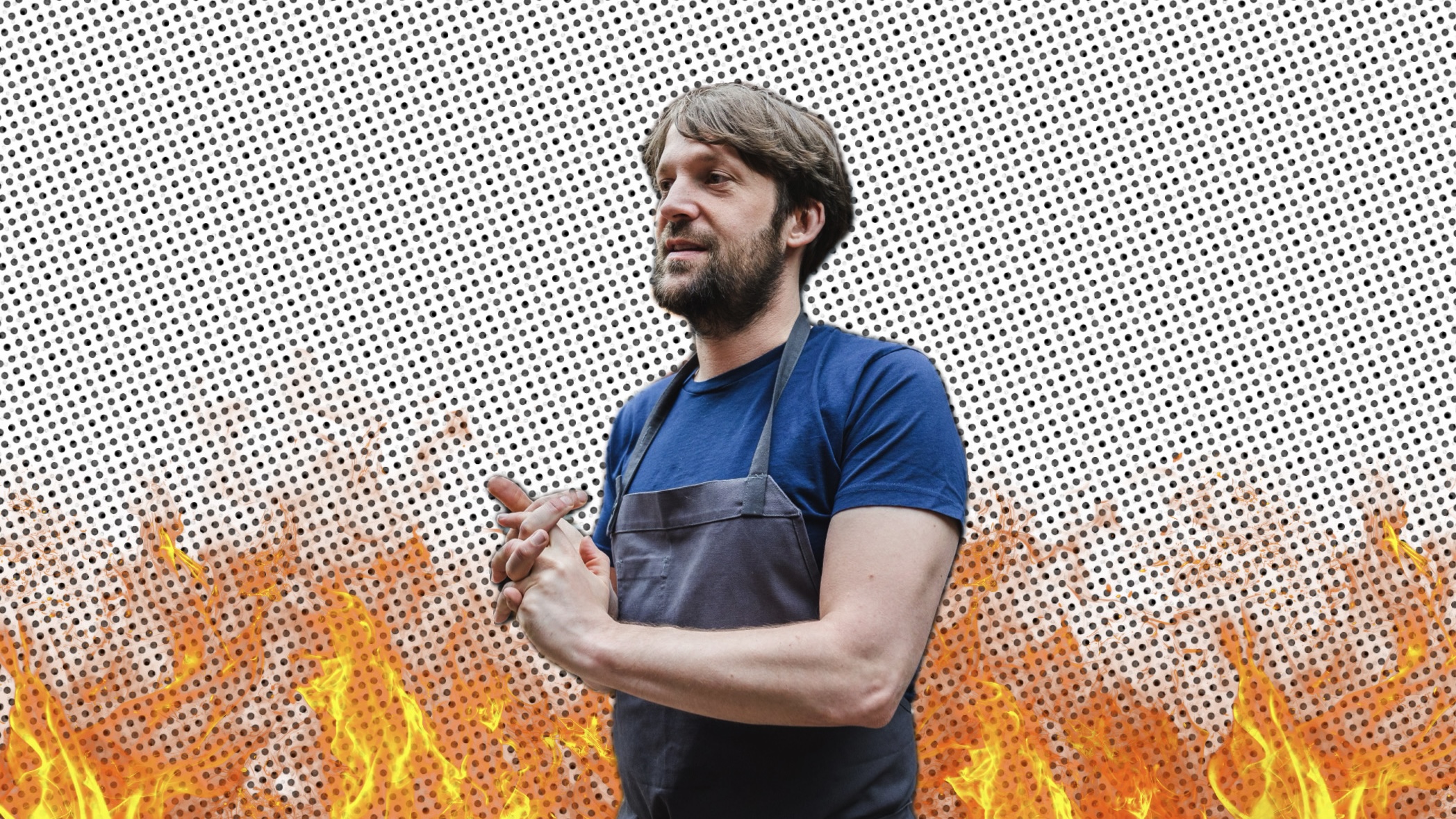


Earlier this month, the New York Times published an exposé of aggression and abuse at Noma under head chef and co-owner René Redzepi, perhaps the most influential chef of the last 20 years.
The heavily sourced article detailed a continuous culture of emotional and physical abuse at the three Michelin-starred Copenhagen restaurant between 2009 and 2017, including instances of Redzepi allegedly stabbing, punching, shoving, verbally assaulting, and publicly shaming employees over mistakes as subtle as leaving a tweezer mark on the petal of an edible flower.
Redzepi pioneered “new Nordic” cuisine and has mentored a slew of chefs who went on to earn their own acclaim. He developed his skills at some of the world’s top restaurants, such as Ferran Adrià’s now-closed El Bulli and Thomas Keller’s The French Laundry, before opening Noma in 2003 at the age of 25. Noma earned its first Michelin star in 2005, then its second in 2007 and third in 2021. It was crowned the best restaurant in the world five times between 2010 and 2021.
The hard-charging, borderline abusive chef has been a pop culture trope (cf. The Bear) verging on cliché (paging Gordon Ramsay) for decades, but Redzepi’s alleged behavior has caused some restaurant lifers to reassess their experiences and question their own assumptions. The criticism of Redzepi may prove to be the starting point of an industry-wide reckoning and movement toward a more equitable kitchen.
At one time, Redzepi himself could have been a leader in that reckoning. In a 2015 issue of the San Francisco-based food magazine Lucky Peach, he wrote at length about his abusive behavior, declaring that he felt a need to lead a shift in kitchen culture. The Times investigation, however, uncovered allegations of violence that were said to have occurred even after that essay was published. It also gave a fuller picture of the extent of the violence at Noma, which chefs say is just one more case study in a broader world of abuse in all kinds of kitchens, not just acclaimed ones.
While currently the posterboy for his industry’s ills, Redzepi did not invent the concept of abusing young cooks. He was not the first chef to run the kitchen like a drill sergeant and he will certainly not be the last.
The report about Noma has, once again, sparked debate among experienced chefs asking why so many great restaurants must be forged by tyrants.
‘Don’t expect to come into a job like this and feel like you have all of the HR protections that you would if you were a software engineer or a product manager.’
Mike Lanham, chef-owner of the fine dining restaurant Anomaly SF, has seen a variety of managerial styles over his career. He’s also had to dodge pots and pans flying toward his head and contend with chefs showing up to work “drunk and pissed off.”
“Learning to navigate that was part of what this job used to be. It’s messed up and it shouldn’t have happened,” Lanham said. “But it did.”
Min Liao, a Bay Area-born, New York-based culinary consultant, recalled that one chef she worked with in a Manhattan steakhouse would throw sizzling hot platters, fresh from the 500-degree broiler, across the kitchen “like frisbees” when upset. She often wondered what would have happened if someone failed to duck in time.
Kitchen work is “very physical and it requires a lot of stamina and thick skin,” Liao said. “Don't expect to come into a job like this and feel like you have all of the HR protections that you would if you were a software engineer or a product manager.”
The instability of the industry (and occasional platter flying by) was partly why Liao left professional kitchens for a career as consultant and private chef.
Some of the intensity found in fine-dining kitchens can be explained by the pressure, pace, high quality of output, and constant scrutiny by diners, critics, and awards judges. But in kitchens where precision and timing are everything, some chefs cross the line from urgency to aggression as a habit.
“Any chef who’s out there releasing emotion at somebody because they can’t handle their own emotion, there's no room for that,” said Ryan Shelton, chef-owner of Merchant Roots. “That’s not ‘just part of the industry.’ That’s someone who has a problem.”
In his career, Shelton said that he’s “worked with chefs who are incredibly intense, but the control that they have on that intensity is what makes them so much more worthy of respect.”
The abuse has been happening to generations of chefs, yet many kitchen workers express a kind of grudging empathy for those who’ve exhibited poor behavior while not outright coming to their defense. Their perspective is often one of commiseration; Senegalese chef Pierre Thiam, for example, commented on Redzepi’s apologetic Instagram post that only those who grew up in kitchens “know how intense that culture is.”
“I respect the courage it takes to reflect and keep growing,” Thiam wrote.
The crisis of kitchen abuse doesn’t simply affect restaurants at the top of the fine-dining game. Lanham observed that, while Redzepi was a major target because of its prestige, restaurants of all kinds can harbor unethical behavior. “There are lots of chefs not under any kind of microscope,” he said. “If some terrible thing happened at Denny’s, no one would have cared.”
Shelton, Liao, and Lanham condemn abuse, but also understand why a kitchen culture rife with stress, conflict, and substance use can breed rage and resentment in leaders. Many kitchens operate as a “brigade,” based on the French system that takes a military approach to hierarchy. In theory, the brigade system creates accountability; in practice, it can devolve into bullying and brutality under the guise of growth and training.
Screaming at someone is, at best, a short-term solution.
Many chefs still believe a pressure-cooker environment inspires an iron-sharpens-iron attitude among workers, Lanham explained. In his 2015 essay, Redzepi suggested that he had believed berating and humiliating young cooks was the most effective way to curtail mistakes. That drill-sergeant mentality is supposed to foster bonding, but Lanham believes that chefs who lead through intimidation simply burn people out at a higher rate.
Cooks can be “hard to deal with,” especially when they repeat mistakes, show up hungover, or work too slowly, Lanham said. In that moment, screaming at someone is, at best, a short-term solution that can ruin a cook’s confidence in the long run.
Instead, Lanham says he tries to consider each cook’s individual quirks and needs, even while making them operate under pressure. He pushes his staff to “work their ass off” without crossing boundaries, and believes that some cooks just need to be let go if they can’t do the job, rather than pushed to their breaking point.
Despite Redzepi’s reputation, thousands of aspiring chefs sat on Noma’s internship waitlist, ready to weather the abuse, unpaid, for the opportunity to learn in one of the world’s most prestigious kitchens.
“To go to some place like Noma and stage is an incredible opportunity, especially if your resume doesn't really qualify you for it. Culinary school is prohibitively expensive, and you don’t really come out of it with much craft,” Shelton said. “If you instead were to go to places where you want to operate at [Noma’s] level, you want to see what makes them tick, and you work for free, free is much cheaper than tens of thousands of dollars. And you can, in the same amount of time, skyrocket your career forward.”
This “opportunity of a lifetime” attitude aided a culture of tolerance and silence at Noma, moving Redzepi’s staff to show up day after day despite its rough culture. (People were still asking for a job at Noma in the comments section of Redzepi’s apology post.)
“There’s definitely a thing in restaurants where if you have a certain place on your resume, and everyone knows it’s miserable to work there, and you get a good reference from it, that means that you can work anywhere,” Lanham said.
For years, chefs around the world have been publicly advocating for change; in 2018, Hervé Riou (Salmagundi Club) and Eric Ripert (Le Bernardin) wrote a symbolic “charter” pledging to fix unethical behavior in kitchens based on their own experiences receiving — and sometimes doling out — abusive treatment. More important than just promises, however, is the ability to create structure in how chefs learn to lead.
“I really strongly believe that a foundation in general management skills and coping skills and just life experience is a real advantage in this industry,” Lanham said.