

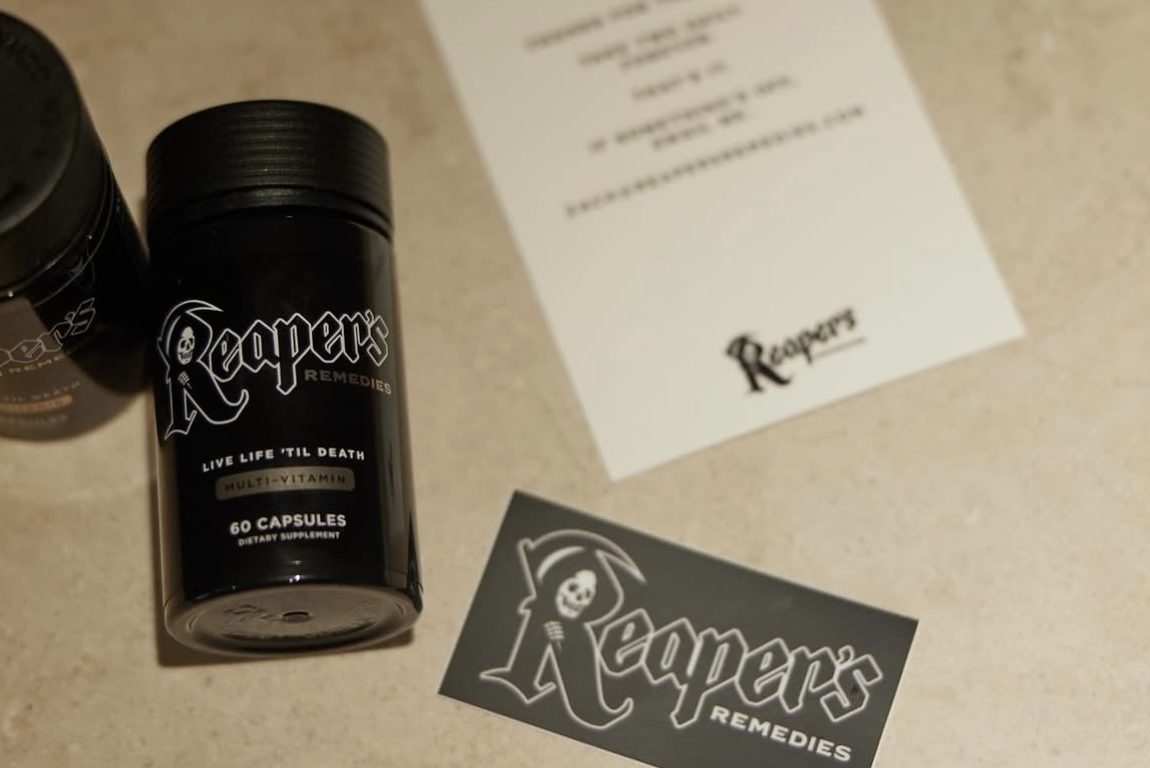
Don’t fear the reaper — especially not one that contains a vegetarian, FDA-approved blend of vitamins chosen to help mobility, brain and liver function, and immunity.
San Francisco-founded Reaper’s Remedies, a vitamin brand that went live last month, is attempting to up-end the usual sunny promises of wellness brands by offering a product that is straightforward and defiantly boring.
Founder Zach Canfield thinks the grandiose promises that other brands make have made people distrust the vitamin and supplement industry. “I think the honest goal of a multivitamin is not immortality. It’s to help you die slower,” he said.
The daily multivitamin, made in New York, (“not a yurt in Sedona”) contains ingredients such as zinc, magnesium, and vitamins A, C, D, and E, not unlike the 14-year-old Flintstones vitamins in your medicine cabinet.
Canfield’s background is in advertising, working for a decade for Goodby Silverstein & Partners, the agency behind huge campaigns such as “Got Milk.” A self-professed supplement fanatic, the more he learned about things like absorption and efficacy, the more he became disillusioned with the wellness industry as a whole. He thought, “Why don’t I start my own so I can actually trust it?”
Canfield consulted health experts for a good multivitamin blend. He refused to simply white-label an existing vitamin blend, choosing to hire a team of scientists to create, over many revisions, a new product, every ingredient of which is disclosed on the label.
He also consulted an expert in branding: Benny Gold, that stalwart of SF’s streetwear and skate scenes, designed the company’s logo and visual elements to ensure that Reaper stood out amid the shiny, rainbow-dripped packages you find at a health food store.
Similar to the way Liquid Death turned such a banal product as packaged water into a punk accessory reportedly valued at over a billion dollars, Reaper’s skulls and scythes bring edge to an otherwise lawful-good market. If water — water — can be made to seem hardcore, why not vitamins? A brand that sells reasonable expectations is counterculture, after all.
“From a marketing standpoint, how do you get someone to take something that, in all honesty, you probably won’t notice that much?” Canfield wondered.
Grasping for a similarly punk metaphor, he continued: “I liken it to a 401(k). It’s pretty boring to put money into a 401(k) every day and or every month or every paycheck, but at some point in life, that should hopefully pay off and you’ll be really glad you did it. And it’s the same with taking a multivitamin.”
One audience Canfield expressly did not, and will not, consult is influencers.
That may be a death wish for a brand launching in 2026, especially one competing in a booming wellness industry that seemingly runs on algorithm-savvy “personalities” accepting payments to flog everything from hair growth supplements to GLP-1s.
If avoiding the influencer adulteration risks Reaper’s Remedies missing out on hockey stick-viral growth, it might be a good thing. Influencer health and wellness marketing is facing mounting scrutiny as consumers weary of unproven promises, lawsuits abound, the Federal Trade Commission is trying to regulate it, and scientists are turning on their ring lights to deinfluence viewers from fads and farces.
Looking at many of the promises and products pushed by the wellness industry, Canfield sees a space for a less hyperbolic pitch. “This idea that you’re going to wake up a new person or all of a sudden, life’s going to be solved is just not realistic,” he said.