
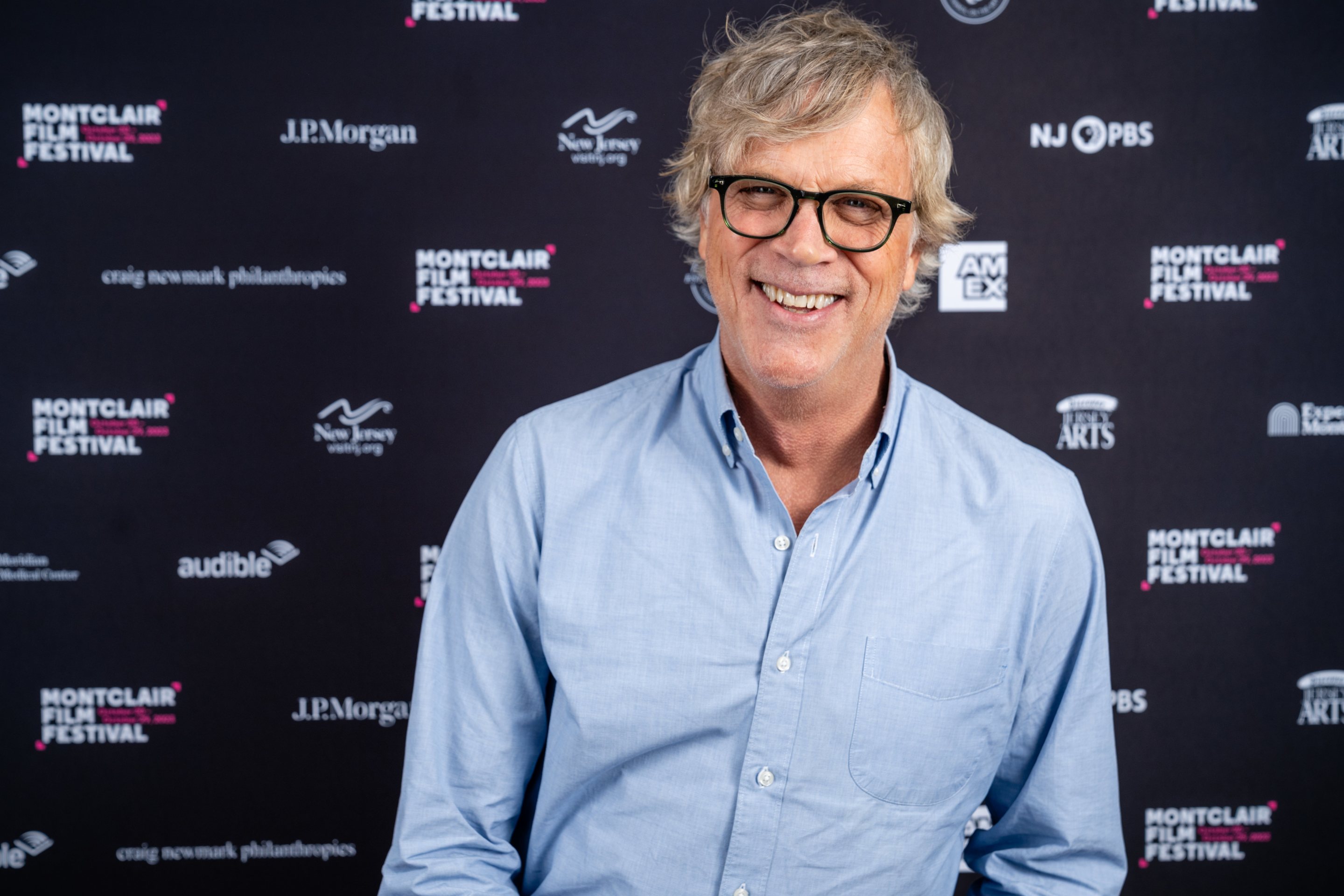
“I was not enamored with a new person in my life when I made Carol,” Todd Haynes told me toward the end of our conversation about Carol Day, the now-annual celebration of his 2015 film.
Never mind that Carol is one of the most potent exhibitions of desire put to film in this young-but-aging century. Carol is a film in which each furtive gesture, refracted through windows and camera lenses, carries a lifetime of want. Each viewing comes with its own reinterpretation, a reconfiguration of these quiet signs.
That’s true, even for the film’s director.
It wasn’t until 2023, when Haynes re-watched it as part of a career retrospective at the Centre Pompidou in Paris, with Cate Blanchett (the titular Carol) in attendance, that he experienced Carol in an amorous state. (For whatever reason, a group on a high school field trip sat in the audience, its own novelty, he said.)
“There was a new person in my life when I watched it in Paris,” Haynes told Gazetteer. “I was watching it from the point of view of somebody who's infatuated with somebody. I almost forgot the storyline, so I was watching it very much like an uninformed spectator, which was very fun and unexpected and not typical of a director.”
Haynes’s next rewatch will be on December 21 at Toni Rembe Theatre, where the legendary filmmaker will be honored in San Francisco for Carol’s decennial at Carol Day, which is at this point, a gay San Francisco holiday tradition. It is celebrated on December 21 because that is the day Carol invites Therese to her place in New Jersey. (Apologies for initially getting that wrong last year.)
Christine Vachon, the film’s producer and Haynes’s longtime collaborative partner on just about everything he’s directed, will make an appearance at the event, as will Peaches Christ and May December’s Charles Melton, who will present Haynes with Frameline’s inaugural Queer Lens Award.
Haynes has been long aware that venues around North America host raucous, campy Carol screenings to adoring crowds, and seems amused by this turn of events for his sweetest film. In San Francisco, there will be a hat competition inspired by the pair’s first encounter.
Haynes said did not set out to make a holiday classic, but there were moments during filming when he realized his film achieved something that might join the canon. Looking at co-star Rooney Mara in her plaid scarf and Tam o’shanter hat near Blanchett in her blond mink coat, he thought, “Wow, there is something possibly iconic about these two.”
But Carol’s lasting impact, Haynes said, is that it exists “in a circular realm,” not quite a tragedy, not quite a happy ending. At best, the “what if” of it all can be read as hope; at worst, abandoned possibility. That holds true in Carol’s mid-century New York, and it holds true in the present day.
The other, sadder parallel: Haynes acknowledged that the time in which Carol was released was less precarious for queer people than the present moment. We’re not so far away from the repression of queerness and gender that hem in the relationship of Therese and Carol as we were even a decade ago, when the film was first released.
“Love stories that leave you yearning that don't fulfill all your hopes and expectations and investments as a viewer are the ones that I think just stay with you,” he said. “Something about that seems to be working in Carol's favor, that there's a yearning.”
Tickets for Carol Day are still available on the Frameline website.