
When Manjula Martin first read the draft of an interview that appeared this week in her new newsletter Scratch, she was moved to tears. The topic? Freelancer taxes.
“I really did cry,” the Bay Area-based writer and editor told Gazetteer SF. “Because those emotions are really real, they’re really powerful. There’s so much shame caught up in these topics of money and art and career and value and worth.”
If you’re a highly-paid office worker who’s been filing easy, breezy W-2s your whole life, you might not understand why a Q&A about tax season might hit a freelance creative professional so hard.
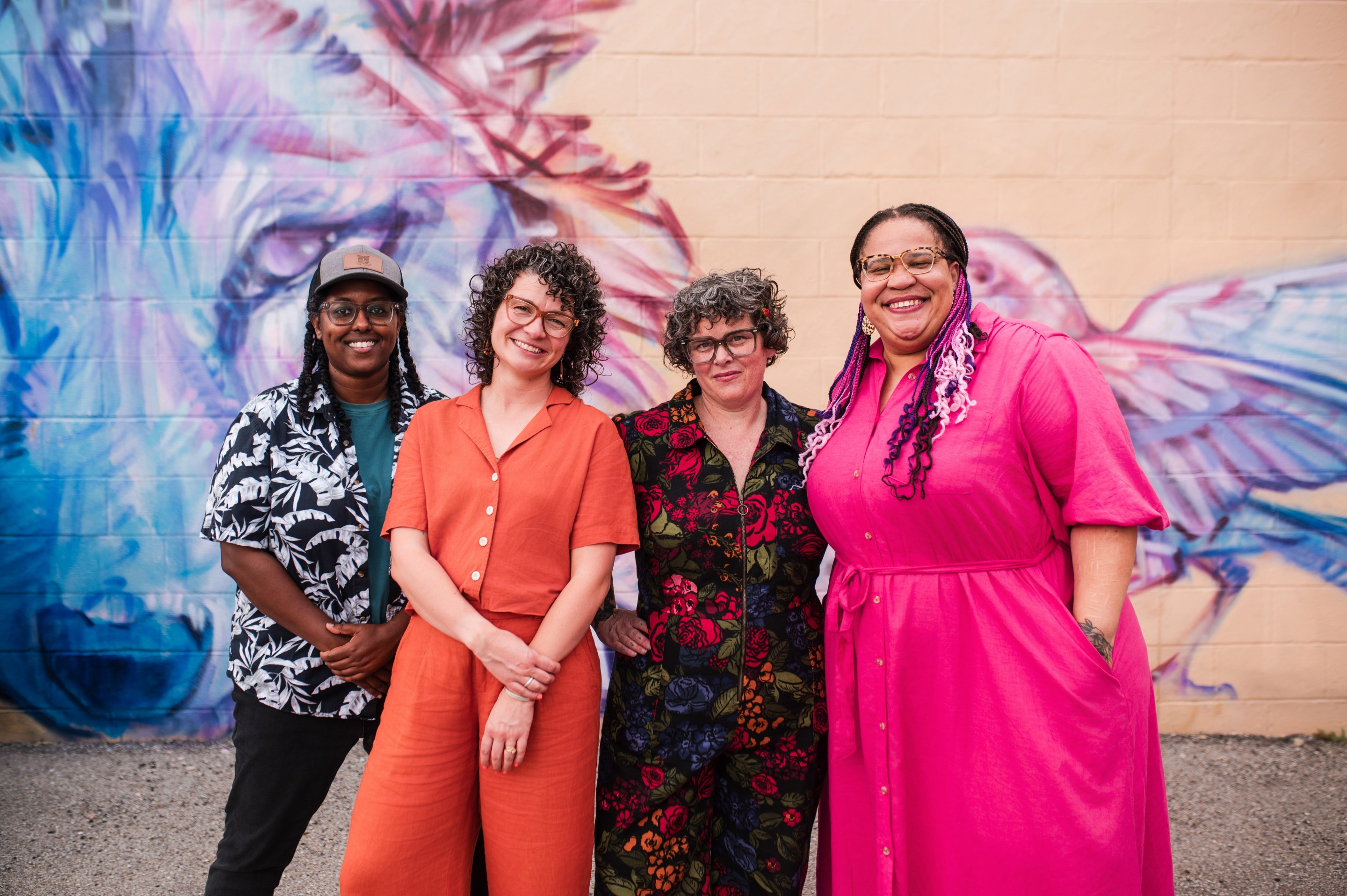
But writers like Martin and her Scratch collaborators, Rahawa Haile, Maggie Mertens and Latria Graham, certainly understand. From constant layoffs to the feast-or-famine cycle of freelancing to inevitably joining the newsletter-industrial complex, trying to survive as a working writer can be enormously frustrating, confusing, and, as Haile put it, “perilously lonely.”
Launched earlier this month, Scratch is the latest version of a project Martin started nearly 15 years ago. The name holds many meanings: Scratch as in cash, Scratch as in scraping by, and Scratch as in the challenge — and joy — of making something out of nothing.
Scratch has deep Bay Area roots. When it first began, the year was 2012; the place, Tumblr. Back then, Martin was navigating the choppy waters as a freelancer in San Francisco when she started a crowdsourced blog of freelancer rates she called Who Pays Writers, hoping to bring a little more transparency to the profession.
After Who Pays Writers blew up online, Martin turned the concept into a magazine called Scratch, which she co-founded with fellow writer Jane Friedman in 2013. The magazine accumulated a small cult following; about 1,000 subscribers paid to read it. The project’s central question, “Does journalism fit into capitalism?,” posed and dissected by people actively living out that messy reality. It was so poignant that even after Scratch folded in 2015, Martin revived the brand in 2017 as an essay anthology that featured contributions from Jonathan Franzen, Cheryl Strayed, Roxane Gay, and other big-name writers.
Now, after nearly a decade of Scratchlessness, Martin, Haile, Mertens, and Graham decided the journalism and publishing industries had reached such dire straits that it was time to resurrect the project.
“I think I’d straight up said to [Martin], ‘I wish Scratch still existed,’” Haile said. Well, Martin wondered, why shouldn’t it again?
After all, these are tough times for writers, which by now is old news. Local newsrooms shutter by the hundreds every year, vaporizing the types of jobs where young reporters used to cut their teeth. Tech billionaires are buying and gutting prestige news outlets, while venture capitalists are building their own, new media ecosystems to flood the internet with content that’s friendly to their interests. AI continues to rip off authors (when it’s not impersonating them), and everywhere, ensloppification reigns.
“It’s a very lonely feeling to watch all of this go on and be like, ‘Am I crazy? Is this really happening? Why are we all acting like this is normal?’” Martin said. “What we’re trying to do is have a place where we can talk about it openly, realistically, and in a way that hopefully provides some sort of sense of community and solidarity for writers.”
Originally, the Scratch team had considered starting a podcast, but for four writers, a newsletter, Martin explained, felt like “the medium that was technologically more available to us.”
Still, Martin and Haile acknowledged their ambivalence about resurrecting Scratch as a newsletter.
“We are very intentionally not on Substack,” Martin said, noting several problems on the platform, including profiting off hate speech and siloing writers’ work and audience in a closed environment.
Instead, the new Scratch is hosted on the open source blog and newsletter platform Ghost, like other media collectives the Scratch team admires, like The Flytrap, Aftermath, 404 Media, and COYOTE Media, the last of which Haile is also a part of.
“Really, I think of us as a blog,” Haile said.
New Scratch pieces drop every Tuesday. Aside from Q&As about freelancer taxes, the Scratch team is planning to “rotate between interviews and essays and candid conversations between the four of us,” Haile explained. “But nothing’s off the table. We can do whatever we want.”
Martin said that taking a punk rock, DIY approach is one of the things that actually makes her excited for this era of writing.
“It’s like, ‘OK, so there’s no money and there’s no outlets and there’s no way to promote anything and we might get arrested and or you know, beat up, for what we’re doing.’ So… fuck it.”