
For 13-year-old Connie Chan, stepping into San Francisco’s Chinatown for the very first time was a revelation, and also very strange.
Born in Hong Kong and raised in Taiwan, Chan moved 6,500 miles across the Pacific with her mother and brother to discover a city full of immigrants like her, but infused with a chaotic, colorful diversity of races, cultures, and aesthetics. Finding a way to fit in felt, at that time, like a hurdle.
“Turns out, being Chinese is different from being Chinese American,” Chan told me with a wry smile.
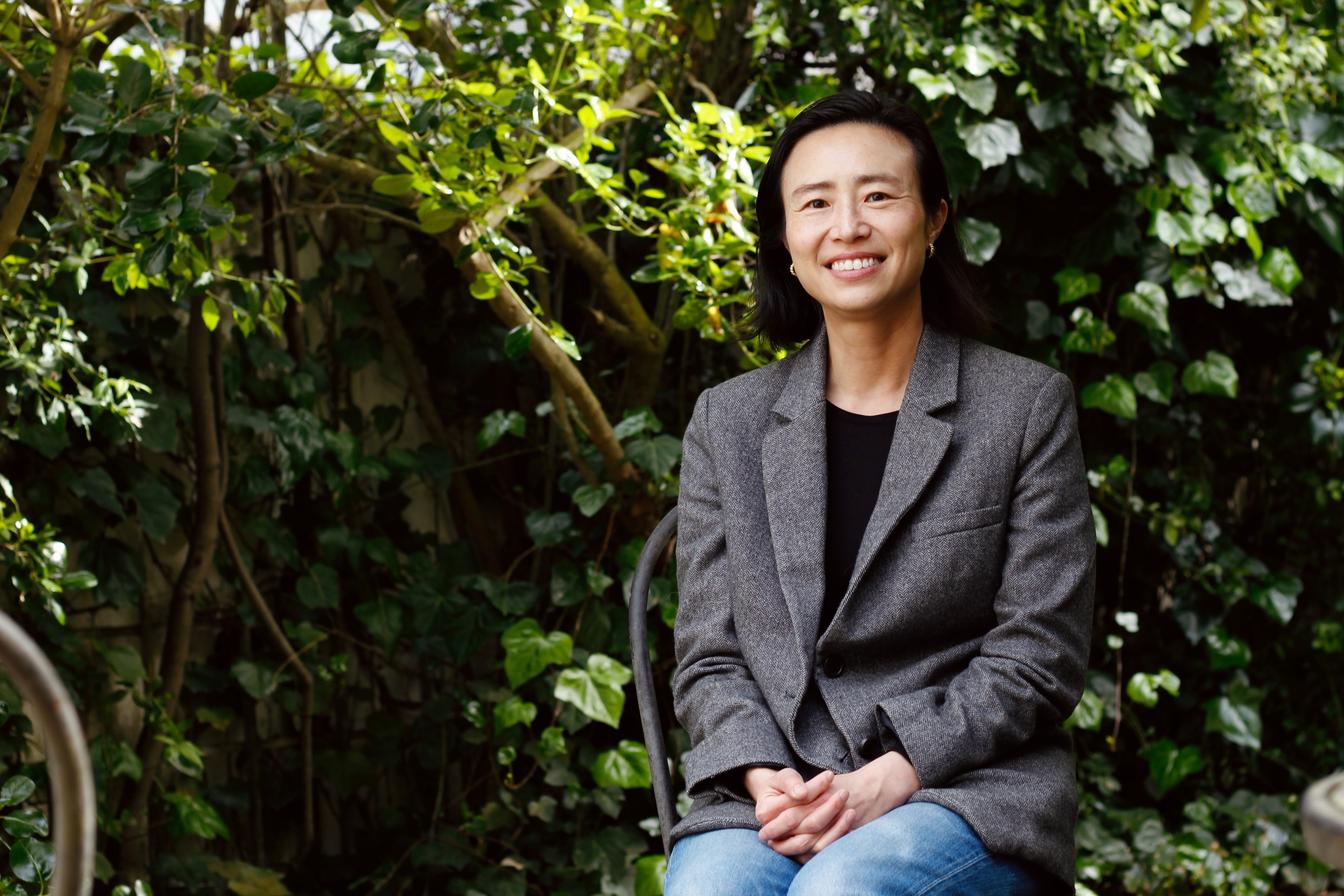
We were talking in the cozy, sun-dappled patio at Garden House Cafe, tucked away on a quiet stretch of Clement Street in the Outer Richmond. Chan, who oversees the Richmond as supervisor of District 1, told me it was a favorite spot in the neighborhood. The big smile and warm greeting of cafe owner Jeanette Kim more or less confirmed it.
Garden House Cafe, it turns out, holds a special place in her heart. “This is where Supervisor Sandra Lee Fewer asked me if I would run for her seat,” Chan told me, referring to her D1 predecessor.
At 47, Chan is a force in city politics, representing a constituency of working-class immigrants that has become increasingly vocal about how the city should be run, be it Sunset Dunes or the mayor’s upzoning plan. She chairs the city’s Budget and Finance and the Budget and Appropriations committees, considered two of the board’s most powerful positions.
She’s also pursuing higher office and an infinitely higher level of scrutiny as she campaigns to fill Rep. Nancy Pelosi’s shoes in Congress in a closely watched primary race against seasoned state legislator Sen. Scott Wiener and centimillionaire Saikat Chakrabarti, who helped form Justice Democrats.
Chan finds herself on a tightrope between Wiener’s YIMBY-flavored liberal politics and Chakrabarti’s populist war on corporate Democrats. As Chan reminded me repeatedly during our conversation, her career, including this campaign, is informed by the immigrant perspective in San Francisco: a blend of material concerns and a belief in the power of grassroots change.
“When I say that I’m an immigrant, I know that others with that experience understand that you can’t label us one thing or another, and you’ll understand when I have a problem, I’m going to find a pragmatic and immediate solution,” Chan said. “Will I have a vision for the long-term? Absolutely, we want world peace and to end world hunger. But what is the most feasible step we can take now?”
A young Chan first settled near Jackson and Grant streets in Chinatown, living with her brother, mother, aunt, and uncle in a diminutive apartment with just one bedroom. Her mother studied at City College, eventually landing a job as a claims processor at the Chinese Hospital. The pay enabled her to move her teen kids into a rent-controlled apartment on the border between Chinatown and North Beach.
Chan’s love affair with San Francisco bloomed in the playgrounds of Chinatown and North Beach, where she took on a quick-fire education on life in a diverse American city. Those playgrounds remained a favorite spot to loiter and gossip during her high school years at Galileo Academy of Science and Technology. So did another gathering place: “When we cut class from Galileo, we went to Fisherman’s Wharf,” Chan told me with a playful grin.
She stayed close to the city for college, landing at UC Davis for a double major in religious studies and classical Chinese. When Chan returned to San Francisco, she worked for the public safety nonprofit SF SAFE and the Community Youth Center of San Francisco before joining the staff of then-District 10 Supervisor Sophie Maxwell in 2005.
Chan remained in city government for the next decade. She spent four years working with District Attorney Kamala Harris, then another four as deputy director of public affairs for the city Recreation and Parks department. In late 2015, she left that role to again serve as legislative aide, this time to Aaron Peskin during his second rodeo on the board.
‘A lot of wealth was coming in, and you could feel it in private and public spaces… Our friends and family and businesses we grew up with, they were saying, “We just can’t afford rent.”’
It was at that time that Chan began noticing big shifts in San Francisco. Mayor Ed Lee’s full-on embrace of tech breached the economic levees, flooding the city with new capital and a new demographic of residents. This was both boom (e.g., skyrocketing real estate prices) and bust (e.g., skyrocketing real estate prices), that left Chan and many others staring at a cultural sea change on the horizon.
“A lot of wealth was coming in, and you could feel it in private and public spaces. That was the height of Airbnb, Uber, et cetera, and there were a lot of evictions happening. A lot of displacement,” Chan said. “Our friends and family and businesses we grew up with, they were saying, ‘We just can’t afford rent.’”
That sensation came back in full force during the pandemic, as small businesses collapsed under the weight of economic stagnation while corporate entities raked in record profits. I moved here in 2020 and witnessed mom-and-pop shops quietly disappear and some of my new friends being forced to leave the city, unable to afford living expenses. Mayor Daniel Lurie will tell you (endlessly) that the city’s back, but that seems more true for, say, the landlord who doubled the rent of Mission institution El Faro, rather than the restaurant’s owners. I wonder, not infrequently, what the per-square-foot price of legacy is in this town.
Chan nodded with a faint grimace when I brought up my trepidation. Seeing displacement up close, after all, is exactly what spurred her to become a progressive stalwart in San Francisco. Chan identified Peskin, Fewer, former Mayor Art Agnos, and former state assembly member Tom Ammiano (“a progressive visionary”) as mentors who helped lay the blueprint for how Chan could meld activism and legislation.
As for which progressive ideas are part of her vision, Chan has been clear on the campaign trail: She wants to lower the cost of living, including with a major expansion of Medicare, rental subsidies, and financing of affordable housing construction.
She has tipped her cap to the many unions that have backed her since the start of her legislative career, pushing to raise the minimum wage and create jobs in manufacturing. Earlier this month, SEIU California — one of the most powerful unions in the state — pulled its co-endorsement of Wiener, leaving Chan its sole beneficiary, opening up more potential funding for her campaign. Overall, Chan has more than two-dozen union endorsements, including from the California Federation of Labor Unions and other organizations representing engineers, nurses, teachers and others.
On the international front, Chan has clarified her claim that Israel has committed genocide by firming her stance on aid and weapons funding. After previously leaving the door ajar on potentially funding defensive weapons for Israel, Chan gave a new statement earlier this month, emphasizing that “we can no longer justify sending U.S. taxpayer money, aid, or weapons to Israel.”
These are stances that are, to a degree, new ground for Chan. The bulk of her battles in San Francisco have been fought over her positions on development and regulation. Former Mayor London Breed once implied Chan is an “obstructionist” on housing, a criticism reinvigorated by Chan’s opposition to the mayor’s upzoning plan. Her calls to reopen the Great Highway have inspired derision, no matter how many times Chan says she’s just trying to help working people.
Meanwhile, local reactionaries are out for her head: Y Combinator head Garry Tan demanded Chan resign and has dubbed her a “disaster for SF and America.” (Tan, like many of his tech colleagues, supports Wiener.)
At the cafe, I pushed Chan on how she fits between the narratives created by her opponents. Wiener has the identity of, as a few political consultants told me recently, a “seasoned winner” of elections with heaps of funding: ol’ reliable, in other words. Chakrabarti, meanwhile, is hanging out with America’s most popular socialist streamer and tossing out “Feel the Bern” vibes while pouring millions of his own dollars into the race.
“I am in solidarity as a believer of the labor movement. But within the labor movement, there’s very diverse ways of thinking. It’s not a bloc with just a ‘progressive’ label,” Chan said after a pause. “So I fundamentally think that, if I must have a brand, I would say it’s really for working people.”
I can tell Chan doesn’t love the word “brand,” but politics is as much about flash as substance. Chan is still figuring out how to frame herself. I chuckled when, at a March town hall hosted by the organizing group Indivisible SF, Chan said she would take her “big mouth” to Congress. Chan’s attitude on the campaign trail has mirrored those of many of the city’s immigrant activists: Flashes of emotion that frame a call for material, long-lasting changes in wages, housing, and safety. Chakrabarti may be flooding airwaves and mailboxes with bold talk of dismantling corporate Democrats, but Chan has the longer history of political fisticuffs, having grappled with fellow supervisors, Lurie, and even protesters with righteous fury.
Chan didn’t say much of note when I brought up the left’s criticism of Pelosi, who was famous for back-channeling with Republicans and disciplining any Democrat who dared to jeopardize her agenda (especially those in the progressive caucus). Would Chan be willing to piss off the metaphoric ghost of Pelosi by being a lone outlier vote on a key issue for House Dems?
Her answer, at least for now, is yes.
“I have to hold this space for our voters, our communities,” she said. “That would be my tactic: To make clear that I’m voting no on something today because it’s important to our community.”
In District 1, holding space for her community’s opinions has meant becoming the No. 1 target of the YIMBY crowd, which wants the Richmond to grow with its fair share of new homes. For supporters, she’s a principled critic unafraid to draw lines in the sand for her base. To her credit, Chan has been consistent in her critique of market-rate development, noting that it does not help working-class people and others in economic precarity, like senior citizens.
I’ve seen that phenomenon myself, having spoken with people who have been evicted amid redevelopment projects and otherwise experienced their rents climbing despite (or perhaps because of) new apartments coming up around them. Lurie’s build-build-build mentality doesn’t seem like a panacea, especially if you follow housing research.
I wanted to know, what, exactly, is the difference between growth and gentrification?
Chan took a sip of tea and nodded before answering.
“Growth is kind of like, if you have a tree, and it grows more branches, grows more leaves, but it’s the very same tree,” she said. “The way I think of gentrification is that you basically cut down a tree, and you put in something completely different.”
It wasn’t exactly a dissertation of the tension between housing expansion and displacement, but I got the metaphor: people need to be able to stay and thrive in their environment. The imagery made me think of Chan, a sapling from across the Pacific who chose to put her roots in San Francisco soil. Now she hopes to bloom in DC.
As we left Garden House Cafe, I asked Chan to take a few photos in front of the storefront. She joked that she didn’t know what pose to strike. I suggested she cross her arms, the favorite stance of politicians around the world.
Chan wrinkled her nose at the idea. “I don’t like that one,” she laughed. “It feels closed-off. I want to be the opposite.”