

When the San Francisco Art Institute shuttered in 2022, I was devastated. My time as a student there was one of the most formative periods of my life and deeply informs my work as an art critic and writer. While the spirit of SFAI has been kept alive by its vibrant alumni community and an ambitious archival project, its absence in the city’s cultural life remains glaring.
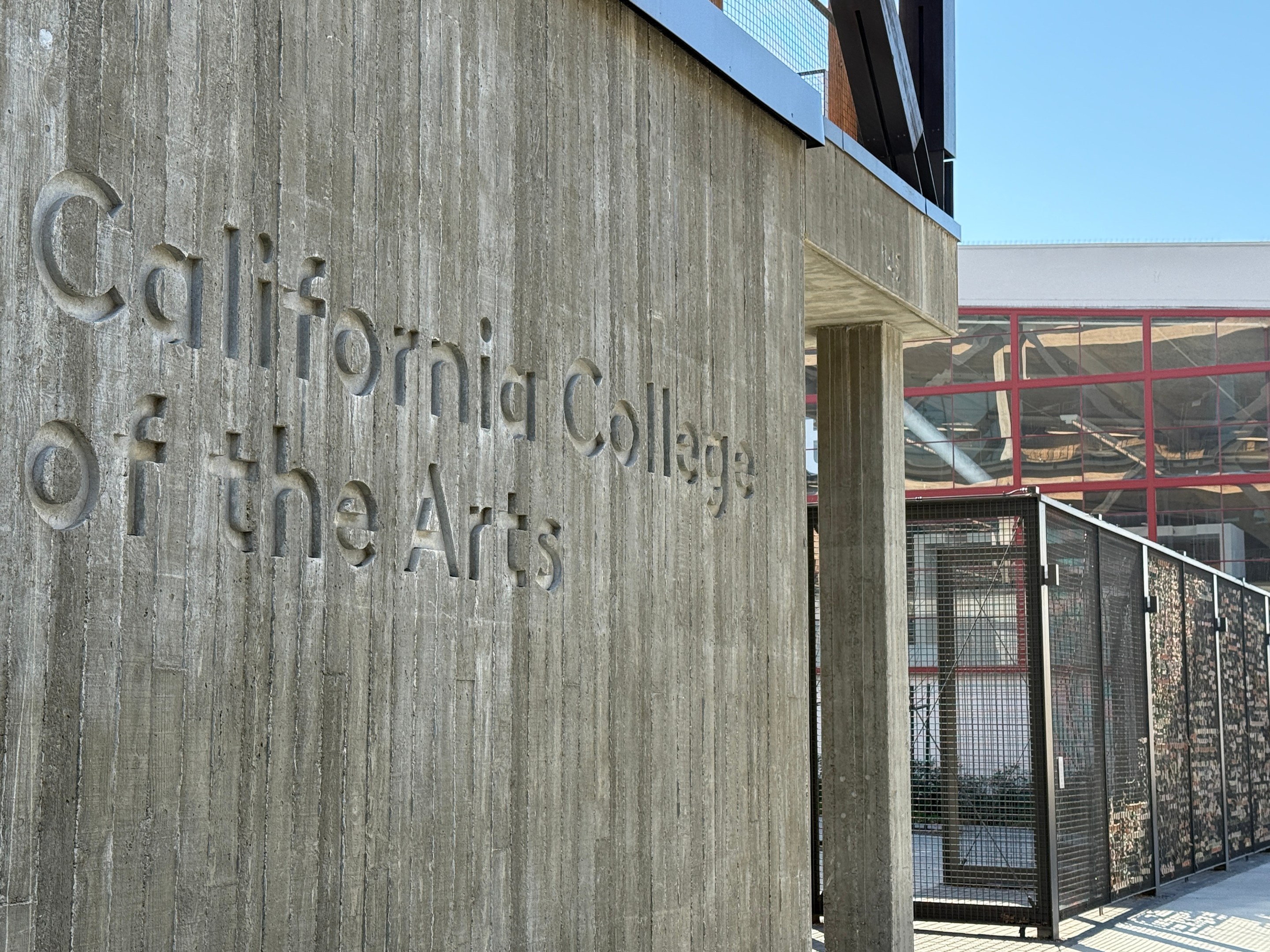
Still, one nonprofit art school remained, the California College of the Arts. CCA weathered its own ups and downs but a massive $45 million donation from NVIDIA founder Jensen Huang, and a group of other donors, and more money from the State of California Budget (as well as a subsequent partnership with NVIDIA), put some much needed wind in the institution’s sails in 2025.
Or so it seemed. On Tuesday morning, CCA announced its closure.
The private art school, which opened in 1907 in Berkeley as the School of the California Guild of Arts and Crafts, will cease operations at the end of the 2026-2027 academic year, selling their campus to Vanderbilt University to operate a satellite campus in San Francisco. Northern California will be left without a single nonprofit college for art and design. The impact of this will be felt throughout the region, especially at cultural institutions that are trying to keep art alive in a city that seems to want to erase it.
Not many artists make it big. Especially not fresh out of school. And these schools, to their credit, do a decent job of preparing prospective graduates for this harsh reality. But there’s a quiet upside. Many graduates find work in the fine arts at nonprofits, museums, as curators, as art handlers, as gallerists, as teachers and in many other areas we call “the arts.” Art schools don’t just prepare new talent for the art market but they also majorly — perhaps even mostly — contribute to the creative workforce of a city.
Case in point: I didn’t leave art school and become a painter. I became an arts journalist. All of these roles play a vital part in a thriving arts ecosystem. One of the reasons this pipeline works — that painting students can become curators, that sculpture students can become arts administrators — is because art school doesn’t teach particular skill sets so much as critical and creative ways of thinking about and valuing art in a society.
A year ago, my fiancée left a career in big law to focus on her art practice. Last fall, after honing her craft, exhibiting in galleries and art fairs throughout the city and establishing herself as a pottery teacher, she decided to go back to grad school. It was a shame, I told her, that she couldn’t go to SFAI. At least there’s still CCA, I said.
But now, there’s one less place in the Bay Area to develop future generations of artists. The closure of these art schools does not only signal a depreciation in the cultural value of art and artists but also a devaluation of the kind of thinking these institutions foster, as well as a disregard for the kinds of citizens they produce year after year. It’s difficult to see a future for the arts community in San Francisco with the places that operated as incubators for the creative class being obliterated. Generations of young artists will never move to San Francisco, instead landing at art schools in Los Angeles, New York, Chicago and elsewhere. In turn, those cities will benefit from their artistry, intelligence and vitality.
There are several internal issues that have long-troubled arts education. The kinds of careers art schools prepare their graduates for aren’t commensurately lucrative with the cost of the tuition those institutions require; many graduates shoulder exorbitant debt for decades as their reward for pursuing the arts. CCA struggled financially for decades, too, overextending itself to build a shiny new San Francisco campus in the hopes of luring potential students. The campus that will soon be owned and operated by Vanderbilt.
“Vanderbilt's decision sends a powerful message,” Mayor Daniel Lurie said at a Tuesday morning press conference. “It says that San Francisco remains one of the world's great places to live, to learn and to innovate.”
CCA’s closure sends a powerful message, too. I have never known a greater location of learning and innovation than art school. But the city in 2026 seems determined to disregard its deep and proud history of arts and culture in favor of cultivating outside investors. The city does this at the expense of the institutions that have built the city’s cultural fabric for decades.
In the absence of that history and what it has produced, living in San Francisco will come to feel grimmer by the day. It is more important than ever to hold what remains of our arts community close, and try, against the odds, to imagine a future.