


At 9:41pm last night, San Francisco Mayor Daniel Lurie officially announced the resignation of Isabella Alcaraz as District 4 Supervisor. The contretemps around Alcaraz’s hiring and departure proved to be a serious distraction from Lurie’s attempt to highlight one of the most serious and potentially consequential acts of his mayoralty: a tough new approach to dealing with fentanyl addiction and homelessness, two central crises he was elected on.
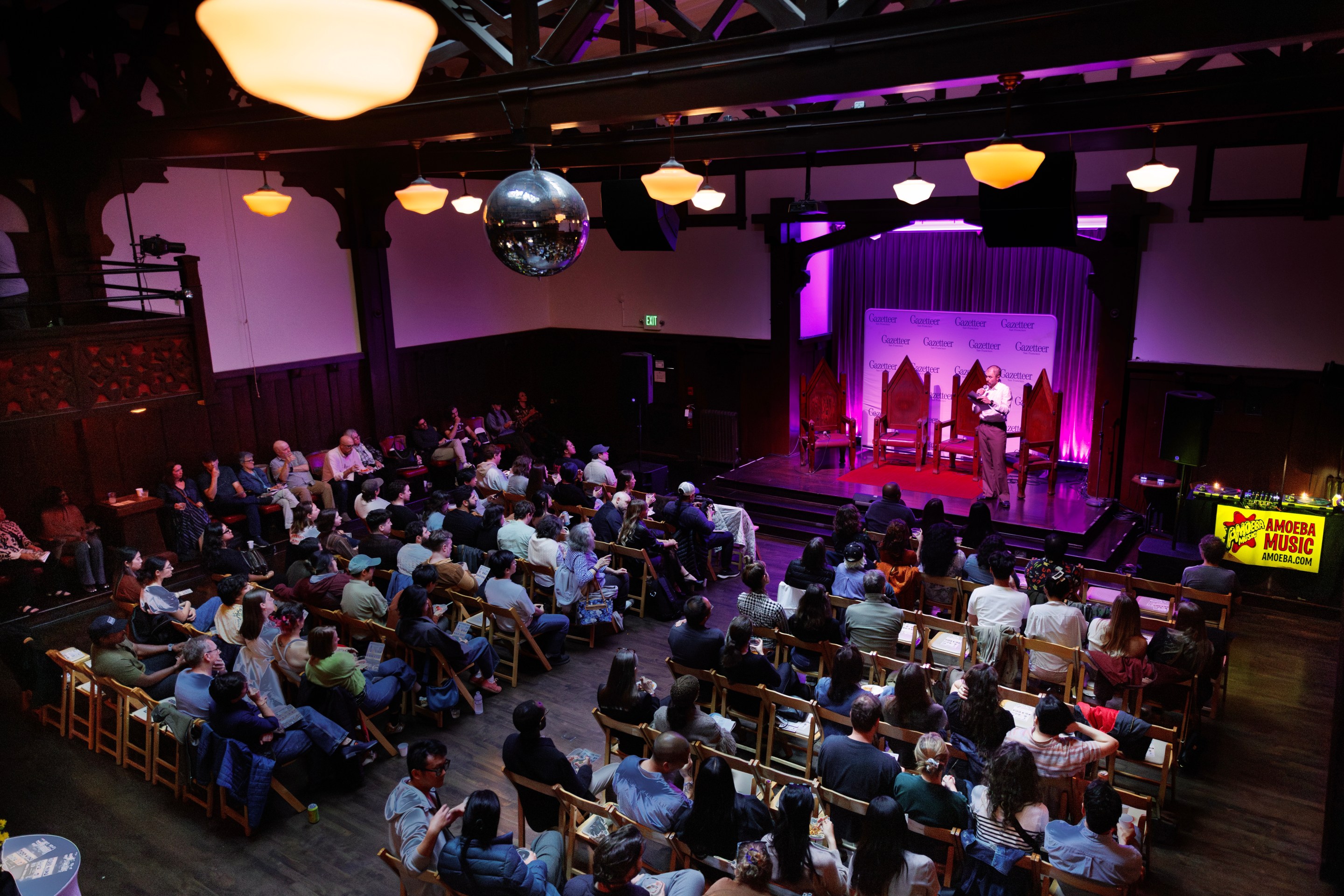
Speaking Wednesday at a conference on artificial intelligence at the Terra Gallery downtown, Lurie was asked about his attempts to revitalize Market Street. He told the audience that his administration has done a good job of breaking up open air drug markets during the day, but acknowledged that they return at night. Lurie pointed out “really problematic” drug activity at 16th Street and Mission and 24th and Mission, presumably referring to the areas around BART stations where drug consumption is at times overt and abundant.
In the last week, 70 people were arrested between the hours of midnight and 5 a.m., Lurie said.
“We are going hard,” Lurie said, noting law enforcement is using drones and license plate readers. “We just announced a new center where we are going to be able to arrest those that are using drugs openly, take them to a place where they can get sober, and get into treatment. And if they don’t take that option, then they go to jail.”
Lurie was referring to a “sobering center” that his office didn’t announce publicly but disclosed through news stories in the San Francisco Chronicle and ABC News earlier that day. Scheduled to open next year, the center will be at 6th Street next to the Hall of Justice.
“If you do drugs on our streets, we will arrest you,” Lurie said in a statement sent out after the AI conference. He added a softer touch, too, promising that people suffering from drug addiction will get medical attention that can help them “take the first step” toward treatment, and get “connected to the right resources at the right time.”
According to the Chronicle’s Maggie Angst, the center will have about two dozen chairs for people to rest in. Larry Olson, a spokesman for Sheriff Paul Miyamoto, told me in an email that the center is “somewhere in between the jail and a hospital.”
“It gives law enforcement the opportunity to get people off the streets that are in the midst of addiction,” Olson said. “Up until this point, there really is not a good option.”
Cedric Akbar, the executive director of Positive Directions Equals Changes, said Lurie’s drug arrest initiative and sobering center plan is a step in the right direction even though it’s “another slow response, as far as I’m concerned.”
In Lurie’s statement about the sobering center, the mayor said San Francisco was “caught flat-footed by the fentanyl crisis,” which was the exact same language he used at the AI conference, and in his interview with ABC.
I found that particular turn of phrase odd, given that fentanyl hit San Francisco’s streets almost a decade ago, something the mayor probably knew from his anti-poverty non-profit Tipping Point, which he founded 20 years ago.
Calling the city flat-footed sounds like a deflection, and an attempt to buy time. It’s the sort of thing a CEO might say when confronted with concerns about their company’s labor practices or safety record: It’s less an admission than a tacit rebuke to their underlings.
Flat-footed could also describe the mayor’s handling of his appointment of Alcaraz: plodding, somewhat obtuse, until press reports more or less forced him to act with haste.
Being flat-footed is not something you want to hear from your mayor nearly a year into his administration. Some fancier footwork is in order to run this particular organization, something Lurie is still figuring out. “He’s moving cautiously,” Akbar told me. “He’s moving a little bit at a time.”