

Once you spot them, you can’t unsee them.
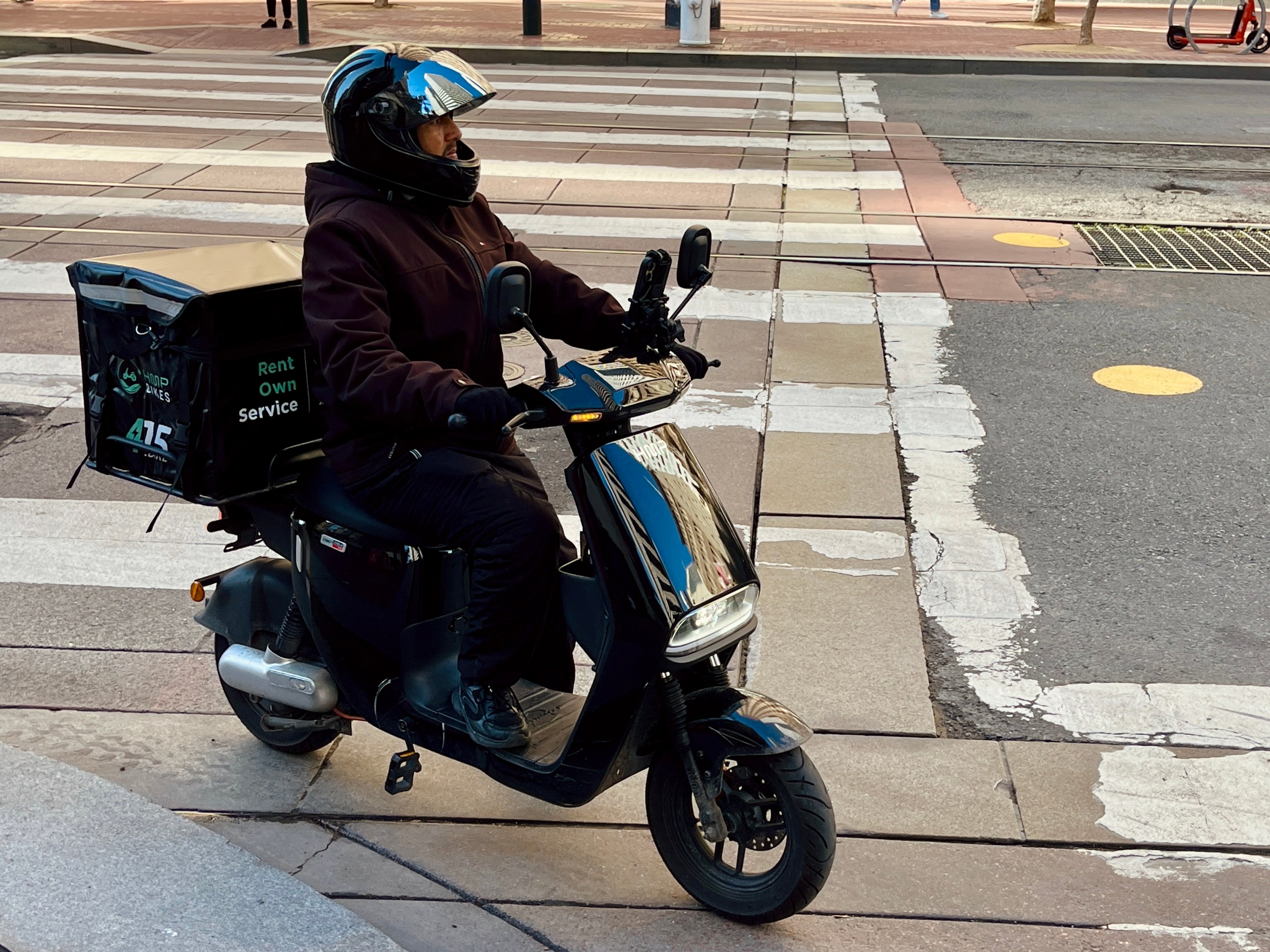
I first noticed an HMP e-moped months ago meandering around the Financial District in February. Turns out, there’s hundreds of these bikes flocking around San Francisco, increasingly favored by delivery drivers who need to shuttle food to hundreds of customers a day at breakneck pace.
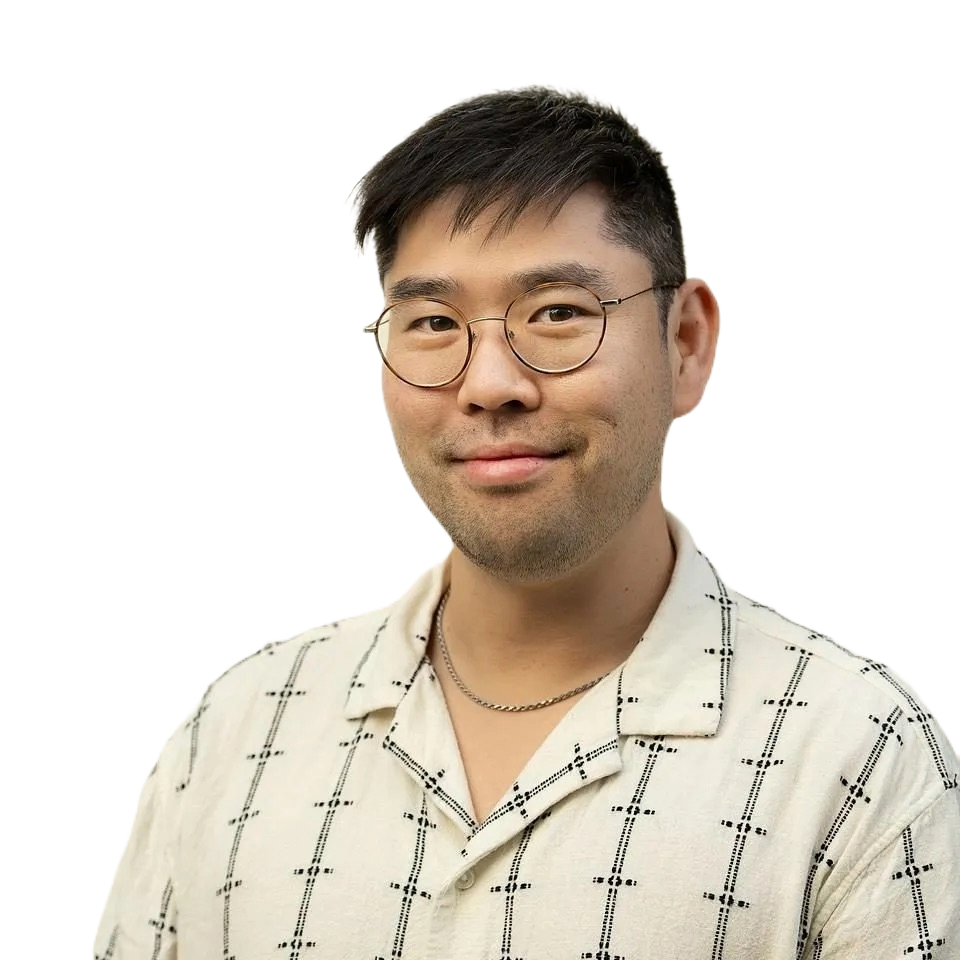
Unlike their gas-powered brethren, HMP’s mopeds are smaller, sleeker and zip along with nary a noise. Company founder Peter Chu is betting that the vehicles are making a strong impression amid a tight-knit community of delivery drivers, many of whom are seeking a reliable, convenient way to get around.
A major draw is the low barrier of entry, Chu told me. HMP’s most popular model, the “Inno,” has the look of a full-fledged gas-powered moped, but is actually regulated as a “class two” e-bike because of limits on its power and top speed. The e-moped can still zip around at 20 mph and climb hills, but drivers don’t need a license, registration, or insurance.
“That’s real upside, and the key is that you get a bigger form factor that is way more comfortable to sit on than a normal e-bike,” Chu said. “I think early on, a few drivers got pulled over by police who asked about missing license plates and registration. We had to clarify that to law enforcement.”
HMP, which is headquartered in Davis, launched in 2022. Chu admitted that the company struggled to find an audience for two years and came near the precipice of bankruptcy (“Multiple times,” Chu added with a wry laugh.) Then came a breakthrough last year, when HMP went big on delivery drivers, wooing them with services tailored to the job.
Its most popular offering is a $2,500 package that includes the “Inno” e-moped, storage rack, a large square bag for carrying goods, and an extra battery. Many gig workers choose HMP’s “rent-to-own” payment plan, which is sweetened by the promise of free routine maintenance (including pick-ups if your moped breaks down) at its SoMa dealership. Chu has even personally helped hunt down stolen HMPs, using a GPS-powered alarm system and a handy power tool to break a lock placed by the thief.
Chu likes being hands-on, especially as he goes all-in on San Francisco.
A decade ago, Chu was a mechanical engineering student at UC Davis looking for an opportunity for entrepreneurship. His first effort in 2017 was Xiaocun, a platform for the Chinese-speaking community to buy and sell used goods and services. Chu found that, although it attracted users, Xiaocun didn’t generate revenue — and so he pivoted to a food delivery service named Muncho, with him initially at the (literal) wheel.
So began long days of shuttling 80-plus orders of food in his Nissan SUV, an experience that came with one major takeaway: the frustration of using a full-sized car for the job.
His handful of Muncho drivers felt the same way. So Chu embarked on a trip to China, where he discovered e-bikes shaped like mopeds with wide seats, rather than a narrow bike saddle.
“So we bought a few more, like around 10, and gave them to our drivers. They loved it. They said, ‘Oh my god, we never have to fight over parking tickets for double parking. And we can still pick up a lot of orders,’” Chu told me. “So the seed was planted in my mind.”
After a very slow start in 2022, HMP now has more than 600 e-mopeds in SF and has ambitions to hit 1,000 by the end of the year.
The HMP drivers I spoke to on Market Street pretty much all said the same thing: The e-mopeds are reliable, easy to drive, and don’t require paying for insurance.
Word of mouth is a motivator. Kamal Oli, a driver waiting outside of McDonald’s, moved from Texas to the Bay Area seven months ago on the urging of his brother, who recommended HMP. He pays about $380 a month to rent the bike.
“Too expensive compared to regular e-bike, maybe, but I like it,” Oli told me. “Charging the battery is better than gas. Look at the gas prices!” (It’s an average of $6 in the county.)
Medsraj Basnet, a driver waiting outside of The Melt, was even more straightforward when I asked why he chose an HMP.
“This one,” Basnet said, rapping the wide cushioned seat of the e-moped with his knuckles.
Despite the positive feedback, Chu believes there are more improvements needed for the e-mopeds, chiefly a way to extend the operating time without forcing workers to go home and grab a charged battery.
The vast majority of customers who stopped renting HMPs “ended up buying Honda PCXs and ADVs” for their extended range and power, Chu said, referring to two very popular gas-powered mopeds that run closer to $5,000 and up.
That’s a big reason HMP is building battery-swapping stations around the city that will debut in June. (The first station will be located at its dealership, 415 eBikes, near Folsom and Sixth streets.)
“When I was doing deliveries, one thing I hated most was when my vehicle broke down in the middle of the work. I have bad, bad memories of this,” Chu said. “So stability, reliability — these are our most important factors.”